

Planet Parade February 2026: When and How to Witness the Rare Multi-Planet Celestial Display
February 2026 is generating significant excitement among skywatchers and astronomy enthusiasts, as it promises a rare planetary alignment often referred to as a "planet parade." This celestial event involves multiple planets appearing in the sky simultaneously, creating a captivating display that encourages observers to look up after sunset. However, experts caution that the reality of this alignment may be more subtle than the dramatic buzz suggests, with visibility challenges for some planets.
The Buzz Around Planetary Alignments
The concept of a planet parade has quickly become a popular astronomy buzzword, joining the ranks of phenomena like supermoons, meteor showers, and solar eclipses that capture public imagination. This trend is not entirely new; a similar wave of excitement occurred in early 2025 when Mars, Jupiter, Saturn, Venus, Uranus, and Neptune were all technically above the horizon on the same nights. In practice, only a few of those planets were visible without special equipment. February 2026 brings a comparable setup, with Mercury replacing Mars in the lineup, once again sparking curiosity about what observers can realistically expect to see.
Key Details of the February 2026 Alignment
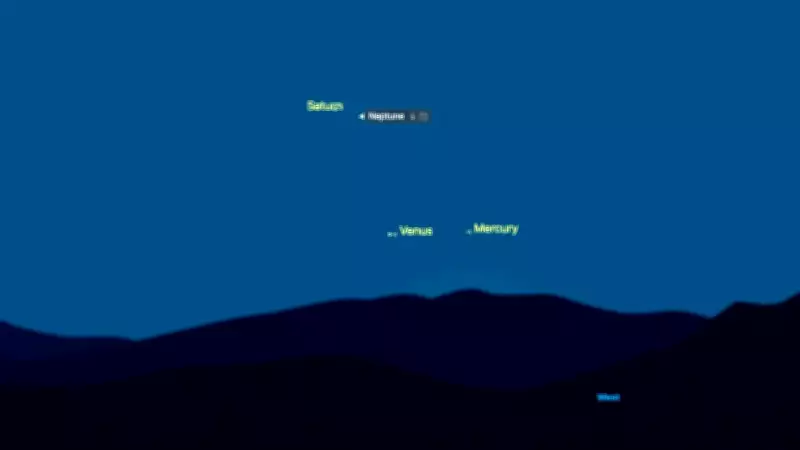
Astronomers have identified Saturday, February 28, 2026, as the pivotal date for this month's planetary alignment. Shortly after sunset, six planets—Mercury, Venus, Saturn, Jupiter, Uranus, and Neptune—will be positioned in the evening sky. While this sounds impressive, the term "see" can be misleading, as visibility varies significantly among these celestial bodies.

- Visibility Challenges: Several planets will sit very low on the western horizon, close to the Sun's lingering glow. This requires clear skies, an unobstructed western view, and precise timing for optimal observation.
- Planet-Specific Insights: Venus and Mercury will be the lowest and among the first to disappear into twilight. Venus will shine brightly but remain near the horizon, while Mercury, though dimmer, may be easier to spot earlier in the month. Saturn will be nearby but with fading brightness, making it less striking. Neptune and Uranus are particularly elusive, requiring binoculars or a small telescope for visibility.
- Highlight of the Show: Jupiter, shining brightly in the sky, will be the easiest planet to spot and is likely to be the highlight for most observers.
Additional Celestial Features
Adding to the spectacle, the bright Moon will rise later in the evening, illuminating the eastern sky. Although it may pose a challenge for those trying to spot the planets due to its brightness, it will still contribute to a breathtaking view for many skywatchers.
In summary, while the February 2026 planet parade offers a rare opportunity to witness multiple planets in alignment, observers should manage their expectations. With careful planning and the right equipment, this event can provide a memorable glimpse into the wonders of our solar system.






