

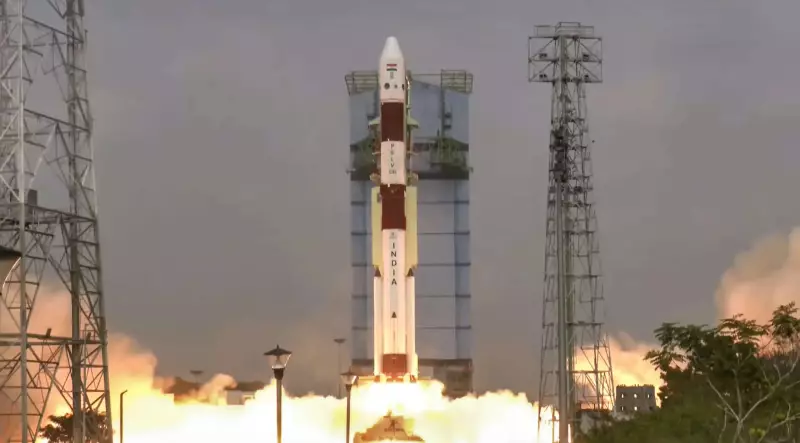
The Indian Space Research Organisation (ISRO) has reported an anomaly during the launch of its Polar Satellite Launch Vehicle (PSLV-C62) mission, the agency's first launch attempt of 2026. In a statement issued on January 12, 2026, ISRO confirmed the issue occurred near the end of the vehicle's third stage and that a detailed analysis has been initiated. The agency has not yet declared the mission a definitive success or failure.
Mission Profile and Payloads
PSLV-C62 was the 64th flight of ISRO's reliable PSLV programme and marked the ninth dedicated commercial mission undertaken by NewSpace India Limited (NSIL). The rocket lifted off from the First Launch Pad at the Satish Dhawan Space Centre in Sriharikota, Andhra Pradesh, using the PSLV-DL (Dual Launch) configuration equipped with two solid strap-on motors.
The primary payload was the Earth Observation Satellite N1, named Anvesha, a hyperspectral imaging satellite developed by the Defence Research and Development Organisation (DRDO) for surveillance and monitoring. The mission also carried multiple co-passenger payloads for Indian and international clients, including CubeSats and small satellites designed for:

- Artificial intelligence processing in orbit
- Store-and-forward communication systems
- Internet of Things (IoT) services
- Radiation measurement
- Agricultural data collection
Key Technology Demonstrations Onboard
Two significant technology demonstrators were part of this flight. The Kestrel Initial Technology Demonstrator (KID), developed by a Spanish startup, was a small-scale prototype of a re-entry vehicle. It was planned to re-enter the Earth's atmosphere and splash down in the South Pacific Ocean for data collection on controlled re-entry behaviour.
Another notable payload was AayulSAT, developed by Bengaluru-based startup OrbitAID Aerospace. This satellite was designed to test pioneering concepts of on-orbit refuelling and satellite servicing in low Earth orbit.
The Anomaly and Immediate Response
According to ISRO Chairman V. Narayanan, the vehicle performed as expected until the later part of its third stage (PS3). He stated, as reported by TNN, "The performance of the vehicle close to the end of third stage was as expected. Close to the end of third stage we are seeing more disturbance in the vehicle. Subsequently, there is a deviation in the vehicle observed in the flight path."
The PSLV is a four-stage vehicle with two solid and two liquid stages. The anomaly near the end of the PS3 stage has prompted a thorough data review. At the time of the announcement, ISRO had not confirmed the final status of all the payloads aboard.
Context and Implications for the PSLV Programme
This incident follows a previous setback in May 2025, when the PSLV-C61 mission failed to place the Earth Observation Satellite 09 into orbit due to a third-stage anomaly. After that failure, ISRO constituted a failure analysis committee and implemented corrective measures before clearing the launcher for this return-to-flight mission.
The PSLV programme, operational for over three decades, has been a workhorse for ISRO, powering landmark missions like Chandrayaan-1, the Mars Orbiter Mission, Aditya L1, and Astrosat. Prior to C62, it had completed 63 flights.
The outcome of the ongoing analysis is critical. The findings will determine the root cause of the disturbance and clarify the fate of the satellites. This is vital for the Polar Satellite Launch Vehicle programme, which remains central to India's commercial launch offerings through NSIL. Further updates from ISRO are awaited upon completion of the review.






