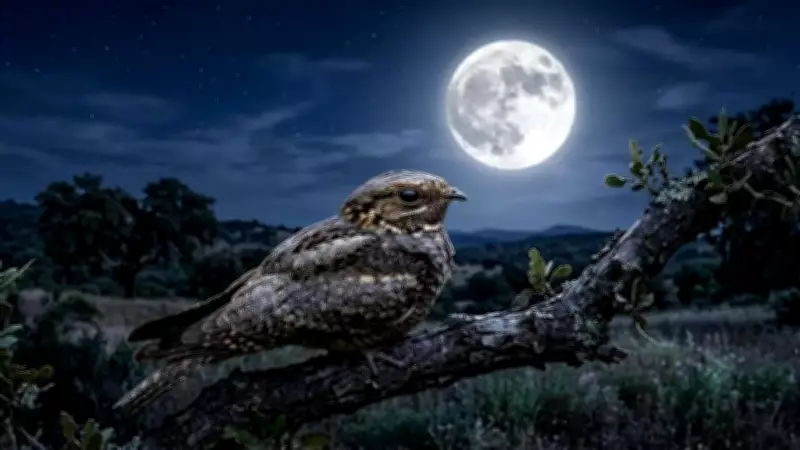
The red-necked nightjar, scientifically known as Caprimulgus ruficollis, synchronises its life cycle with the lunar cycle, which lasts about 29.5 days. Recent research highlights this fascinating behaviour. Unlike most birds that use the sun as a guide, this nocturnal insect-eater aligns its crucial activities — including migration, breeding, and foraging — with moonlight. When the moon is full, it helps the nightjar spot insects more easily in flight, effectively increasing foraging activity by 100 per cent. This reliance on the moon is so significant that it even influences when they cross the Sahara or when their chicks hatch. Their timing ensures these energy-intensive moments match up with bright nights, showing a remarkable evolutionary trait adapted to lunar light.
Why the Red-Necked Nightjar Waits for the Full Moon to Fly
Research featured in Science Advances reveals that red-necked nightjars rely on moonlight as a crucial period for intense activity. These birds double their foraging time on moonlit nights compared to the darkest nights of the new moon while wintering in sub-Saharan Africa. The light helps them spot and catch insects more easily. As a result, they time their migratory departures with the waxing phase of the moon, which provides the visibility they need to hunt effectively during long journeys.
How the Full Moon Dictates the Nightjar’s Breeding Cycle
As noted in a report on Lund University, researchers discovered that nightjars have a breeding cycle timed perfectly so eggs hatch around the full moon. This schedule matters because chicks, growing fast, need lots of insects. When the nestling period aligns with the month's brightest nights, parents can spend more hours hunting to feed their young ones adequately.

The Threat of Anthropogenic Light Pollution to the Nightjar
The International Dark-Sky Association and various biological studies point out that nocturnal birds like the nightjar are very sensitive to light, making them at risk from light pollution. Artificial skyglow can mess with their ancient lunar cues, leading to problems like incorrect migration timing or challenges in finding food. Therefore, there is growing concern for these species, which rely heavily on natural nighttime darkness throughout their lives.
Nightjars Conserve Energy in the Dark
Research on the red-necked nightjar shows it slows down its activity when the moon is darkest, taking a facultative hypometabolism to save energy. These birds hunt by sight, so during a new moon, the energetic cost of foraging exceeds the caloric gain. They remain sedentary and keep their energy low until there is enough moonlight again to make hunting worthwhile.