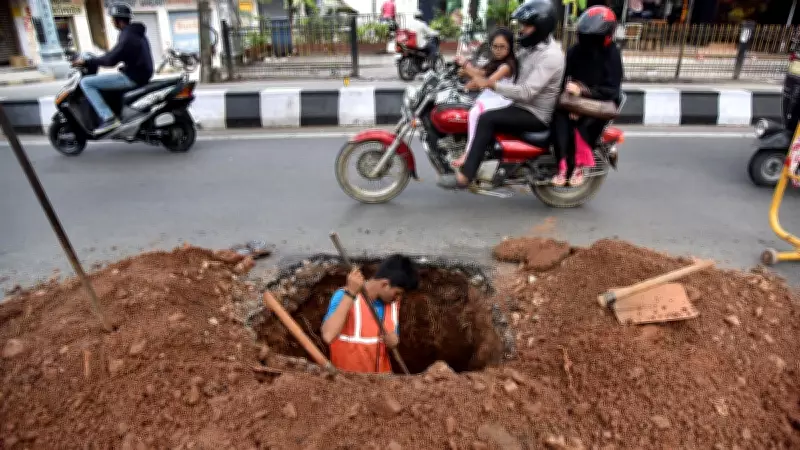
In a groundbreaking initiative, the Bengaluru Water Supply and Sewerage Board (BWSSB) has successfully identified nearly 400 instances of water pipeline leaks and sewerage faults across the city within just six months. This was achieved by deploying advanced robotic units directly into the underground network, eliminating the need for disruptive road-digging operations.
Robotic Survey Covers 32 km of Infrastructure
Over the half-year period, the robotic units surveyed more than 32 kilometers of pipelines and sewer lines. The technology enabled the detection of critical faults, including cracks, blockages, and leaks, which could have otherwise led to significant water loss and environmental hazards. By pinpointing the exact locations of these issues, BWSSB could plan targeted repairs without extensive excavation.
How the Robotic System Works
The robotic units are equipped with high-resolution cameras and sensors that navigate through the underground pipes. They transmit real-time data to engineers on the surface, allowing for immediate analysis. The system can detect even minor anomalies that might be missed during manual inspections. This non-invasive approach not only speeds up the detection process but also reduces costs and minimizes disruption to traffic and daily life.

Impact on Bengaluru's Water Management
Bengaluru has long struggled with water scarcity and aging infrastructure. The successful deployment of robotic technology marks a significant step toward smarter water management. By identifying leaks early, BWSSB can save millions of liters of water annually. Additionally, the early detection of sewerage faults helps prevent contamination and public health risks.
Future Plans and Expansion
Encouraged by the results, BWSSB plans to expand the robotic survey to cover more areas of the city. The board aims to inspect all major pipelines and sewer networks over the next few years. This initiative is part of a broader effort to modernize Bengaluru's water infrastructure using cutting-edge technology. The data collected will also be used to create a digital map of the underground network, facilitating better maintenance and planning.
The success of this project highlights the potential of robotics in urban infrastructure management. It serves as a model for other cities facing similar challenges. With continued investment and innovation, such technologies can transform how cities manage their essential services.