

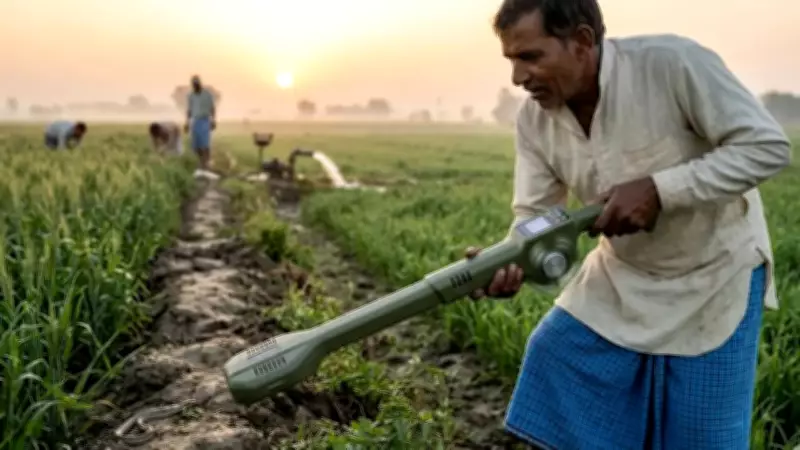
Kisan Mitra Chhadi: AI-Powered Smart Stick to Prevent Snake Bite Deaths in Rural India
In a significant technological advancement for agricultural safety, Indian scientists have developed an innovative electronic device named 'Kisan Mitra Chhadi' (Farmer's Friend Stick). This smart stick is specifically designed to address the critical issue of snake bite fatalities in rural India, where thousands of farmers lose their lives annually due to accidental encounters with venomous reptiles.
How the Smart Stick Works: Vibration and Infrared Detection
The Kisan Mitra Chhadi utilizes sophisticated vibration technology combined with infrared sensors to identify the presence of snakes within a localized range of approximately 5 to 15 meters. Remarkably, its broadcast alert capability extends up to 100 meters, providing farmers with ample warning time. When the device detects a snake, it emits a loud vibration signal, alerting the farmer to retreat safely.
According to an official presentation by Agriculture Minister Shivraj Singh Chouhan, operating the device is straightforward:

- Place the stick on the ground
- Turn it on using a simple button
- Allow the stick to scan the surrounding area for activity
- Receive immediate vibration alerts when snake presence is detected
Advanced AI Integration for Accurate Threat Detection
A study published by the National Institutes of Health (NIH) titled "Smart IoT-based snake trapping device for automated snake capture and identification" reveals that advanced versions of these smart sticks incorporate artificial intelligence to distinguish between actual snake movements and environmental factors with high-level accuracy.
The technology employs:
- Passive Infrared (PIR) sensors to detect ectothermic thermal signatures
- Ultrasonic sensors to identify spatial anomalies
- AI algorithms to minimize false alarms and provide valid alerts only when genuine threats exist
IoT Architecture and Instant Notifications
Research published in the International Journal of Scientific Research and Engineering Development demonstrates that these devices are built on Internet of Things (IoT) architecture using microcontrollers such as Arduino and Raspberry Pi. When sensors recognize specific threat indicators—including low-frequency seismic vibrations from serpentine movement or acoustic profiles of snake hisses—the system triggers multiple responses:
- On-site buzzer activation for immediate local alerts
- Simultaneous notifications sent to mobile devices
- Real-time threat assessment and communication
This dual-alert system is particularly crucial for farmers working during nighttime hours or in low-light conditions where visibility is severely limited.
Dual Benefits: Farmer Safety and Biodiversity Conservation
Government-funded research agencies highlight that Kisan Mitra Chhadi serves two important functions simultaneously:
- Enhanced Farmer Safety: By providing early detection of snakes, the device helps prevent accidental encounters that often lead to fatal bites during agricultural activities like nighttime irrigation.
- Biodiversity Conservation: The technology enables safe snake detection without causing harm to the reptiles, supporting important ecological functions like rodent population control in farming areas.
This approach also facilitates the ethical collection of snake venom for antivenom synthesis and pharmacological research, creating a sustainable model that protects both human lives and wildlife.
Addressing a Critical Rural Health Challenge
The development of Kisan Mitra Chhadi represents a significant step forward in addressing one of India's most persistent rural health challenges. Snake bites claim thousands of lives annually, particularly among agricultural workers who frequently encounter reptiles in fields, irrigation channels, and storage areas.

By combining vibration technology, infrared detection, artificial intelligence, and IoT connectivity, this innovative device offers a comprehensive solution that could dramatically reduce preventable deaths while promoting harmonious coexistence between farming communities and local wildlife populations.





