

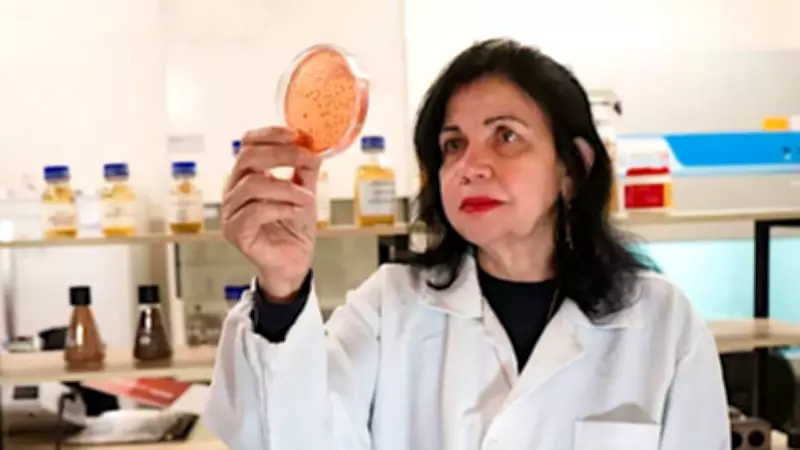
Mariangela Hungria's Revolutionary Soil Bacteria Research Earns Global Recognition
For generations, conventional agricultural wisdom maintained that achieving high crop yields necessitated the heavy application of synthetic nitrogen fertilizers. Brazilian scientist Mariangela Hungria has definitively proven this assumption wrong. Through more than four decades of dedicated, quiet research at Embrapa, Brazil's agricultural research corporation, she meticulously studied beneficial soil bacteria that enable crops to absorb nitrogen directly from the atmosphere.
The Nitrogen Problem and the Fertilizer Dependency
Nitrogen stands as an absolutely essential element for robust plant growth and development. It serves as a fundamental building block for critical plant components including proteins, vital enzymes, and chlorophyll, which is necessary for photosynthesis. Although nitrogen constitutes approximately seventy-eight percent of the Earth's atmosphere, plants cannot utilize it in its gaseous form. Throughout much of the twentieth century, global agriculture addressed this limitation primarily through the widespread use of synthetic nitrogen fertilizers, which are manufactured using energy-intensive processes reliant on fossil fuels.
While these chemical fertilizers undoubtedly boosted agricultural productivity, they also introduced significant drawbacks: substantial financial costs for farmers, severe environmental pollution from runoff, and considerable greenhouse gas emissions linked to their production and application, contributing to climate change.

The Scientific Breakthrough: Harnessing Biological Nitrogen Fixation
Mariangela Hungria dedicated her career to advancing biological nitrogen fixation, a completely natural process where specific strains of soil bacteria convert inert atmospheric nitrogen into ammonia, a form that plants can readily absorb and use. In leguminous crops like soybeans, these bacteria reside within specialized nodules that form on the plant roots, establishing a symbiotic, mutually beneficial relationship.
The plant supplies the bacteria with carbohydrates and a protected environment, while the bacteria reciprocate by providing the plant with fixed, usable nitrogen. Hungria's monumental contribution was not the initial discovery of this process, which was already established science, but rather her pioneering work in meticulously identifying, selecting, and enhancing the most efficient and resilient bacterial strains specifically adapted to Brazil's diverse and challenging tropical soils.
Furthermore, her rigorous, long-term research provided conclusive, large-scale proof that these microbial inoculants could perform reliably and effectively under real-world, commercial farming conditions, moving far beyond theoretical laboratory results.
From Laboratory Innovation to Widespread Agricultural Adoption
Leading research initiatives at Embrapa's National Soybean Research Center, Hungria and her team developed practical, user-friendly microbial inoculants that farmers could easily apply to seeds prior to planting. These inoculants, containing concentrated populations of nitrogen-fixing bacteria, either completely replaced or dramatically reduced the need for synthetic nitrogen fertilizer applications.
A critical component of her team's success involved establishing robust quality control protocols for inoculant production and implementing comprehensive farmer education and outreach programs. These efforts ensured the technology delivered consistent, high-performance results in the variable conditions of actual farm fields, not just controlled laboratory environments.
As trust and adoption grew, the practice spread across millions of hectares of Brazilian farmland, fundamentally shifting the national agricultural system toward a microbe-based nitrogen supply model.
Transforming a Nation's Agricultural Landscape
The impact of Mariangela Hungria's work on Brazilian agriculture has been profound and nationwide. Brazil successfully reduced its heavy dependence on expensive, imported nitrogen fertilizers while simultaneously maintaining and even improving crop yields. Farmers benefited from significantly lower input costs and witnessed enhanced, long-term soil health and fertility.

Environmental gains were substantial, with marked reductions in greenhouse gas emissions associated with fertilizer manufacturing and decreased pollution from agricultural runoff. Over time, biological nitrogen fixation using microbial inoculants became the standard, foundational practice in Brazilian soybean cultivation, a key factor underpinning the country's ascent to become the world's largest soybean exporter and a global agricultural superpower.
Global Acclaim and Broader Implications for Sustainable Farming
Hungria's receipt of the prestigious 2025 World Food Prize honored not only her scientific excellence but also the unprecedented scale of her innovation's adoption. Very few agricultural breakthroughs ever achieve implementation across tens of millions of hectares. Even fewer accomplish this while simultaneously lowering production costs for farmers and reducing environmental footprints.
Her groundbreaking model is now actively studied by researchers, agricultural extension agents, and policymakers across Africa, Asia, and Europe, especially as global fertilizer prices experience volatility and climate change pressures intensify the search for resilient, sustainable farming solutions.
A New Paradigm for the Future of Global Food Production
The legacy of Mariangela Hungria's career offers a powerful, alternative lesson for twenty-first-century agriculture. Instead of relentlessly pursuing productivity through chemistry and industrial inputs alone, farming systems can be redesigned to work in harmony with natural biology. Her approach demonstrates convincingly that solutions deeply rooted in understanding and enhancing local ecosystems can often outperform imported, high-input industrial models.
As noted by agricultural scientists inspired by her work, "This breakthrough transcends soybeans. It is about fundamentally redesigning agricultural systems to be centered on nurturing living, healthy soil."
In an era urgently searching for sustainable, scalable methods to nourish a growing global population, the lifelong work of Mariangela Hungria powerfully suggests that some of the most effective and elegant solutions are not found in distant laboratories or complex chemistry, but are already present, working silently, beneath our feet.





