

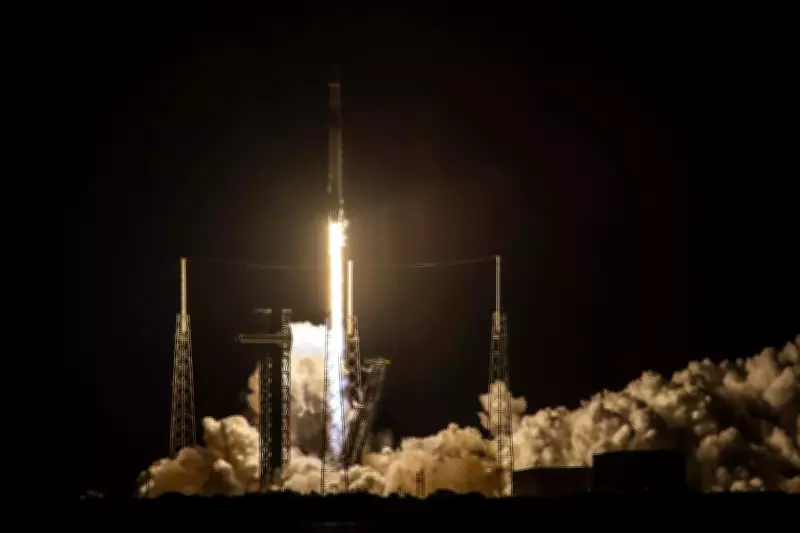
SpaceX Falcon 9 Successfully Deploys 29 Starlink Satellites in Latest Mission
In a routine yet significant operation, a Falcon 9 rocket lifted off from Cape Canaveral Space Force Station in Florida on Thursday evening, precisely at 8:41 p.m. Eastern Time. The launch from Space Launch Complex 40 successfully placed 29 Starlink satellites into low Earth orbit, marking another incremental expansion of SpaceX's global broadband constellation.
Booster Achieves 26th Flight Milestone with Controlled Landing
Following stage separation, the first stage booster executed a controlled descent and landed on the droneship Just Read the Instructions, which was stationed in the Atlantic Ocean off the coast of The Bahamas. This landing was the second time a Falcon 9 has touched down on this specific droneship in that region. Satellite deployment was confirmed shortly after, concluding the mission without incident.
The booster used for this mission has now flown an impressive 26 times, demonstrating SpaceX's commitment to reusability. Its extensive flight history includes:

- Crew 5 mission
- GPS III Space Vehicle 06
- Inmarsat I6 F2
- CRS 28
- Intelsat G37
- NG 20
- TD7
- Multiple previous Starlink missions
Southeast Trajectory Enhances Payload Performance
The mission followed a southeast trajectory from Florida, a strategic path that allows the Falcon 9 to maximize performance when carrying heavier satellite batches. This more efficient trajectory enables SpaceX to transport additional satellites on a single flight, optimizing launch capabilities.
Landing in the Atlantic Ocean east of Florida provides additional flexibility during winter months when weather conditions can affect recovery operations. By adjusting landing zones as needed, SpaceX maintains its aggressive launch cadence and turnaround schedules.
Starlink Constellation Continues Steady Expansion
Low Earth orbit remains a critical component of the Starlink internet network, which aims to provide global internet access, particularly in regions with limited ground-based infrastructure. Rather than massive expansions, each launch adds incremental capability to the growing constellation.
Earlier in the week, another Falcon 9 launched 24 Starlink satellites from California, continuing the company's steady deployment rhythm. The Starlink constellation has grown through frequent launches from both Florida and California, with reusability playing a visible role in maintaining this pace.
Boosters now regularly exceed twenty flights, significantly reducing manufacturing demand and shortening preparation times. This mission represents another quiet, routine addition to the constellation—almost procedural in its execution yet crucial to SpaceX's broader connectivity goals.






