

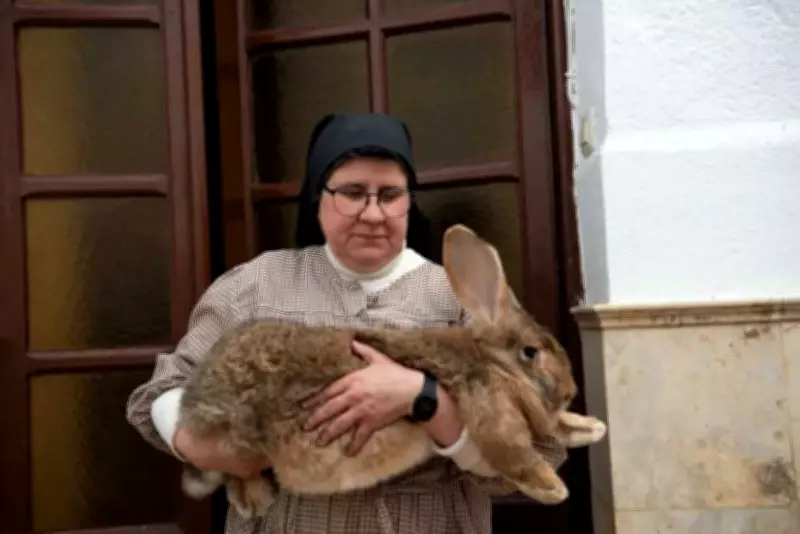
In the tranquil setting of the Convent of St. Anthony of Padua, surrounded by stone walls and hidden in the heart of Spain, mornings once began with whispered prayers and the aroma of burning incense. Today, however, the silence is broken by the rhythmic thud of powerful paws on hard ground. The sisters have transformed their spiritual haven into a sanctuary for the Gigante de España, the Spanish Giant rabbit, dedicating themselves to saving this endangered breed.
A Heritage at Risk
For centuries, the Spanish Giant rabbit thrived in the Iberian Peninsula, known for its calm temperament and ability to survive on local vegetation. It became an integral part of Spanish agricultural culture. However, as farming evolved, fast-growing hybrids suited for crowded conditions took over. By the early 2000s, purebred Spanish Giants had nearly vanished.
Sanctuary Behind Stone Walls
The move to the convent was driven by a desire to preserve this unique species, a part of Spain's heritage. The sisters realized that their lifestyle—characterized by patience, regularity, and reverence for nature—was ideal for the breed's reproduction. This is not a pet breed; it is a large, heavy rabbit requiring spacious surroundings.

The rescue effort is backed by science. A study published in the journal Animal Genetic Resources provided the foundation, part of a larger project to map the genomes of Europe's vanishing livestock breeds. The Spanish Giant was deemed an indispensable element of Europe's genetic wealth.
Faith and Science Converge
Following the study's recommendations, the sisters maintain careful breeding records to ensure genetic health. They have become skilled animal breeders, tracking births and health signals meticulously. What the research calls an inventory is a tangible, dedicated effort.
The benefits extend beyond the rabbits. The sisters and visitors alike find joy in the unlikely pairing of nuns in habits cradling rabbit that resemble small dogs. Tourists on spiritual retreats or seeking homemade sweets are fascinated by the rabbit cages.
According to the Global Sisters Report, which has followed this initiative, the convent serves as a rare bridge between local heritage and scientific recovery. The quiet, low-stress environment is ideal for high-stress species. When animals feel safe, breeding success skyrockets. The sisters often note that the rabbits have taught them mindfulness, as the animals respond to the keepers' calm energy.
Toward a Sustainable Future
The ultimate goal is to remove the Spanish Giant from the endangered list and reintroduce it to local farmers and enthusiasts. The sisters aim to stabilize numbers and then sell rabbits to small sustainable farms that prioritize quality over quantity. This aligns with broader scientific views on diversifying food sources.
As dusk falls on the hills of northern Spain, the sisters finish their chores at the rabbit breeding area. The Gigante de España represents more than a species at risk; it is a reminder of what is lost when efficiency prevails. Thanks to the dedication of these resolute women, guided by scientific insight, this heritage breed is making a comeback.






