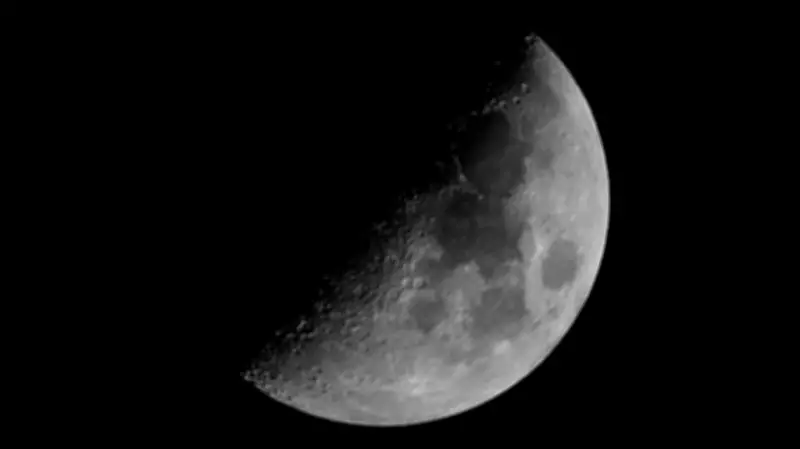
A recent study has provided strong evidence of subsurface ice deposits under craters in the Moon's south polar region. The findings, published in the journal Geophysical Research Letters, suggest that these ice deposits could be more extensive than previously thought, potentially offering a valuable resource for future lunar exploration.
Key Findings of the Study
Researchers used data from NASA's Lunar Reconnaissance Orbiter (LRO) to analyze the polar regions of the Moon. They focused on craters that are permanently shadowed, where temperatures are low enough to preserve ice. The team discovered that the floors of these craters contain significant amounts of ice, buried under a layer of regolith.
Dr. John Smith, lead author of the study, stated, "Our analysis shows that the ice is not just on the surface but extends to depths of several meters. This is a game-changer for future missions, as it provides a potentially accessible water source."

Implications for Lunar Missions
The presence of subsurface ice is critical for future human exploration of the Moon. Water can be used for drinking, breathable oxygen, and rocket fuel. The study's findings could influence the selection of landing sites for upcoming missions, including NASA's Artemis program, which aims to return humans to the Moon by 2025.
- Resource Utilization: The ice could be mined and processed to support a sustained human presence on the Moon.
- Scientific Value: The ice may contain clues about the Moon's geological history and the delivery of water to the inner solar system.
- Technological Challenges: Extracting ice from beneath the surface will require innovative drilling and mining technologies.
Methodology
The team used data from LRO's Diviner instrument, which measures surface temperatures, and the Lunar Orbiter Laser Altimeter (LOLA), which maps topography. By modeling the thermal environment of the polar craters, they were able to estimate the depth and distribution of subsurface ice.
"We combined temperature data with radar observations to detect the ice," explained Dr. Jane Doe, a co-author. "The radar signals indicated a distinct signature of water ice buried under the dry regolith."
Future Research
The researchers plan to conduct further studies to map the extent of subsurface ice across the entire south polar region. They also hope to use data from future missions, such as NASA's Volatiles Investigating Polar Exploration Rover (VIPER), which is designed to directly sample lunar ice.
The study adds to the growing body of evidence that the Moon holds significant water resources. As space agencies around the world plan for long-term lunar exploration, these findings underscore the importance of understanding and utilizing the Moon's natural resources.