

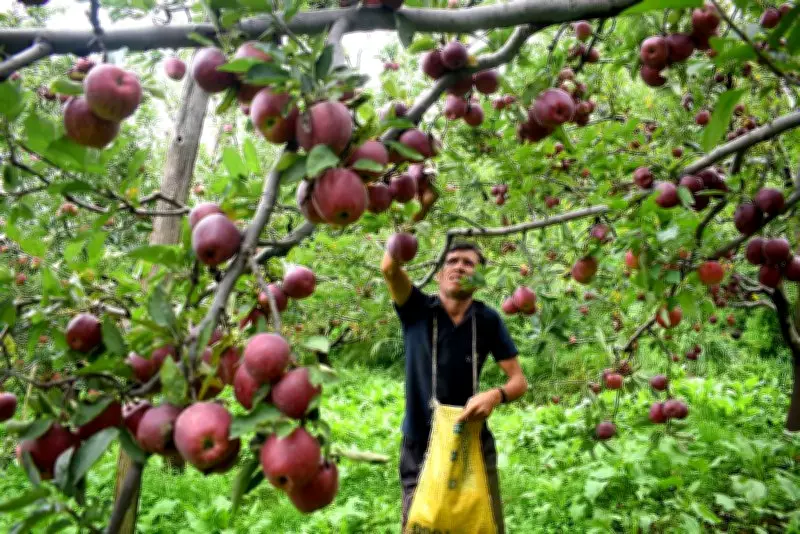
Most apple growers in the Indian Himalayan region, including Jammu & Kashmir, Ladakh, Himachal, Uttarakhand and the north-eastern states, traditionally prune their orchards during winter months from December to March. Many remain hesitant about summer pruning during active plant growth, fearing negative impacts on fruit production. However, both summer and winter pruning are essential in apple production systems and complement each other effectively.
Benefits of Summer Pruning
Summer pruning is crucial for controlling tree size, allowing more trees per unit area and reducing winter pruning workload. Managing tree size simplifies maintenance and harvesting while improving overall tree aesthetics. It also ensures adequate sunlight and air circulation, promoting healthier growth and better fruit quality. Dense tree canopies hinder fruit colour development, directly affecting marketability.
Colour and Size Determine Price
Colour, size, shape and weight determine apple market prices. Indian consumers strongly prefer striking red-coloured fruit. Instead of summer pruning, some farmers resort to unethical chemical spraying to induce colour, with unwarranted consequences. Summer pruning removes dense, overgrowing, interfering, upward-growing branches and water shoots. Canopy management also includes branch-bending, scoring, girdling and optimal fertiliser and soil moisture use to maintain ideal tree structure. These practices enhance productivity, improve fruit quality, facilitate cultural operations and help manage pests and diseases.

Additionally, summer pruning promotes flower bud formation, improves flower quality, ensures better yield the following year and helps overcome biennial bearing. It improves internal tree growth, increases water-use efficiency and soil respiration rates in the short term. During the growing season, it lowers water consumption and improves tree water status, benefiting fruit growth and offsetting potential harm from carbohydrate deficits.
How and When to Prune
Apple trees should be pruned on a smaller scale over multiple sessions during summer, from late May to mid-August. Focus on cutting back vigorous vertical shoots and water sprouts to two or three buds from their base to encourage fruiting spur growth.
Although summer pruning suppresses trunk growth annually, it leaves no detrimental effect on shoot growth, flowering or fruit set. It enhances red colour development, increases fruit flesh calcium concentration and reduces bitter pit, pre-harvest fruit drop, flesh starch ratings, water core and fruit soluble solids concentration.
To prune correctly, shorten the leader shoot by half just after a leaf node to encourage branching. Then cut back side shoots to two or three buds from the base of the current season’s growth. This promotes fruiting spur formation and controls tree spread. Improving air circulation and sunlight availability ensures a balanced structure that enhances fruit quality and overall productivity.
Cut back new shoots (laterals) longer than 20 cm from the main stem to three leaves above the basal cluster. Do not prune shoots shorter than 20 cm, as they usually produce fruit buds. Cut back new shoots from existing side shoots (sub-laterals) to one leaf above the basal cluster. Remove any upright, vigorous growth completely. If secondary growth occurs after summer pruning, cut back any regrowth in September to one leaf beyond the previous cut.
Reduces Fungal Infection Risk
Pruning during warm, dry weather decreases fungal infection risk and other diseases entering through fresh cuts. Consistent sunlight and warm conditions promote quicker wound healing, reducing infection likelihood. During hot weather, sap flow slows, lessening bleeding from cuts and making pruning less stressful for the tree.

Summer pruning also effectively manages biennial bearing, where trees produce heavy crops one year and little to none the next. By thinning excess fruit and removing vigorous shoots, summer pruning balances energy distribution between vegetative growth and fruit production. It ensures the tree does not exhaust resources in a single season, promoting more consistent annual yields. Regular summer pruning encourages fruiting spur development and maintains a stable, sustainable production cycle. It also delays leaf senescence in autumn, resulting in higher photosynthetic rates compared to late winter (February) pruning.
Avoid Autumn Pruning
Avoid autumn pruning, as it can stimulate new growth when trees prepare for dormancy. Remove only about one-third of branches at a time, focusing on crossing branches and those growing inward. Also remove shoots or buds from the trunk base. Avoid pruning during rainy weather to prevent wound infections and tree weakening.
Opening the canopy improves sunlight penetration and air circulation, reducing disease risks such as premature leaf-fall, Alternaria leaf blotch, fruit spot, powdery mildew and scab. Heavy crop load increases apple tree sensitivity to European red mite. Remove any inward-growing, crowding or imbalance-causing branches.
Common pruning mistakes can severely stress plants, stunt growth or introduce deadly diseases. Critical errors include improper cuts (flush cuts or stubs), wrong timing and removing too much foliage at once. Remove no more than 15-30 per cent of the canopy during summer pruning. Ensure all tools are clean and disinfected before use.
Pruning is both a science and an art, requiring knowledge, proper timing and technique. Done well, it promotes bud formation, improves fruit quality and increases yield the following year. However, it must be carried out carefully to prevent excessive sunlight exposure and sunburn on scaffold branches, which can cause canker diseases. In conclusion, summer pruning is an advisable cultural practice and should be an integral part of quality apple production management.





