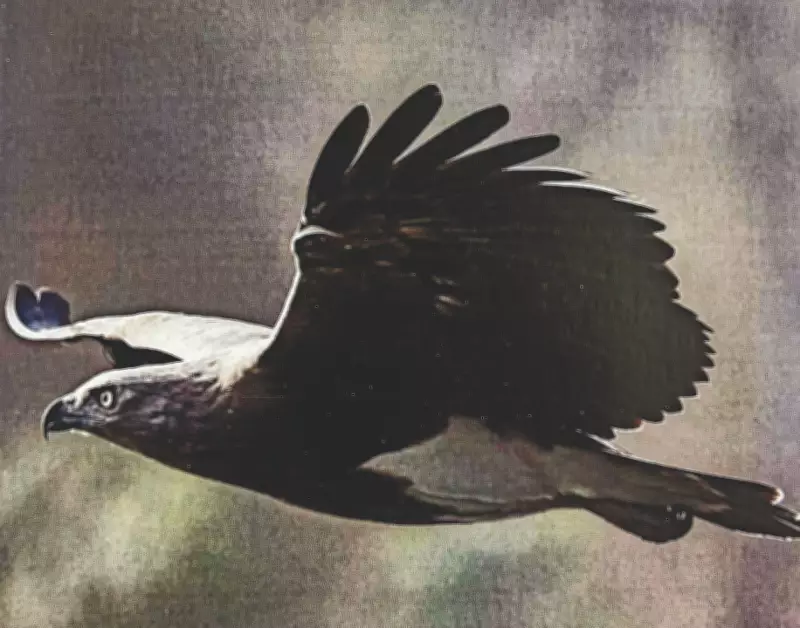
Tamil Nadu's first-ever raptor census documented 68 species of birds of prey across the state, from the forests of the Western Ghats to the grassy lowlands, establishing baseline data for long-term conservation monitoring. Conducted simultaneously as diurnal and nocturnal surveys, the exercise spanned 49 forest divisions and mobilised 3,643 participants, including forest staff, researchers from the Advanced Institute for Wildlife Conservation (AIWC), and members of the TN Raptors Research Foundation. The scale and coordination of the effort reflect the state's growing commitment to systematic wildlife documentation.
Objectives of the Census
State forest secretary Supriya Sahu stated that the census had three primary objectives: establishing baseline data for long-term monitoring, identifying raptor hotspots, and mapping current distribution patterns. "Observations of synchronised bird census from 2022 confirmed the presence of 68 raptor species," she said. "These birds occupy low densities over extensive areas owing to their large home range requirements and diverse life history traits."
Findings Across Landscapes
Observers encountered raptors across a variety of landscapes, from grasslands and open dry habitats to the forested hills of western Tamil Nadu, showcasing the birds' adaptability and the state's ecological variety. However, a cause for concern is that generalist carnivores like shikra and carrion feeders were found to be abundant, while insectivores and grassland-dependent birds like owls were low in number. The high representation of species such as steppe eagle, tawny eagle, and greater spotted eagle suggests that dry plains, agricultural mosaics, and scrub-grassland systems are critical foraging habitats for migratory and resident raptors.

Regional Highlights
Western districts such as Coimbatore, Erode, Tirupur, and Hosur recorded the highest species diversity, closely linked to their proximity to the Western Ghats and higher forest cover, while coastal districts showed lower numbers. The delta districts surprised surveyors: western districts logged 451 individual sightings and delta regions 378, suggesting that moderately diverse habitats can still sustain significant raptor populations. Districts with abundance of raptors include Tiruvarur, Nagapattinam, Thanjavur, Kanyakumari, the Nilgiris, and Erode. The Nilgiri-Eastern Ghats interface remains one of the last viable vulture habitats in the southern region.
Survey Methods
Surveys were conducted using three methods: vehicle survey, foot survey, and nocturnal survey, each capturing different ecological dimensions. Vehicle surveys reflected broader landscape-level patterns, while foot surveys revealed more localized variations. Ahead of the census, a training-of-trainers programme at the AIWC equipped 56 forest officers with species identification materials and standardised datasheets, ensuring methodological consistency across divisions.
Conservation Implications
The occurrence of greater spotted eagle, eastern marsh harrier, and other wetland-associated raptors across lowland districts suggests that Tamil Nadu forms part of a major 'Central Asian Flyway' wintering system. Migratory species using the flyway include the Eurasian sparrowhawk, pied harrier, and black baza, highlighting Tamil Nadu as a critical corridor in intercontinental bird migration.