

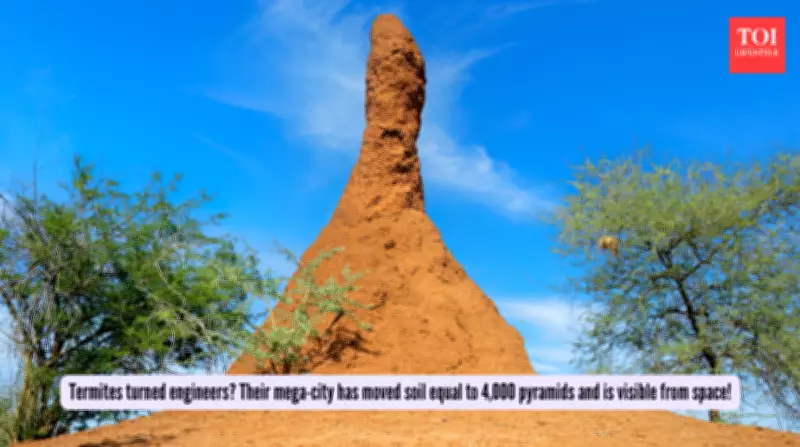
Termites: The Unseen Architects of Our Planet
For centuries, termites have been vilified as relentless homewreckers, gnawing through wooden structures and inflicting billions in property damage annually. However, a profound scientific revelation is reshaping this narrative. These diminutive insects are not mere destroyers but are, in fact, master builders and ecological engineers of extraordinary capability.
Engineering Marvels on a Grand Scale
With approximately 3,000 species thriving globally, termites live in sophisticated colonies that can number in the millions. Their primary ecological role is recycling dead plant material, transforming detritus into life-sustaining hubs. But their true genius lies in construction. Termite colonies erect monumental structures that, relative to their size, dwarf even the most ambitious human infrastructure projects.
The collective effort of these insects has moved a volume of soil comparable to 4,000 Great Pyramids of Giza. Some of their creations are so vast they are visible from outer space, marking them as one of the most significant biological engineering feats on Earth.

Anatomy of a Termite Metropolis
Often confused with ants, termites are social insects that build intricate nests within trees, wood, or underground. These are not simple mounds; they are complex, climate-controlled cities. Constructed from a mixture of soil, saliva, and feces, the resulting material is incredibly durable, with some structures standing for thousands of years.
The architecture is nothing short of brilliant. Sky-high chimneys function as natural ventilation systems, drawing in fresh air and expelling carbon dioxide and other gases. This internal airflow acts like a built-in air conditioning unit, maintaining a cool, stable temperature essential for the colony's fungus gardens and brood.
In Australia, cathedral termites construct the tallest known mounds, reaching heights of up to 8 meters. To put this in perspective, if a human were to build a structure of proportional scale, it would be equivalent to stacking four Burj Khalifa skyscrapers on top of one another.
The Brazilian Mega-City: A Space-Visible Wonder
The most staggering example of termite engineering is found in the caatinga dry forests of northeast Brazil. Here, conical mounds known as "murundus" dominate the landscape. According to reports from Discover Wildlife, these structures can stand 2.5 meters tall and 9 meters wide, spread across an area the size of Great Britain.
Built by the ancient species Syntermes dirus, over 4,000 years old, this termite mega-city is clearly visible from satellite imagery. The scale of earth moved is estimated at a staggering 10 cubic kilometers. This engineering project, executed grain by grain over millennia, represents a transformation of the landscape on a continental scale.
Nocturnal Builders and Ecosystem Engineers
The termites' work is meticulous and relentless. Under the cover of darkness, squads of up to 50 foragers emerge through temporary tunnels to harvest leaves and other organic matter. They swiftly retreat, sealing the entrances behind them to stockpile food in vast underground larders.
Their construction methods are direct and efficient. Access points are often simple, vertical drops leading to expansive subterranean tunnel networks. This relentless cycle of foraging and building sustains the colony and allows the mega-structure to grow, generation after generation.
Beyond Construction: Transforming the Biosphere
Scientists now rank termites, particularly the builders of the caatinga mounds, as the ultimate example of a single species engineering an entire ecosystem. Their impact extends far beyond erecting the tallest towers or the largest underground cities.
Termites are fundamental agents of bioturbation. They physically alter soil structure, enhance aeration, and influence water infiltration. By processing vast amounts of organic material, they play a critical role in nutrient cycling, effectively fertilizing the forests they inhabit. They modify the very air and soil, creating conditions that support diverse plant and animal life.

In conclusion, the narrative of the termite must be rewritten. They are not pests to be merely eradicated but should be recognized as some of the planet's greatest and most persistent insect engineers. Their silent, collective work over millennia has sculpted landscapes, enriched ecosystems, and created monuments to biological ingenuity that challenge our own definitions of architecture and civilization.





