Rethinking Speed: The Power of Deliberate Innovation in a Fast-Paced World
In today's achievement-oriented society, rapid execution is frequently celebrated as the primary indicator of success. However, a deeper examination of historical breakthroughs reveals that many transformative inventions emerged not from haste, but from meticulous planning, iterative refinement, and thorough polishing long before physical realization. This counterintuitive approach finds perfect embodiment in the methodology of Nikola Tesla, whose revolutionary contributions to electrical engineering were born from a disciplined practice of mental construction.
The Tesla Method: Building in Imagination Before Physical Reality
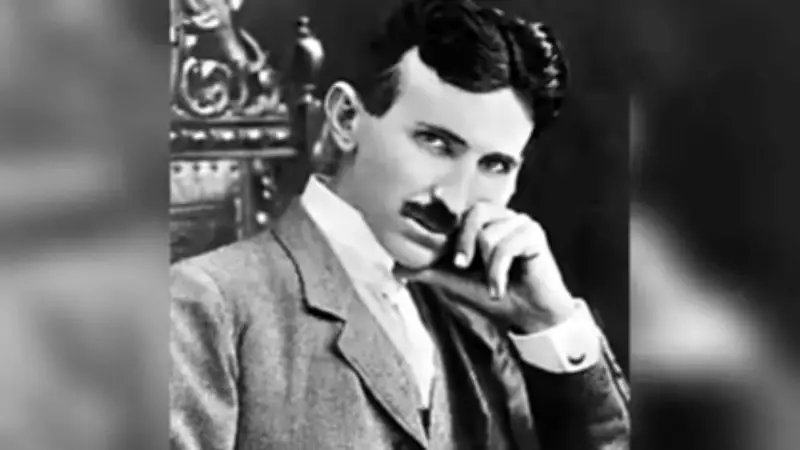
Nikola Tesla stands as one of history's most significant inventors in electrical engineering, distinguished by his unconventional problem-solving techniques. Unlike contemporaries who relied heavily on physical experimentation, Tesla developed a distinctive approach where he constructed, tested, and perfected his inventions entirely within his mind before ever touching materials or tools.
"My method is different. I do not rush into actual work. When I get an idea I start at once building it up in my imagination. I change the construction, make improvements, and operate the device entirely in my mind."

This quotation illuminates Tesla's fundamental process: a sophisticated mental workshop where designs underwent continuous evolution. He would visualize every component, simulate operations, identify potential flaws, and implement enhancements—all through cognitive visualization. This methodology significantly reduced errors during physical construction while conserving substantial time and resources.
Imagination as Scientific Instrument: Beyond Artistic Expression
While imagination is commonly associated with artistic and literary endeavors, Tesla demonstrated its critical role in scientific and engineering breakthroughs. His ability to mentally visualize complex electrical systems enabled exploration of possibilities not yet physically manifest. Through this cognitive simulation, he could observe how various components would interact, anticipate performance under different conditions, and optimize designs before material implementation.
This approach remarkably parallels modern engineering practices where digital simulations and computer modeling allow designers to test concepts virtually. Tesla's mental visualization can be viewed as a pioneering precursor to today's sophisticated simulation technologies, highlighting how imagination serves as a foundational tool for innovation across centuries.
Strategic Patience: Why Tesla Avoided Premature Physical Work
Tesla's deliberate avoidance of rushing into physical construction stemmed from strategic efficiency and precision considerations. Beginning construction without comprehensive mental preparation often leads to costly mistakes, repeated modifications, and wasted resources. By thoroughly developing concepts in his imagination first, Tesla circumvented these pitfalls, demonstrating that preparation constitutes an equally vital phase as execution in the creative process.
This emphasis on patience and thorough preliminary work underscores a crucial principle: meaningful innovation requires disciplined forethought. The time invested in mental refinement ultimately accelerates and enhances the physical realization process.
Mental Visualization as Advanced Problem-Solving Technique
Cognitive visualization provides unparalleled flexibility in conceptual exploration. Inventors can rapidly iterate through design variations, evaluate performance characteristics, and select optimal solutions without physical constraints. This process facilitates early identification of potential issues while encouraging innovative problem-solving approaches.
Tesla's alternating current (AC) systems exemplify this methodology's effectiveness. He mentally visualized intricate electrical networks, imagining current flow patterns, component interactions, and system behaviors under various scenarios. This detailed cognitive modeling enabled development of highly efficient solutions without exclusive reliance on physical prototypes.

Contemporary Relevance: Imagination's Enduring Role in Modern Innovation
Despite technological advancements enabling sophisticated digital modeling, imagination remains fundamental to contemporary innovation. Engineers, designers, and scientists continue to employ cognitive visualization to conceptualize, refine, and realize groundbreaking ideas. Tesla's methodology persists as relevant because it addresses a universal truth: successful creation requires the ability to envision what does not yet exist.
Beyond technical fields, this approach applies to diverse life domains including project planning, educational preparation, and decision-making processes. Considering multiple alternatives through mental exploration consistently leads to superior outcomes across personal and professional contexts.
Refinement Before Execution: The Core Principle
A central insight from Tesla's methodology emphasizes the critical importance of iterative refinement before implementation. He didn't merely conceive basic ideas; he continuously enhanced them through mental experimentation. This rigorous process ensured thoroughly developed designs that minimized need for substantial modifications during construction.
This principle remains applicable across numerous disciplines today. Whether in engineering, business strategy, or creative endeavors, refining concepts before execution consistently produces superior results and more efficient processes.
Additional Tesla Insights: Broader Philosophical Perspectives
Nikola Tesla's thinking extended beyond technical methodology to encompass broader philosophical views on innovation and human potential:
- "The present is theirs; the future, for which I really worked, is mine."
- "If you want to find the secrets of the universe, think in terms of energy, frequency and vibration."
- "Our virtues and our failings are inseparable, like force and matter."
- "Be alone, that is the secret of invention; be alone, that is when ideas are born."
Final Perspective: The Transformative Power of Cognitive Preparation
Nikola Tesla's methodology offers a powerful paradigm shift: innovation originates not with tools or materials, but with thought. By harnessing imagination to explore possibilities, anticipate challenges, and refine concepts, individuals can enhance their creative output across all endeavors. Tesla's approach demonstrates that time dedicated to cognitive preparation represents not delay, but strategic investment that optimizes the entire innovation process.
His enduring legacy reminds us that in our acceleration-obsessed world, deliberate imagination remains an indispensable catalyst for meaningful advancement. The capacity to visualize, refine, and perfect within the mind's workshop continues to distinguish transformative innovations from mere incremental improvements.