Tesla's Oasis Supercharger: A Solar-Powered EV Revolution in California
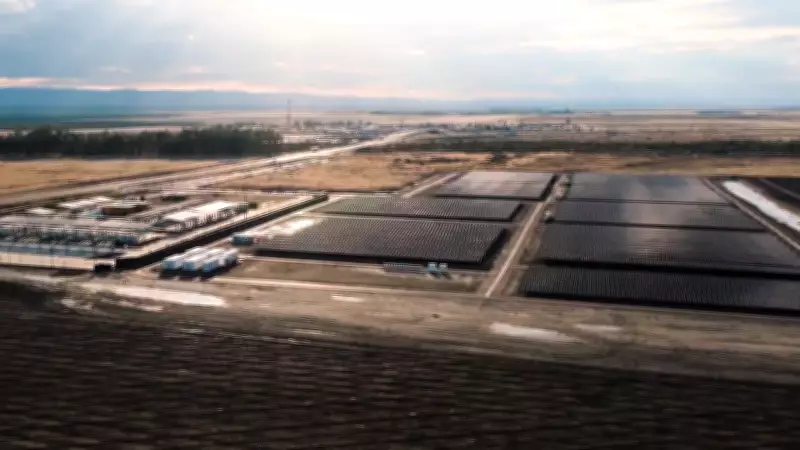
In the sun-drenched expanses of California's Central Valley, Tesla has constructed what may be the most ambitious electric vehicle charging facility ever conceived. The Oasis Supercharger, strategically located in Lost Hills along the heavily trafficked Interstate 5 corridor, spans an impressive 30 acres and integrates a massive 11-megawatt solar installation with large-scale battery storage systems.
From Charging Station to Integrated Energy Hub
Designed to accommodate hundreds of vehicles daily, with potential capacity approaching 1,000 charges, this facility represents a fundamental transformation from traditional charging stations to comprehensive energy hubs. Rather than simply drawing electricity from the conventional grid, the site generates, stores, and distributes its own power, establishing itself as a self-sustaining system engineered for the next evolutionary phase of electric mobility.
This groundbreaking project arrives at a critical juncture as electric vehicle adoption accelerates globally while charging infrastructure struggles to maintain pace. By seamlessly integrating solar generation with Megapack battery storage technology, Tesla aims to reduce dependence on traditional power grids while effectively managing high demand from long-distance travelers. The Oasis model challenges conventional assumptions about charging networks, offering a decentralized, renewable-powered solution that could fundamentally reshape how EV infrastructure is deployed in the coming decades.

Unprecedented Scale and Technical Innovation
At first glance, the Oasis Supercharger impresses with its sheer magnitude. The facility features 164 V4 Supercharger stalls, each capable of delivering up to 325 kilowatts of power, ranking it among the largest charging sites ever constructed worldwide. The layout has been meticulously designed for maximum efficiency and volume, including dedicated pull-through bays specifically for vehicles towing trailers—an often overlooked but increasingly essential feature as electric vehicle adoption expands beyond urban commuters to include recreational and commercial users.
Yet the true innovation lies not in the quantity of chargers, but in their revolutionary power source. Traditional charging stations typically draw electricity directly from the grid, frequently requiring expensive infrastructure upgrades to handle peak demand loads. The Oasis facility completely inverts this model. The site's expansive 11-megawatt solar array, distributed across ground-mounted panels and canopy structures that provide shade for parked vehicles, generates a substantial portion of the energy consumed on-site. This renewable energy is then stored in Tesla's advanced Megapack battery systems, which provide an impressive 39 megawatt-hours of storage capacity.
This sophisticated combination enables the station to operate largely independently of the conventional power grid, maintaining only a limited backup connection for additional reliability. At peak performance, the site can manage electrical loads reaching up to 15.8 megawatts, effectively functioning as a micro power plant dedicated exclusively to electric vehicle charging.
The Critical Role of Megapack Storage Technology
The Megapack battery system stands as the central component making the Oasis concept viable. Solar generation is inherently intermittent, peaking during daylight hours and diminishing to zero at night, while charging demand fluctuates according to travel patterns and seasonal variations. Without substantial energy storage capabilities, even an extensive solar installation would struggle to provide consistent, reliable power for continuous charging operations.
Tesla's Megapacks address this challenge by serving as an intelligent buffer between energy generation and consumption. During daylight hours, excess solar energy is efficiently stored within the batteries. When demand spikes or sunlight diminishes, this stored energy is released to maintain charger operation at optimal capacity. This approach not only ensures operational reliability but also significantly reduces dependence on fossil fuel-heavy grid electricity during peak demand periods.

With 39 megawatt-hours of storage capacity, the system can sustain substantial charging activity even without immediate solar input. This capability also enables the site to effectively smooth out demand spikes, such as those occurring during holiday travel surges, without overloading external infrastructure or requiring costly grid upgrades.
Strategic Location Along the I-5 Corridor
Lost Hills might initially appear as an unlikely location for such a flagship project, but its placement demonstrates careful strategic planning. The Interstate 5 highway represents one of California's most vital transportation arteries, connecting major population centers and accommodating a significant portion of long-distance travel throughout the state.
By constructing the Oasis facility in this location, Tesla addresses a critical gap in the charging network. The station is specifically engineered to handle exceptionally high throughput, substantially reducing wait times and making long-distance electric vehicle travel more practical and appealing. Its substantial scale also provides future-proofing against rising demand, ensuring that as more drivers transition to electric vehicles, the supporting infrastructure can evolve accordingly.
Furthermore, the Central Valley's abundant sunlight makes it an ideal geographical location for solar generation. High solar irradiance levels translate directly into superior energy output, enhancing both the efficiency and economic viability of the entire system.
Beyond Charging: Designing a Comprehensive User Experience
Tesla has dedicated considerable attention to user experience, transforming what could have been a purely functional charging stop into something resembling a comfortable rest hub. The solar canopies provide welcome shade from California's intense heat, while carefully landscaped areas, ample seating, and lounge-like spaces offer a more pleasant environment for drivers during charging periods.
Additional facilities including clean, app-accessible restrooms and dedicated waiting areas reflect a sophisticated understanding that charging represents not merely a technical process but a behavioral experience. As charging times—even with advanced fast chargers—remain longer than refueling conventional gasoline vehicles, comfort and convenience emerge as crucial differentiators in the competitive EV landscape.
Addressing Implementation Challenges and Complexities
Despite its considerable promise, the Oasis Supercharger is not without implementation challenges. Early user reports have indicated occasional temporary closures for maintenance, highlighting the operational complexity of managing such an advanced, integrated system. Combining large-scale solar generation, sophisticated battery storage, and high-capacity charging infrastructure introduces multiple potential points of failure and requires highly sophisticated management protocols.
These operational issues are not entirely unexpected in a first-of-its-kind deployment. In many respects, the Oasis facility serves as a live testbed where Tesla can refine its approach, identify optimization opportunities, and develop best practices before scaling this innovative model to additional locations worldwide.
A Blueprint for the Future of Energy and Mobility
What makes the Oasis Supercharger genuinely significant extends beyond its physical scale to its broader implications. By demonstrating that a high-capacity charging hub can operate substantially off-grid, Tesla challenges the fundamental assumption that electric vehicle infrastructure must remain tightly coupled to traditional energy systems.
This realization carries far-reaching consequences. In regions where grid expansion proceeds slowly or proves economically prohibitive, similar microgrid-based charging hubs could enable accelerated electric vehicle adoption. In areas blessed with abundant renewable resources, such facilities could substantially reduce reliance on fossil fuels while lowering overall transportation emissions.
Tesla's Oasis Supercharger represents more than a milestone in electric vehicle infrastructure—it constitutes a powerful statement about our collective future. By merging solar generation, advanced battery storage, and high-speed charging into a single, cohesive system, it fundamentally redefines what a charging station can become, transforming a patch of California desert into a fully functional, renewable energy powerhouse.