

Ancient Fable Meets Modern Space Race: The Tortoise and Hare on the Moon
The timeless story of the tortoise and the hare, a fable told across generations and cultures, has long served as a moral compass. Parents, educators, and community leaders have consistently used this narrative to illustrate that true success stems not merely from raw speed, but from unwavering patience, disciplined focus, and persistent effort.
This simple yet profound lesson—that slow and steady wins the race—has been applied to countless real-world scenarios, from rigorous exam preparation and navigating highly competitive job markets to building a sustainable career or mastering a complex skill. In a remarkable and unexpected twist, this centuries-old parable has now found profound relevance in the contemporary rivalry between the world's wealthiest space entrepreneurs, where the ultimate goal is no longer a terrestrial finish line, but the celestial body of the Moon itself.
From Classroom Parable to Cosmic Metaphor
What originated as a simple classroom lesson has evolved into a powerful metaphor for a modern space race, pitting two billionaire visionaries with fundamentally different philosophies about how humanity should establish permanent colonies beyond our home planet. The contrast between Elon Musk and Jeff Bezos has been a persistent topic of intense debate within the global space industry for years.

Musk, the founder of SpaceX, has built his reputation on incredible speed, rapid prototyping, and a very public acceptance of failure as a necessary step toward innovation. Bezos, the founder of Blue Origin, has constructed his space ambitions around a foundation of meticulous patience, careful systematic testing, and deliberate incremental progress. This philosophical clash came into sharp public focus recently when Musk outlined a significant strategic shift for SpaceX on social media platform X.
Musk's Lunar Vision: Speed as Strategy
Elon Musk announced that SpaceX would place greater emphasis on developing a self-sustaining city on the Moon, arguing that lunar development could advance far more rapidly than Martian colonization. His reasoning centered on practical logistics: missions to the Moon take merely days, while journeys to Mars require months and are constrained by narrow launch windows that occur only every two years.
In subsequent social media posts, Musk elaborated on his vision, describing the Moon as an ideal practical testing ground for large-scale off-world civilization. He emphasized that frequent launches and repeated landing attempts would enable SpaceX to refine construction techniques, life-support systems, and complex logistical frameworks much more quickly than would be possible on the distant Red Planet.
This approach perfectly reflects SpaceX's long-standing operational philosophy of failing fast, learning quickly, and iterating relentlessly until success becomes routine. This vision builds directly upon SpaceX's existing role within NASA's ambitious Artemis program, where the company has already secured critical contracts to develop a next-generation lunar lander. Musk's core argument remains that speed and repetition, even at the cost of early failures, are absolutely essential if humanity is genuinely serious about building permanent, self-sustaining settlements beyond Earth.
Bezos's Response: The Tortoise Strikes Back
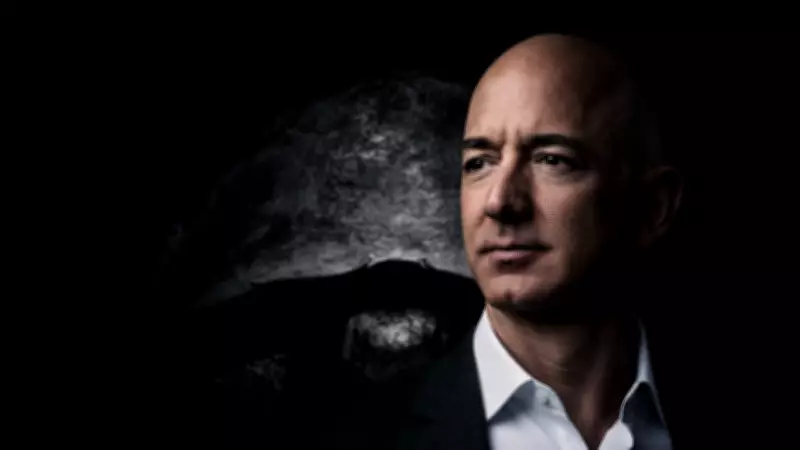
Not long after Musk's lunar remarks gained significant traction across media platforms, Jeff Bezos posted a stark, high-contrast black-and-white close-up image of a tortoise on his social media account, explicitly tagging Blue Origin. The post contained no explanatory caption, yet its symbolic meaning was immediately and universally understood by observers.
The image was widely interpreted as a direct reference to Blue Origin's long-standing Latin motto, Gradatim Ferociter, which translates to "step by step, ferociously." This visual statement appeared to strategically position Blue Origin as the deliberate tortoise in the classic fable, advancing slowly but with fierce determination toward the Moon, in direct contrast to SpaceX's faster and more aggressively experimental approach. Given the precise timing following Musk's Moon city announcement, the post was difficult to interpret as anything other than a subtle yet pointed challenge.

Rivalry Dynamics: From Jabs to Serious Reflection
Elon Musk responded initially with characteristic humor, asking "Turtle heading?" in a light-hearted jab at Blue Origin's perceived pace. He later followed with another tongue-in-cheek remark about moving slowly but ferociously, effectively leaning into the metaphor rather than rejecting its premise.
Soon after, however, Musk adopted a more serious and reflective tone. He stated publicly that Blue Origin successfully landing on the Moon before SpaceX would be perfectly acceptable to him, adding that he would sincerely congratulate the company if such an achievement occurred. He then skillfully reframed the entire debate, arguing that the real monumental challenge is not about which entity lands first, but which organization can repeatedly land massive amounts of critical equipment and human personnel to support a truly self-sustaining lunar city. From this perspective, Musk suggested, SpaceX may at times resemble the persistent tortoise more than the sprinting hare.
The Lunar Dominance Race: Beyond a Single Finish Line
This public exchange underscores a growing and fundamental contrast in how these two pioneering companies approach the grand endeavor of space exploration. Musk's overarching strategy is frequently associated with blistering speed, monumental ambition, and a willingness to learn through repeated testing and inevitable setbacks. Bezos, by direct comparison, has consistently emphasized long-term durability, absolute reliability, and building robust systems engineered to operate seamlessly over extended time horizons.
As both corporate giants pursue crucial roles within NASA's expansive lunar program, they are also competing intensely for influence, government funding, and strategic relevance in shaping the next decisive phase of human activity beyond Earth. Unlike the original fable, this is not a race with a single, clearly defined finish line. The Moon is increasingly viewed by experts as a vital testing ground rather than a final destination, with its paramount importance tied directly to what humanity can learn about sustaining a permanent human presence off our planet.
The focus has decisively shifted from achieving a one-time landing to demonstrating the sustained ability to operate repeatedly, safely, and at an industrial scale. Viewed through this lens, the tortoise-and-hare metaphor has become an incredibly useful shorthand for a space race narrative that is still dynamically unfolding. As project timelines, breakthrough technologies, and human ambitions continue to evolve, the rivalry between Musk and Bezos reflects much broader existential questions about how quickly—and how cautiously—humanity should advance as it pushes its boundaries deeper into the cosmic frontier.





