

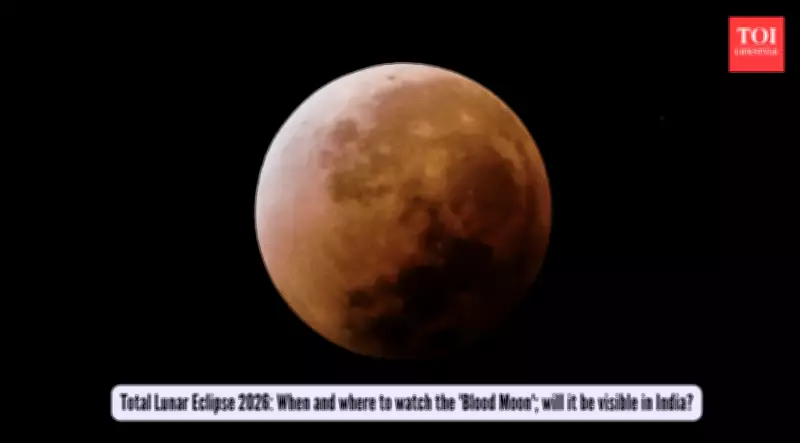
Total Lunar Eclipse 2026: A Spectacular 'Blood Moon' Event Visible in India
Eclipses stand as awe-inspiring wonders of our solar system, offering a unique glimpse into the precise alignment of the Earth, Moon, and Sun. The upcoming total lunar eclipse in 2026 promises to be a breathtaking celestial display, with the Moon transforming into a striking reddish hue known as a "Blood Moon." This event will be visible from various parts of the world, including India, providing skywatchers with a rare opportunity to witness this natural phenomenon firsthand.
Understanding Lunar Eclipses: The Science Behind the 'Blood Moon'
A lunar eclipse occurs when the Earth positions itself directly between the Sun and the Moon, casting its shadow across the lunar surface. This alignment happens exclusively during a full moon phase, blocking direct sunlight and causing the Moon to dim or adopt a vivid reddish color. Unlike solar eclipses, lunar eclipses are entirely safe to observe with the naked eye and can be seen from any location on Earth's night side. These events typically last for several hours, with the totality phase—when the Moon is fully engulfed in Earth's shadow—lasting up to approximately two hours.
When and Where to Watch the Total Lunar Eclipse in 2026
On March 3, 2026, a total lunar eclipse will be briefly visible from the night side of the Earth, with regions including India in the viewing path. Lunar eclipses are more accessible than solar eclipses, as they are visible to anyone facing the Moon during the event. According to DrikPanchang, in cities like New Delhi and Noida, the Moon will rise partially eclipsed at 6:26 PM IST, with the eclipse concluding by 6:46 PM IST. This makes it a convenient evening spectacle for observers across the country.

The 'Blood Moon' Phenomenon: Why the Moon Glows Red
During totality, the Moon takes on a rusty red appearance, often referred to as a "Blood Moon." This effect is caused by Rayleigh scattering, where Earth's atmosphere filters sunlight, bending longer red wavelengths to illuminate the shadowed lunar surface. NASA notes that this total phase will last about 59 minutes, offering a prolonged view of the captivating red glow. This natural light show is a result of atmospheric conditions and provides a stunning visual experience for viewers.
Differences Between Solar and Lunar Eclipses
Solar eclipses occur when the Moon passes between the Earth and the Sun, casting a small shadow that traces a narrow path on Earth's surface. In contrast, lunar eclipses involve the Earth's broad shadow engulfing the Moon, making them visible from a much wider area. The March 2026 event marks the first total lunar eclipse of the year and will not be fully repeated until 2029, highlighting its rarity and significance for astronomy enthusiasts.
This total lunar eclipse serves as a reminder of the dynamic interactions within our solar system. With its visibility in India and the fascinating 'Blood Moon' effect, it promises to be a memorable event for all who take the time to look up at the night sky. Remember to mark your calendars and prepare for a safe and enjoyable viewing experience under the stars.






