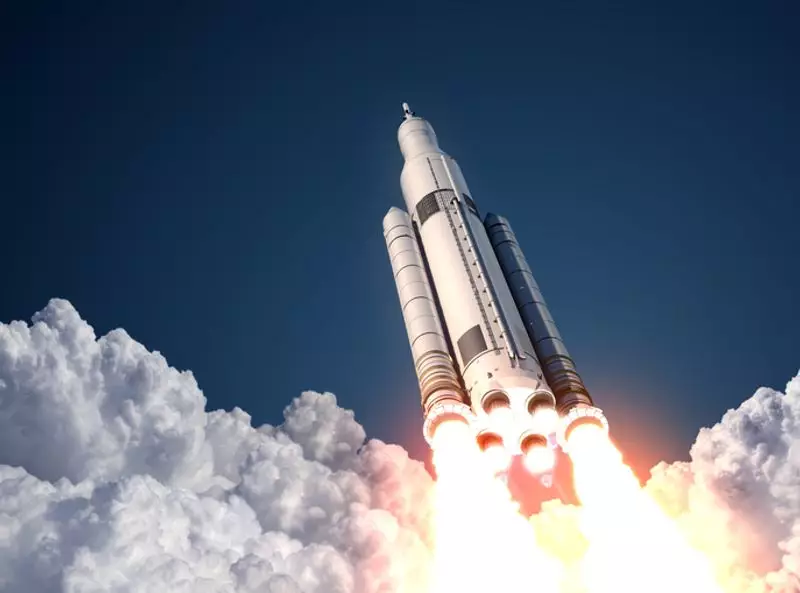
The final frontier is getting a sustainable makeover. The high-stakes race to develop fully reusable rockets is fundamentally reshaping space exploration, promising to slash costs and increase launch frequency. This technological leap, once the stuff of science fiction, is now a reality being pursued by leading space agencies and private companies worldwide. The goal is simple yet revolutionary: to recover and reuse rocket stages, just like airplanes, instead of discarding them into the ocean after a single flight.
The Pioneers of Reusability: A Global Landscape
The concept of reusable launch vehicles (RLVs) isn't new, but turning it into a reliable, operational reality has been the challenge. Today, a mix of private enterprise and national space programs is driving the innovation. The frontrunners in this domain have demonstrated varying degrees of success, each with a unique approach to conquering the physics and economics of spaceflight.
SpaceX, founded by Elon Musk, stands as the most prolific player. The company's workhorse, the Falcon 9 rocket, has redefined the industry with its first-stage booster landings. SpaceX achieved its first successful landing on solid ground in December 2015 and on a droneship at sea in April 2016. This capability has become routine, with boosters now flying more than a dozen times each. The larger Falcon Heavy and the in-development Starship—a fully reusable super-heavy launch system—represent the next ambitious steps in SpaceX's roadmap.

ISRO's Strategic Strides with the RLV-TD
India's space agency, the Indian Space Research Organisation (ISRO), has made significant and cost-effective strides with its Reusable Launch Vehicle - Technology Demonstrator (RLV-TD) program. In a landmark mission in 2016, ISRO successfully conducted the RLV-TD HEX-01 (Hypersonic Flight Experiment). The winged vehicle was launched atop a solid booster, reached an altitude of about 65 km, and then glided back at hypersonic speeds to a splashdown in the Bay of Bengal.
This critical experiment validated key technologies like autonomous navigation, guidance, control, and the reusable thermal protection system needed for atmospheric re-entry. The recent success of the RLV LEX (Landing Experiment) in April 2023 marked another major milestone. In this test, a prototype was air-dropped by a helicopter and executed a precise autonomous landing on a runway, proving the crucial final phase of return. ISRO's approach is incremental and focused on mastering the complex re-entry and landing profile for a future orbital vehicle.
Other Key Contenders and Their Achievements
Beyond SpaceX and ISRO, other entities are carving their own path. Blue Origin, founded by Jeff Bezos, pioneered vertical landing with its suborbital New Shepard vehicle. Its first successful landing occurred in November 2015. While New Shepard is designed for brief space tourism flights, its technology is foundational. Blue Origin is also developing the New Glenn, a heavy-lift orbital rocket with a reusable first stage.
Other notable efforts include Rocket Lab's attempts to recover and reuse the first stage of its small-lift Electron rocket via mid-air helicopter capture. In China, the commercial company i-Space conducted a successful test of a reusable suborbital vehicle, and the state-run program is developing reusable rocket plans. Even Europe, through the European Space Agency and entities like The Exploration Company, is now actively funding and promoting reusable launch system projects to stay competitive.
The drive for reusability is fueled by one overwhelming factor: dramatic cost reduction. Building a rocket is expensive; flying it multiple times spreads that cost over many missions. This economics can democratize access to space for more countries, private companies, and research institutions. It enables larger constellations of satellites for communication and Earth observation, more affordable deep-space missions, and the foundational infrastructure for a sustained human presence beyond Earth.

In conclusion, the reusable rocket race is in full swing, transitioning from experimental tests to operational service. SpaceX currently leads in operational orbital reusability, while ISRO has demonstrated exceptional prowess in mastering the core technologies for a future indigenous system through its pragmatic RLV-TD tests. As Blue Origin, Rocket Lab, and others advance their programs, the next decade will likely see reusable rockets become the standard, opening a new, more affordable chapter in humanity's journey to the stars.