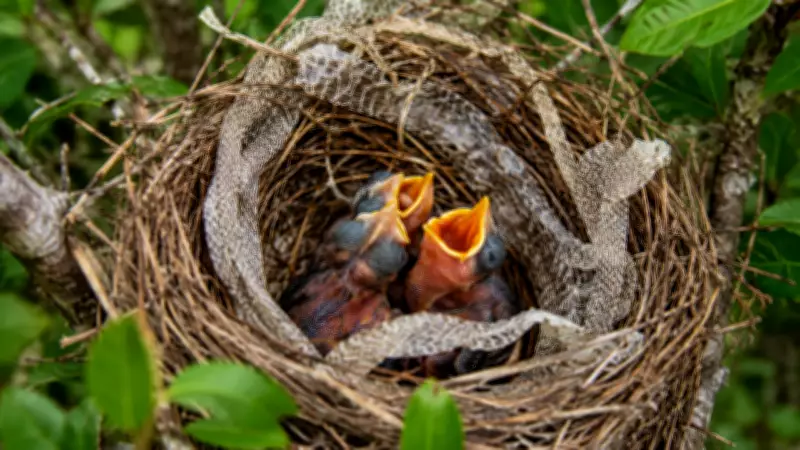
A recent study published in the February 2025 edition of The American Naturalist has shed light on a fascinating behavior observed in some bird species: the use of shed snake skin in nest construction. This practice, documented by birdwatchers since the 1800s, was long considered a curiosity. However, researchers have now uncovered the ecological motivation behind it.
The Predator Psychology Behind It
The logic is straightforward: snakes prey on small mammals like mice and squirrels, which are also predators of bird eggs and nestlings. By incorporating snake skin into their nests, birds may scare away these potential threats. According to Vanya Rohwer, lead author and curator of birds and mammals at Cornell University, cavity-nesting birds appear to rely on an evolutionary history of harmful interactions between small predators and snakes. The skin signals danger, deterring creatures that would otherwise ransack the nest.
While not foolproof, this strategy can make a mouse or squirrel think twice before approaching.

Data Points to Cavity Nesters Specifically
A review of literature found that 78 species from 22 families use shed snake skin in nest construction, with all but one being passerines (perching birds). Notably, the proportion of nests with snake skin is roughly 6.5 times higher in cavity-nesting species than in open cup-nesting species. This suggests birds make calculated choices based on their specific vulnerabilities. Cavity nests face different predator pressures than open nests, and the snakeskin deterrent appears more effective for the former.
What This Actually Means
Researchers tested four hypotheses: reducing nest parasites, altering microbial communities, social signaling, and predator deterrence. The strongest support was found for the predation hypothesis. Snake skin primarily functions as a predator deterrent, not for other speculated reasons.
The broader takeaway, as Rohwer noted, is that birds are not randomly selecting nesting materials. Many questions remain about this behavior, and the study underscores the need for further research into how and why birds choose their materials. This is sophisticated animal behavior—birds solving specific problems with specific solutions, even if those problems are ones most humans never notice.