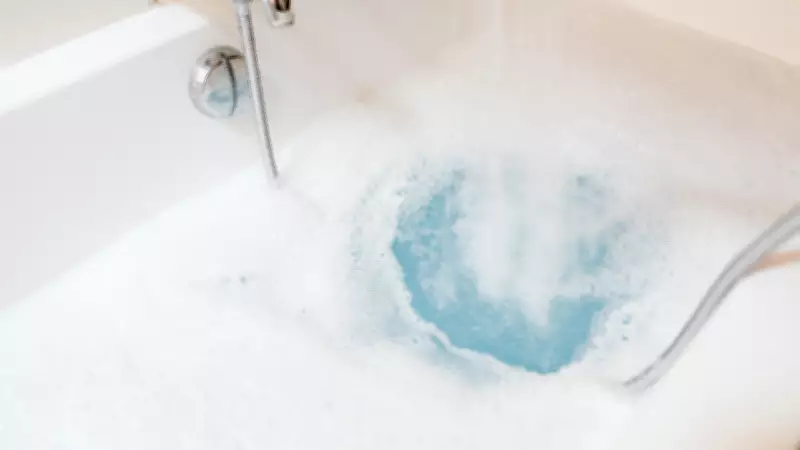
The Science Behind Soap Foam's White Color: Light Scattering Explained
At first glance, soap foam appears deceptively simple—light, airy, and typically white. However, beneath its frothy surface lies a complex interplay of physics and optics that transforms clear soap solution into opaque white foam. This phenomenon has intrigued scientists for decades, revealing fundamental principles about how light interacts with matter.
Why Soap Foam Turns White: The Physics of Light Scattering
The transformation from clear soap solution to white foam occurs due to a process called light scattering. When light encounters soap foam, it doesn't simply pass through or reflect in one direction. Instead, it undergoes multiple scattering events within the intricate network of bubbles and liquid films.
According to the American Physical Society, when light bounces repeatedly in all directions within the foam structure, different wavelengths of visible light mix together, creating the perception of white light. This same principle explains why clouds, milk, and sea foam appear white despite lacking inherent color.

From Clear Solution to Opaque Foam: The Transformation Process
One of the most striking observations is the dramatic difference between liquid soap and its foamed counterpart. The soap solution in its liquid state remains transparent because light passes through with minimal scattering. However, when agitated with air during handwashing or other processes, everything changes:
- The solution transforms into a complex network of air bubbles
- Thin liquid films form around each bubble
- Light rays encounter multiple surfaces and interfaces
- Increased scattering creates the opaque white appearance
Research published in the Journal of Colloid and Interface Science confirms that foam's structure—gas bubbles separated by liquid films—significantly increases light scattering compared to the liquid phase.
How Bubble Size Affects Foam Color and Appearance
Not all foam appears equally white. Variations in bubble size create differences in brightness and hue:
- Smaller bubbles create more scattering interfaces, resulting in brighter white foam
- Larger bubbles produce less uniform scattering, sometimes appearing slightly grayish
This relationship connects to Mie Scattering theory, which describes how particles of different sizes interact with light. Studies from the University of St. Andrews demonstrate that as bubble size approaches the wavelength of visible light (approximately 400-700 nanometers), scattering intensity increases dramatically. This explains why thick, fine-bubbled foam appears particularly bright white.
Rainbow Colors in Single Bubbles vs. White Foam
Observant viewers might notice rainbow patterns on individual soap bubbles, seemingly contradicting the white foam phenomenon. This occurs due to thin film interference—a different optical effect where light reflects from both the inner and outer surfaces of a bubble's film, creating colorful interference patterns.
In foam, however, the constant scattering of light among numerous bubbles prevents these interference patterns from becoming visible. As researchers at the University of Cambridge's Royal Society of Chemistry explain, interference colors only appear when films are isolated, which doesn't occur in multi-bubble foam structures.
Everyday Examples of Similar Light Scattering Phenomena
Soap foam isn't unique in its light-scattering behavior. Several common materials exhibit similar optical properties:
- Milk: Fat droplets scatter light throughout the liquid
- Clouds: Water droplets scatter sunlight in all directions
- Sea foam: Air bubbles trapped in seawater create white appearance
All these examples demonstrate diffuse reflection, where light scatters in multiple directions rather than reflecting at a single angle.
Practical Applications and Scientific Importance
Understanding soap foam's optical properties extends beyond mere curiosity. This knowledge has practical applications across multiple industries:

- Food science: Optimizing texture and appearance of whipped products
- Materials science: Developing lightweight foams with specific optical properties
- Environmental science: Analyzing ocean foam and its ecological implications
By studying how light interacts with foam structures, scientists can improve product design and gain insights into natural phenomena. Colloid science research emphasizes that foams serve as valuable models for understanding complex interfaces and light-matter interactions.
The Simple Wonder of Complex Physics
What appears as ordinary white soap foam actually represents a sophisticated demonstration of physical principles in action. The color emerges not from pigments but from structural interactions between light and matter.
Next time you wash your hands or observe soap bubbles, remember that this simple white foam contains a universe of physics—where structure, light, and perception combine to create an everyday marvel of science.