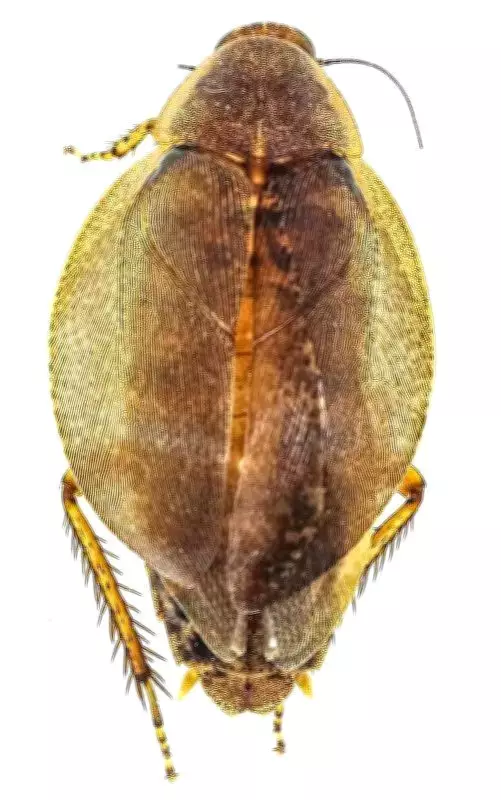
In a significant advancement for Indian biodiversity research, scientists from the Zoological Survey of India (ZSI) have created the country's first and largest DNA barcode reference library for cockroaches. This breakthrough has revealed several previously undocumented and endemic lineages that are found nowhere else in the world.
Study Published in Zootaxa
The research, published in the international taxonomy journal Zootaxa, indicates that India's hidden cockroach diversity is far greater than previously recognized. The collaborative effort involved scientists from ZSI's Western Regional Centre in Pune, Southern Regional Centre in Chennai, and Prof. Ramkrishna More College. The team generated over 100 high-quality DNA barcodes, significantly altering the understanding of these ancient insects.
Ecological Role of Cockroaches
Scientists emphasize that cockroaches are often wrongly stereotyped as household pests, while the majority of wild species are harmless to humans and play a crucial ecological role. Wild cockroaches help decompose organic matter, recycle nutrients into the soil, and support complex forest food webs. Due to their sensitivity to environmental changes, they also serve as important bioindicators of ecosystem health.

DNA Barcoding Technology
To uncover this hidden world, researchers used DNA barcoding technology, which identifies species using short, standardized DNA sequences. By blending modern molecular techniques with traditional taxonomy, the study resolved long-standing classification arguments and mapped out previously overlooked evolutionary lineages. The findings also suggest that some endemic lineages may have Gondwanan biogeographic origins, tracing their roots back to the time when India was part of the southern supercontinent Gondwana.
Expert Opinions
Dhriti Banerjee, director of ZSI, said, "The study highlights the growing power of DNA barcoding as a globally recognized tool for uncovering hidden species diversity, resolving taxonomic ambiguities, and documenting poorly known groups such as cockroaches." According to lead author Shabnam, the barcode library will serve as an important reference tool for global biosecurity, agricultural pest identification, ecological monitoring, and future genomic studies on Indian insects.
Basudev Tripathy, head of Office, ZSI, WRC, Pune, added, "DNA barcoding is emerging as a rapid and reliable tool for species identification, complementing conventional taxonomy, provided that reference barcode libraries are accurately validated and authenticated."
Future Implications
The ZSI research team noted that this study marks a significant step towards constructing a comprehensive DNA barcode reference library for India's insect population. This is an urgent necessity to safeguard and document the nation's rich biological heritage before it is altered by climate change and habitat loss.