

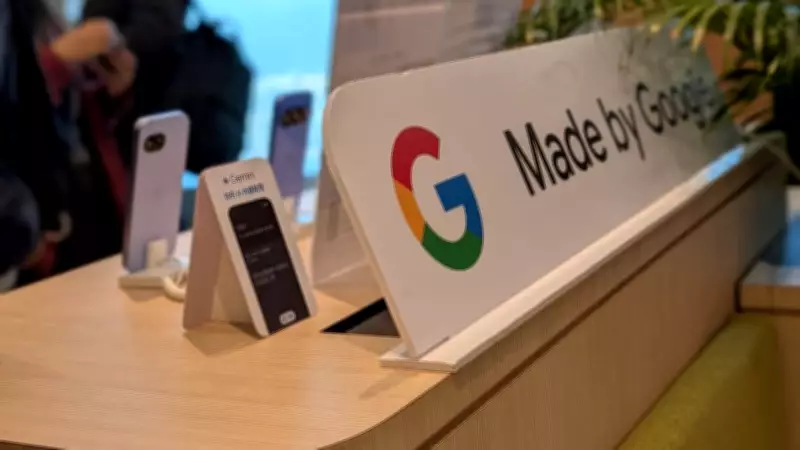
Inside Google's Secret Taipei Hub: How the Pixel 10 is Bridging the Gap with Apple's iPhone
Nestled in the TPark campus of New Taipei City, Taiwan, lies Google's largest hardware engineering hub outside the United States. This sprawling facility, a 45-minute drive from Taipei's iconic financial district, is the clandestine nerve center where the future of Pixel devices is meticulously crafted. Here, in labs dedicated to core hardware engineering and development testing, features for Pixel phones, Pixel Watches, and Pixel Buds are first designed and prototyped.
Why Pixel Matters in a Crowded Market
Despite holding less than 3% of the global smartphone market share, Pixel is recognized as the fastest-growing brand in a sluggish market. Google's ambition with Pixel transcends mere sales figures. Instead, it aims to showcase the pinnacle of Android software and Artificial Intelligence, integrated into hardware that is distinctly Google. This sets Pixel apart from Android licensees like Samsung and Xiaomi, even as those companies later adopt some Pixel-first features.
Venkat Rapaka, Vice President of Product Management for the Pixel Ecosystems at Google, emphasized the strategic depth behind Pixel's development. "Silicon is one of the hardest things to get right because you are looking many years ahead," he explained. "You have to put all of that together, take an educated guess about where the world will be, and then design silicon that's ready when all of those pieces come together."

The Full-Stack Advantage: Hardware, Software, and AI
Google occupies a unique position with Pixel, leveraging its control over Android, custom Tensor processors, and Gemini AI models. This full-stack integration allows for a seamless, iterative collaboration across hardware, software, and silicon. Rapaka highlighted that this approach enables multi-year planning while remaining responsive to evolving technologies and user expectations.
Erik Kay, Vice President of Engineering for Android Platforms at Google, described the bidirectional influence between hardware and software. "There's often a desire to solve a problem in software, which then leads to requests to the hardware team," he said. "Sometimes it works the other way around. It really goes both ways, but the key piece is hardware because it has a multi-year development lifecycle."
AI as the Centerpiece of the Pixel Experience
While smartphone design has plateaued, Google's pivot toward artificial intelligence is making Pixel phones fundamentally different with each generation. AI is not just a buzzword for Google; it's a foundational tool integrated into the user experience. Features like Circle to Search, AI-powered theft detection, and automated scam detection exemplify this seamless integration.
Pixel phones boast exclusive AI-driven capabilities, such as Magic Cue, which proactively surfaces relevant information from apps, and Camera Coach, which uses generative AI to assist with photography. These features, powered by Tensor chips and deep AI research, remain unique to Pixel devices, underscoring Google's commitment to premium differentiation.
Pixel's Role in the Android Ecosystem
Pixel serves as the heartbeat of the Android ecosystem, positioned at its center. With partners like Samsung and Motorola relying on Google for key services and AI features, Google gains a strategic advantage as AI goes mainstream. Even as Apple collaborates with Google on Gemini models, Rapaka affirmed that exclusive Pixel experiences will persist to maintain this differentiation.
Google's vision extends beyond Pixel, aiming for an open Android ecosystem where devices connect naturally. Kay noted efforts to expand AirDrop-style support across Android devices, enhancing interoperability with Apple products. "We spent a lot of time and energy making sure we could build something that was compatible not only with iPhones, but also with iPads and MacBooks," he said.
The Future of Smartphones and Pixel's Trajectory
Despite speculation about smart glasses ending the smartphone era, Rapaka asserted that phones are here to stay. "Phones are so good at so many things. They are the Goldilocks form factor," he stated, predicting that devices will become more autonomous and context-aware.

Google continues to invest heavily in Pixel, with the Tensor chip now in its fifth generation, developed in-house with Taiwan Semiconductor Manufacturing Co. This mirrors Apple's approach, highlighting Google's hardware ambitions. However, the challenge remains: convincing consumers to choose Pixel over iPhones or Samsung devices.
As Apple thrives without a clear AI strategy and OpenAI explores AI-based devices, Google's Pixel 10 series represents significant progress. Yet, whether Pixel can transcend its niche appeal to become mainstream depends on continued innovation and strategic execution in a fiercely competitive market.
