Nothing Phone (4a) Review: A Masterclass in Mid-Range Design and Performance
Every year, Nothing enters a market saturated with capable Android phones and somehow captures attention. It's a remarkable feat. The Phone (4a) is the latest effort to achieve this—arriving when the mid-range segment is more competitive and capable than ever.
A Phone That Commands Attention Without Effort
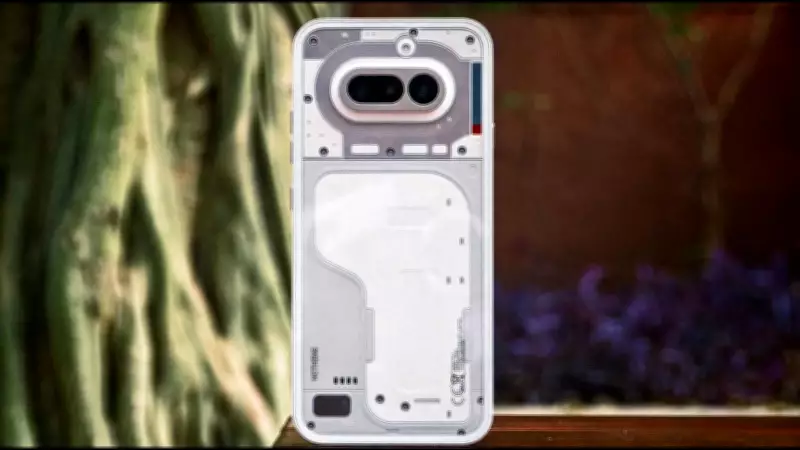
Starting at Rs 31,999, the Phone (4a) faces intense competition. Brands are bombarding buyers with specifications, and Nothing's own lineup has grown complex. Yet, this phone stands out with a transparent back, 63 flashing LEDs, and a belief that good design matters. It mostly succeeds.
The white model features clean lines, deliberate geometry, and a back that proudly showcases its uniqueness. Nothing's transparent aesthetic is now in its fourth generation, and it remains fresh. The Phone (4a) follows this visual language—exposed geometry, intentional screws, battery outlines visible through clear glass—but feels more refined. The camera housing sits higher, creating a cleaner vertical flow, while the see-through section has softer, rounded edges. On the white variant, it resembles a prop from a futuristic film where beauty wasn't forgotten.

The pink model, however, steals the spotlight—a soft metallic blush that looks stunning in photos. Clearly designed with social media in mind, it's a smart move targeting budget phone buyers in 2026. With a glass back, polycarbonate frame, and IP64 rating, it feels premium despite its specs. Nothing claims 34% better bend resistance than the Phone (3a), and it shows no flex under pressure. The IP64 rating is official, but internal tests survived a 25cm submersion for 20 minutes, exceeding expectations.
Glyph Bar: From Gimmick to Genuine Feature
The Glyph Bar replaces old LED strips with 63 mini-LEDs in six addressable zones, reaching 3,500 nits—blinding in dim rooms. It's brighter, smarter, and more useful than ever. You can set flash patterns for contacts, track Google Calendar meetings, monitor Uber rides, or use it as a volume indicator. While still partly a gimmick, it's evolving into a feature. The red recording indicator, inspired by film cameras, adds a cool touch.
The Essential Key has moved to the left side, away from power and volume buttons, making it easier to find by feel—a small but overdue fix.
Display That Delivers Excellence
The display addresses last year's biggest complaint. Nothing upgraded resolution from Full HD+ to 1.5K (1224 x 2720, 440 PPI) while keeping the 6.78-inch size. Text is pin-sharp, and Nothing's custom UI looks perfect on this high-density screen.
With 4,500 nit peak brightness, the 1,600 nit outdoor mode ensures readability in direct sunlight. The adaptive refresh rate (30-120Hz via LTPS) saves battery by scaling intelligently. The 2,160Hz PWM dimming reduces screen flicker, benefiting those sensitive to low brightness. Colors are expressive in the default "Alive" preset but more accurate in "Standard." Contrast is excellent, with genuinely black blacks, making content viewing feel like a steal at this price.
Stereo speakers are competent—loud and clear for videos. The inclusion of aptX Adaptive support enhances audio detail and spatial resolution with compatible headphones.
Smooth Performance on a Budget
The Snapdragon 7s Gen 4 chip won't impress benchmark enthusiasts, but daily use—multitasking, scrolling, app switching, photo shooting, video watching—is smooth and responsive. Nothing paired it with faster storage: 47% quicker reads and a 380% jump in write speeds, benefiting app installations and file saves. The RAM Booster extends effective memory to 20GB, aiding heavy multitasking.
Battery life is a strong suit. The 5,080mAh cell (5,400mAh in India) easily lasts a full day, with reviewers often having charge left the next morning. Nothing claims 17 hours of mixed usage. The 50W wired charging reaches 50% in 22 minutes and full charge in 64 minutes. Wireless charging is absent, but at this price, it's hard to feel shortchanged.

Software That Shines
Nothing OS 4.1 on Android 16 is the most design-coherent Android skin available. Everything—fonts, widgets, icons, animations, haptic feedback—feels unified and intentional. Bloatware is minimal, and the keyboard's tactile feedback surpasses most phones under Rs 30,000. The software stays out of your way, a bar many budget phones fail to meet.
The Essential AI suite has matured. Essential Space organizes screenshots, voice memos, and links automatically. Essential Search finds contacts, photos, messages, and apps from a single input. Essential Voice (via OTA post-launch) transcribes speech into clean text, strips filler words, adapts tone, and supports 12 languages including Hindi. Nothing's AI is ambient, working quietly in the background without intrusion.
Camera: A Tale of Two Lenses
Nothing made a significant camera upgrade, focused on the telephoto. The Phone (4a) replaces the basic 2x lens with a 50MP tetraprism periscope (same Samsung JN5 sensor as the flagship Phone 3), offering 3.5x optical zoom, 7x lossless zoom via sensor cropping, and up to 70x digital zoom. At 3.5x, results are clean, detailed, and competitive for the price. Portraits at this zoom length (equivalent to 80mm) look particularly good. At 7x, it remains useful; beyond that, expectations should adjust.
The main 50MP Samsung GN9 wide camera is another strong performer. Its large 1/1.57" sensor captures 64% more light than common 1/1.95" sensors, producing sharp, naturally exposed images in daylight. The TrueLens Engine 4, co-developed with Google, processes 13-frame RAW bursts for Ultra XDR capture, improving highlight and shadow detail. However, it struggles with focusing in low light.
Low-light photography shows limitations. Night mode works but processes slowly, blurring moving subjects. Artificial lighting can cause inconsistent color balance. The 8MP Sony ultra-wide is the weakest link—softer edges, narrower dynamic range, and mismatched colors. Many reviewers avoid it after dark; in bright conditions, it's merely adequate.
Video tops at 4K 30fps with OIS, EIS, and AI anti-shake for smooth footage. Slo-mo is available at 1080p 120fps. The 32MP front camera handles selfies and video calls without over-beautifying, offering a natural look.
Verdict: Buy Without Second-Guessing
The Nothing Phone (4a) is the best version of Nothing's budget line—a phone that looks expensive, runs cleanly, lasts all day, and takes good photos in most situations. The periscope camera closes a gap on pricier competitors, the display is segment-leading, and the software excels.
Weaknesses exist: low-light photography is average, the ultra-wide is subpar, and the 5,080mAh battery (only 80mAh more than last year) is unremarkable amid 6,500mAh rivals. The Phone (4a) Pro offers a better main camera, Snapdragon 7 Gen 4 chip, and circular Glyph Matrix at Rs 39,999—Rs 9,000 more.
For most buyers at this price, stretching isn't an option. The Phone (4a) doesn't demand it, delivering a complete, well-built phone for those seeking intentional design. Nothing has made this argument for four generations; the Phone (4a) makes it convincingly.
Our rating: 4/5