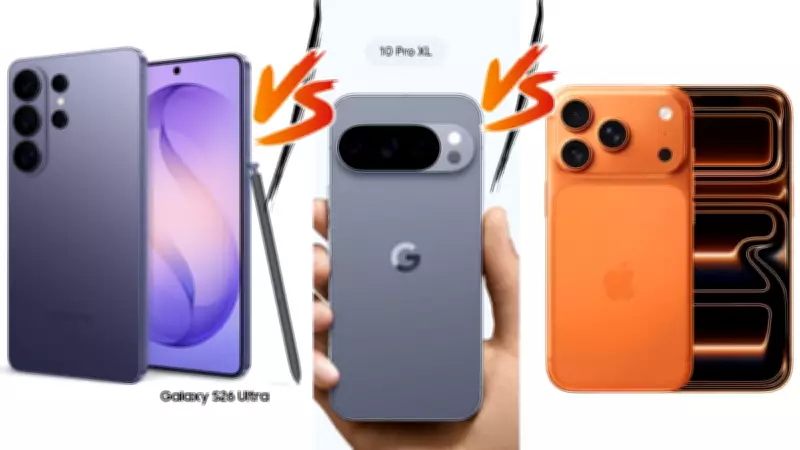
Samsung Galaxy S26 Ultra vs Pixel 10 Pro XL vs iPhone 17 Pro Max: The Ultimate 2026 Flagship Race
The smartphone industry is poised for a monumental clash in 2026, with three tech titans—Samsung, Google, and Apple—set to unveil their most advanced devices yet. The Samsung Galaxy S26 Ultra, Google Pixel 10 Pro XL, and Apple iPhone 17 Pro Max are expected to redefine flagship standards, sparking intense debate over which will emerge victorious. This comprehensive analysis delves into their anticipated specifications, innovative features, and overall performance to determine the frontrunner in this high-stakes competition.
Design and Display: A Battle of Aesthetics and Technology
Each contender brings a unique design philosophy to the table. The Samsung Galaxy S26 Ultra is rumored to feature a sleek, titanium frame with a nearly bezel-less Dynamic AMOLED 3X display, boasting a 6.9-inch screen and a groundbreaking 240Hz refresh rate for unparalleled smoothness. In contrast, the Google Pixel 10 Pro XL is expected to emphasize minimalist elegance with a ceramic back and a 6.8-inch LTPO OLED panel, offering adaptive refresh rates up to 144Hz for optimized battery efficiency. Meanwhile, the Apple iPhone 17 Pro Max is anticipated to continue its premium build with aerospace-grade aluminum and a 6.7-inch Super Retina XDR display, enhanced by ProMotion technology that dynamically adjusts up to 120Hz. All three models are likely to support advanced HDR standards and peak brightness levels exceeding 3,000 nits, ensuring vibrant visuals in any lighting condition.
Performance and Hardware: Powering the Future
Under the hood, these flagships promise to deliver exceptional performance. The Samsung Galaxy S26 Ultra is speculated to run on the next-generation Exynos 2600 or Snapdragon 8 Gen 5 chipset, coupled with up to 24GB of RAM and storage options reaching 2TB, making it a powerhouse for multitasking and gaming. The Google Pixel 10 Pro XL is projected to integrate the custom Tensor G5 processor, optimized for AI-driven tasks and machine learning, with configurations up to 16GB of RAM and 1TB of storage. On the other hand, the Apple iPhone 17 Pro Max is expected to debut the A19 Bionic chip, renowned for its industry-leading efficiency and speed, paired with up to 12GB of RAM and 2TB of storage. Early benchmarks suggest all three will handle demanding applications and augmented reality experiences with ease, though thermal management and battery optimization could be key differentiators.

Camera Capabilities: Capturing Perfection
The camera systems are set to be a major battleground. The Samsung Galaxy S26 Ultra is rumored to feature a quad-camera setup with a 200MP primary sensor, supported by periscope telephoto lenses offering up to 15x optical zoom and advanced computational photography for low-light excellence. The Google Pixel 10 Pro XL is anticipated to leverage its AI expertise with a triple-camera array, including a 50MP main sensor and enhanced Night Sight capabilities for stunning detail in challenging environments. The Apple iPhone 17 Pro Max is expected to upgrade its triple-camera system with larger sensors and improved optical image stabilization, along with new software features for professional-grade video recording. All models are likely to introduce innovations in portrait mode, macro photography, and real-time editing tools, pushing the boundaries of mobile imaging.
Battery Life and Charging: Endurance and Speed
Battery performance will be crucial for users. The Samsung Galaxy S26 Ultra is speculated to house a 6,000mAh battery with support for 100W wired fast charging and 50W wireless charging, ensuring rapid power-ups and all-day usage. The Google Pixel 10 Pro XL is expected to include a 5,500mAh battery with 65W wired charging and 30W wireless charging, focusing on efficiency through adaptive battery technology. The Apple iPhone 17 Pro Max is anticipated to feature a 5,000mAh battery with 45W wired charging and 25W MagSafe wireless charging, complemented by iOS optimizations for extended longevity. Fast charging protocols and reverse charging capabilities may also play a role in differentiating these devices.

Software and Ecosystem Integration
Software experience will vary significantly. The Samsung Galaxy S26 Ultra will likely run on Android 16 with One UI 8, offering deep customization and integration with Samsung's ecosystem of wearables and smart home devices. The Google Pixel 10 Pro XL is expected to showcase pure Android 16 with exclusive AI features and seamless Google services integration, such as enhanced Assistant functionalities. The Apple iPhone 17 Pro Max will operate on iOS 20, providing a cohesive ecosystem with other Apple products, including MacBooks and AirPods, along with regular security updates. Each platform's approach to privacy, app availability, and user interface will influence consumer preference.
Price and Value Proposition
Pricing is anticipated to be competitive yet premium. The Samsung Galaxy S26 Ultra might start at around $1,499, offering high-end specs at a relatively accessible price point. The Google Pixel 10 Pro XL could be priced from $1,299, positioning it as a value-oriented flagship with strong AI capabilities. The Apple iPhone 17 Pro Max is expected to command a premium, potentially starting at $1,599, justified by its ecosystem and brand loyalty. Factors like warranty, after-sales support, and trade-in programs will also impact the overall value for consumers.
Conclusion: Who Wins the 2026 Flagship Race?
Determining a clear winner depends on user priorities. The Samsung Galaxy S26 Ultra appears to lead in raw power and display technology, making it ideal for tech enthusiasts and gamers. The Google Pixel 10 Pro XL shines with its AI integration and software purity, appealing to those who value smart features and photography. The Apple iPhone 17 Pro Max excels in ecosystem cohesion and performance efficiency, catering to loyal Apple users. Ultimately, the 2026 flagship race is set to be fiercely contested, with each device offering unique strengths that could sway the market. As launch dates approach, further details will refine this comparison, but one thing is certain: consumers are in for an exciting year of technological innovation.