

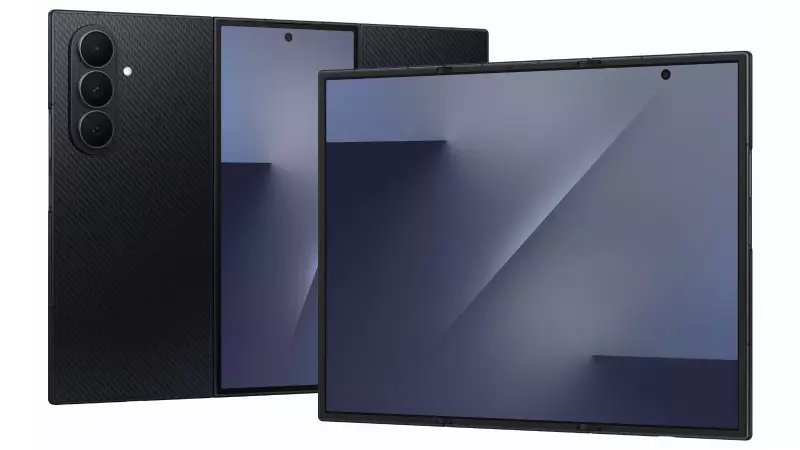
In a surprising revelation, Samsung Electronics is reportedly selling its most advanced foldable smartphone, the Galaxy Z TriFold, at a financial loss. This strategy highlights the immense cost and complexity behind cutting-edge foldable technology, even at premium prices.
An Engineering Marvel, Not a Cash Cow
According to a report from South Korean outlet The Bell, cited by 9to5Google, Samsung is consciously pricing the recently launched Galaxy Z TriFold below its actual production cost. The company is choosing to absorb the loss on each unit rather than targeting immediate profitability. This positions the device not as a mass-market product but as a special-edition showcase of engineering prowess aimed at early adopters and tech enthusiasts.
Samsung executives have openly acknowledged this approach. At the device's launch event in South Korea, Samsung Electronics Korea vice president Lim Sung-taek described the Z TriFold as a product for early adopters. He cited significant cost pressures, particularly around memory components, and stated that difficult pricing decisions were made to ensure the product could reach consumers.

The High Cost of Folding Tech
The financial strain is multifaceted. A worldwide shortage of memory components, driven largely by soaring demand from the Artificial Intelligence sector, has increased costs. Furthermore, a limited supply of key RAM has exacerbated the issue. The advanced hardware required for a triple-folding mechanism carries a substantial price tag, squeezing Samsung's profit margins to the point of loss, despite the phone's ultra-premium retail price.
In its home market of South Korea, the Galaxy Z TriFold carries a price tag of 3.59 million South Korean Won (roughly $2,500), making it the most expensive smartphone Samsung currently offers. When folded, the device is 12.9mm thick, which is 4.7mm thicker than the Galaxy S25 Ultra and slightly thicker than the Z Fold 7, though closer in size to the Z Fold 6.
Future Implications and Global Rollout
This situation underscores the significant gap between consumer pricing and the true cost of pioneering foldable technology. While selling a flagship at a loss is unusual, it is not unprecedented in the tech industry. Companies often launch products like gaming consoles at a loss initially, banking on future production efficiencies and ecosystem revenue to eventually turn a profit.
For Samsung, the strategy with the Z TriFold raises questions about how future, more refined versions could be priced sustainably. For now, consumers outside South Korea will have to wait to see if this experiment pays off. The Galaxy Z TriFold is expected to arrive in the United States in early 2026. While its international pricing has not been announced, it is unlikely to be any more affordable than its Korean counterpart, if the current cost structure holds.
The limited market rollout of the Z TriFold thus finds a clear explanation: it is a statement piece, a bold demonstration of what is technically possible, even if it means selling at a loss in the short term.






