From Touch to Swipe: How Smartphones Reshaped Our Hands and Sparked a Craft Revival
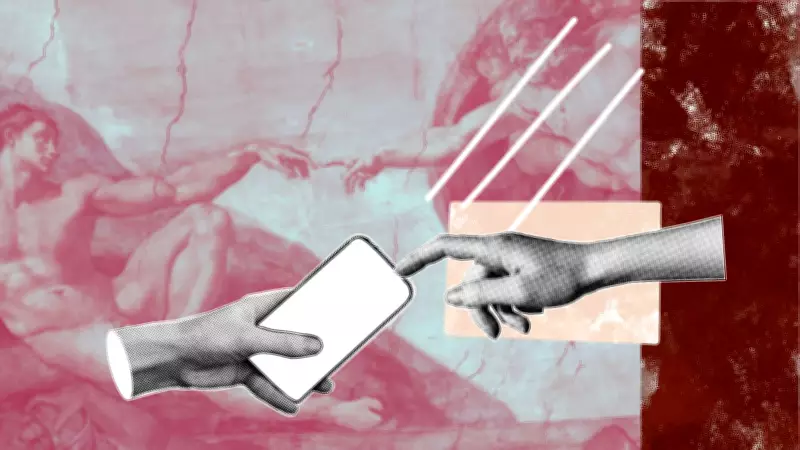
In the 1500s, Michelangelo's Creation of Adam captured the spark of life through the almost-touch of two fingertips. Fast forward to January 9, 2007, when Steve Jobs unveiled the iPhone, declaring, "We're going to use our fingers... It works like magic." This marked a pivotal shift from tactile buttons to smooth screens, transferring responsibility from our hands to our devices.
The Evolution of Touch: From First Sense to Digital Interface
Touch is one of the first senses we develop, preceding sight and speech. As Margaret Atwood wrote in The Blind Assassin, "It is the first language and the last, and it always tells the truth." Before words and algorithms, cognition was built through touch. Writing by hand, for instance, creates neural pathways that aid memory and deliberate thinking.
Neuroscientist Audrey van der Meer notes that children learning via tablets struggle to distinguish similar letters because they haven't physically felt their formation. This highlights how our hands teach our brains to think, a process now disrupted by digital interfaces.

The Modern Hand: Swiping, Tapping, and Digital Disconnection
Today, our dominant gestures involve less hand engagement—swiping and tapping replace grasping and crafting. Our phones have become the primary vessel through which we touch the world, merging with our oldest tool: the finger. This shift has led to a hyperreality where ideas feel two-dimensional and intangible.
A personal anecdote illustrates this: a friend once remarked on the decline of my handwriting, recalling my youthful obsession with penmanship. This prompted a return to hand-hobbies, only to find fingers fumbling with threads and paintbrushes, revealing the physical toll of smartphone use—dents in palms, bent pinkies, and thumbs trained for speed.
Gen Z's Antidote: A Return to Hands-On Hobbies
In response, Gen Z is turning to hobbies that require crafting, sewing, weaving, drawing, and writing as an antidote to digital disconnection. These activities offer a tangible counterpoint to the abstract nature of screen-based interactions.
- Crafting as Thinking: Archaeologist Lambros Malafouris calls this "thinging"—thought unfolding through material contact. Sketching aids visualization, knitting promises immersion, and pottery teaches orientation.
- Health Benefits: Rhythmic movements in crafts sharpen focus, strengthen motor skills, improve sleep, relieve stress, and nurture emotional regulation.
- Grounding Feedback Loop: Each stitch or mark produces something tangible, creating a connection to the physical world and combating doomscrolling.
The Hand's Legacy and Future in an AI Era
Historically, hands were sites of repair, care, and craft—evident in India's rich weaves and prints. Our ancestors left hand imprints on cave walls, and today, we seek promises in palm lines. Interestingly, the hand remains one thing AI struggles to generate authentically.
As this generation embraces hands-on hobbies, there's a call to loosen grips on perfection. The goal isn't straight lines or polished images but creating real, tangible things—whether good, tilted, or prone to crumbling. Forget the call to "touch grass"; instead, touch paper and reconnect with the physical world through making.