

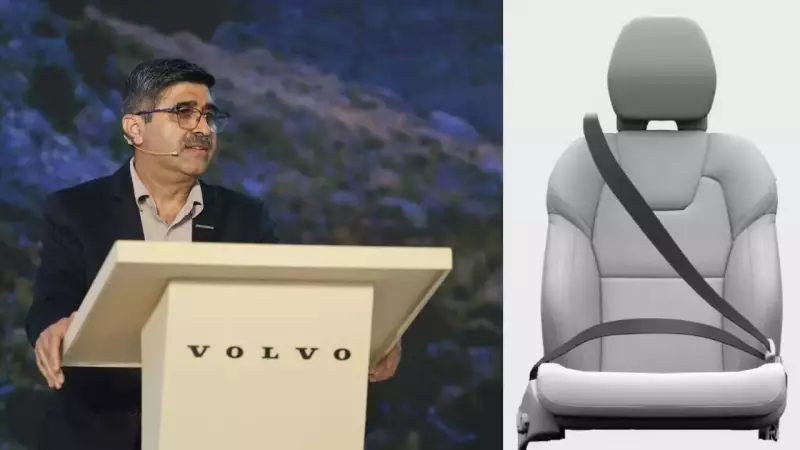
This article is authored by Jyoti Malhotra, Managing Director of Volvo Car India. For decades, the automotive industry has considered road safety a fundamental responsibility. Historical progress was marked by tangible innovations like seatbelts, reinforced vehicle structures, and airbags. These advancements dramatically improved survival rates in accidents and have saved countless lives globally, remaining the bedrock of vehicle safety to this day.
A Changing Mobility Landscape
However, the context of mobility has transformed significantly. Roads are now more congested, traffic behavior has grown more complex, and driver attention is increasingly fragmented. In this evolving environment, safety can no longer be confined to protection after an incident occurs. It must prioritize prevention before risks escalate. This paradigm shift is redefining vehicle design and how manufacturers perceive their societal role.
Navigating India's Complex Risk Environment
Driving conditions in markets like India highlight the multifaceted nature of modern road safety. Vehicles share space with pedestrians, cyclists, two-wheelers, commercial traffic, and unpredictable obstacles. Rapid urbanization, increasing vehicle density, and varying infrastructure quality add further layers of complexity. Encouragingly, national focus on road safety has intensified through policy initiatives, enhanced enforcement, and investments in highway infrastructure. Yet, infrastructure and regulation alone cannot address every risk scenario. Vehicles themselves must assume a more active role in supporting safer outcomes.

The Rise of Active Safety Systems
This necessity has accelerated the adoption of active safety systems. Technologies leveraging cameras, radars, sensors, and advanced software continuously assess a vehicle's surroundings and assist drivers during critical moments. These systems are engineered to support human decision-making, not replace it. Their effectiveness is often gauged by what does not occur—namely, the collisions that are prevented.
Software: The Heart of Modern Vehicles
One of the most significant transformations in the automotive sector is the growing centrality of software. Traditionally, vehicles were defined by mechanical engineering excellence. Today, software architecture is equally decisive. Modern vehicles are increasingly developed on integrated technology platforms that allow hardware and software to function as a unified system. This enables continuous improvement through software updates that can enhance performance, refine functionality, and strengthen safety features over the vehicle's lifecycle.
This represents a fundamental change in ownership and responsibility. A vehicle is no longer static from the day it is delivered. Over time, it can become more intelligent and safer. From an industry perspective, this marks a transition from one-time delivery to long-term accountability. At Volvo Cars, this philosophy underpins our approach to software-defined vehicles. Centralized computing platforms facilitate faster data processing, support advanced driver assistance capabilities, and allow learning from real-world driving conditions. Consequently, safety evolves into a continuous process rather than a fixed specification.
Electric Mobility and Safety by Design
India's transition to electric mobility introduces another crucial dimension to the safety discussion. Electric vehicles exhibit different behaviors due to instant torque delivery, altered weight distribution, and high-voltage battery systems. These characteristics necessitate that safety be engineered into the vehicle architecture from the earliest stages. Battery protection, thermal management, and crash safety are now central to design and development. Across the industry, these challenges are being addressed proactively, ensuring that sustainability goals are matched by uncompromising safety standards. This alignment is vital for building consumer confidence and supporting the long-term adoption of electric mobility.

Human-Centric Safety Approaches
Despite rapid technological advances, human behavior remains a decisive factor in road safety. Fatigue, distraction, and cognitive overload are realities that technology alone cannot eliminate. Therefore, safety systems must be designed with empathy. Driver monitoring, intuitive interfaces, and intelligent alerts are most effective when they operate discreetly and contextually. The objective is to reduce risk without increasing complexity. This human-centric approach ensures that innovation delivers tangible benefits on everyday roads.
Looking Forward: The Path to Safer Mobility
The aspiration of zero road fatalities may seem ambitious, but meaningful progress has always begun with bold goals. Safety is not a milestone that can be achieved and set aside. It is an ongoing responsibility that evolves alongside technology, infrastructure, and behavior. As the industry transitions from seatbelts to software and from reactive protection to intelligent prevention, the opportunity is clear. By combining advanced technology with human understanding and supportive policy frameworks, mobility can become safer, cleaner, and more efficient. Ultimately, every advancement in road safety serves one purpose: to ensure that every journey ends safely.





