

Comet C/2025 K1 ATLAS Disintegrates After Close Solar Flyby: Rare Telescope Images Capture Event
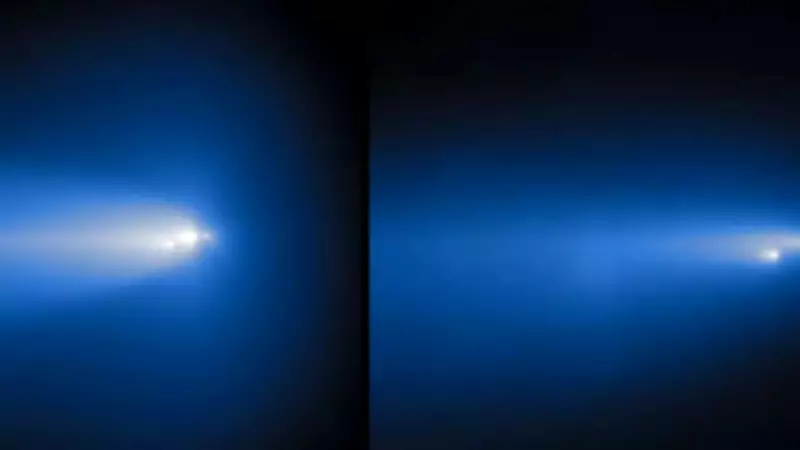
In a spectacular celestial event, Comet C/2025 K1 ATLAS, a relatively new visitor from the outer solar system, has broken apart after its close encounter with the Sun in October 2025. Stunning images captured by the Gemini North telescope in Hawaii reveal glowing fragments tumbling through space, resembling shards of icy glass. Astronomers describe this observation as exceptionally rare, providing unique insights into the fragile nature of these cosmic bodies.
The Fragile Nature of Long-Period Comets
Long-period comets like C/2025 K1 ATLAS are loosely bound collections of ice and dust, making them inherently fragile. While they may appear solid in photographs, these comets can crumble under minimal stress, such as the gravitational pull of the Sun or the pressure from solar wind. This vulnerability was starkly demonstrated during the comet's recent solar approach, leading to its dramatic fragmentation.
Detailed Observations from Gemini North Telescope
As reported by NOIRLab, new images released on January 29, 2026, showcase the comet's disintegration process. One set of images from November 11, 2025, depicts a glowing white streak with subtle blue hues streaking across the dark sky. By December 6, 2025, the comet had further fragmented into multiple pieces. Experts emphasize that such detailed observations are uncommon, as most comets are not monitored this closely during breakup events.

Perched high on Mauna Kea, the Gemini North telescope, part of the International Gemini Observatory with an impressive 8.1-meter aperture, captured the comet in all its chaotic glory. This powerful instrument enabled astronomers to document the fragmentation with unprecedented clarity, revealing at least three distinct chunks, with some pieces separated by distances of up to 2,000 kilometers.
Additional Observations from Italy
Complementing the Gemini North findings, Gianluca Masi in Italy observed the comet splitting using a smaller telescope, spotting three or four fragments. Similarly, the Asiago Observatory detected two main pieces separated by approximately 1,200 miles. These observations collectively paint a vivid picture of cosmic fireworks frozen in time, offering a rare visual treat for astronomers and space enthusiasts alike.
Origin and Discovery of C/2025 K1 ATLAS
C/2025 K1 ATLAS is not a local resident of our inner solar system. It was discovered in May 2025 by the Asteroid Terrestrial-impact Last Alert System (ATLAS). Billions of such comets may exist in the outer reaches of our solar system, remaining dormant for eons until a gravitational nudge sends them hurtling toward the Sun. This particular comet made its closest approach on October 8, 2025, where the combined forces of the Sun's gravity and solar wind ultimately tore it apart.
The breakup of Comet C/2025 K1 ATLAS serves as a poignant reminder of the dynamic and ever-changing nature of our solar system. These rare images not only captivate the imagination but also provide valuable data for scientists studying comet composition and behavior. As technology advances, such detailed observations will continue to enhance our understanding of these ancient icy wanderers and their journeys through space.






