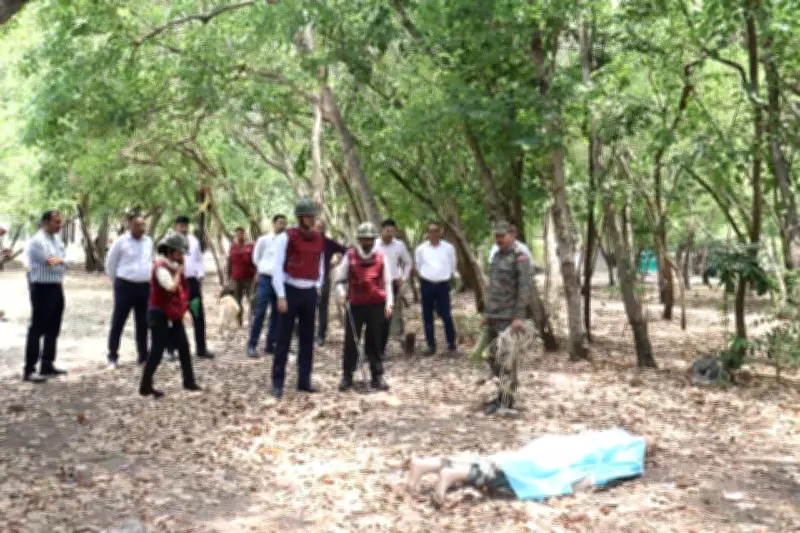
The College of Military Engineering (CME) of the Indian Army has, for the first time, conducted a counter-improvised explosive device (IED) and disaster management capsule course for security managers of the Reserve Bank of India (RBI). This initiative marks a significant step towards strengthening coordination between military institutions and civilian security agencies in tackling emerging threats.
Course Overview
The five-day programme, held from May 11 to 15 at the sprawling military campus in Pune, focused on imparting practical knowledge and operational exposure in counter-IED handling, search operations, drone deployment, and disaster-response management. Officials stated that the course was designed as an intensive hands-on training module to familiarise senior security managers with evolving security challenges and modern response mechanisms used by the armed forces.
Training Components
Participants underwent training in IED fundamentals, Rendering Safe Procedures (RSP), search and detection techniques, use of specialised Explosive Ordnance Disposal (EOD) equipment, and coordinated emergency drills. They also received exposure to the role of drones and technology-enabled surveillance in modern security operations, according to a senior army officer.

Objective: Enhancing Synergy
According to officials, the course aimed at creating better synergy between military establishments and civilian institutions responsible for critical infrastructure security. The idea is to enhance preparedness and ensure a unified response mechanism during emergencies, terror threats, or disaster situations, sources associated with the training said.
CME's Expertise
The college houses one of the country's premier bomb detection and disposal training facilities, where specialised courses are regularly conducted for armed forces personnel. Over the years, the institution has emerged as a key centre for advanced counter-IED training and technical research related to explosive threats.
Officials familiar with the facility noted that it not only trains personnel in detection and disposal techniques but also undertakes detailed analysis of IEDs recovered from border and conflict regions. The findings are shared with engineer regiments and operational units to improve field-level response and safety protocols. The centre has also developed methodologies related to IED detection, neutralisation, and disposal, helping security agencies adapt to rapidly changing threat patterns.
Training Approach
The security managers received preliminary stage training in theory and practical exposure in classrooms and on the ground. This covered their basic understanding of such threats, said the officials. Personnel from various police organisations, paramilitary forces, and other government departments frequently attend specialised courses conducted at the facility.
Because of the expertise available, many personnel from police and paramilitary organisations undergo training at the institute. The instructors are highly experienced, professionally qualified, and their standards are comparable with global benchmarks, the officer added.
Growing Importance
Officers emphasised that such collaborative programmes are increasingly becoming important amid rising concerns over threats to critical infrastructure, financial institutions, and public spaces.