

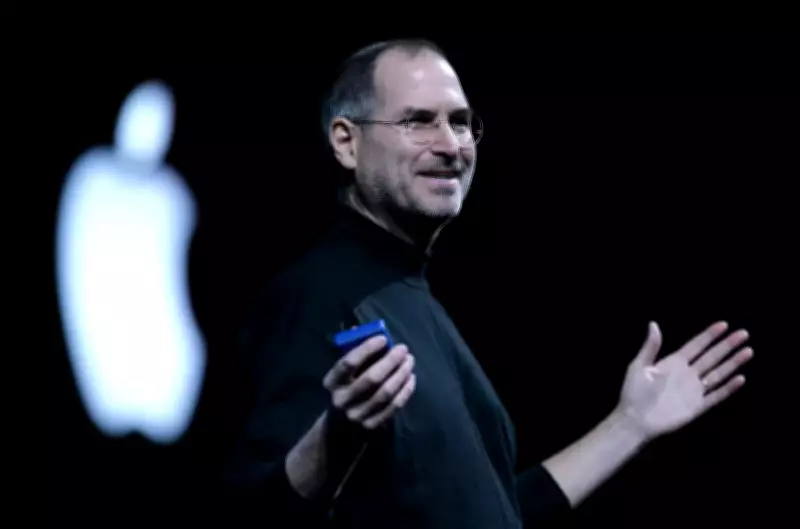
In today's world, Apple stands as more than just a corporation; it represents a global standard of excellence and innovation. From iPhones that vanish from shelves in moments to MacBooks that power educational institutions and creative enterprises worldwide, Apple's offerings are universally recognized for their elegant design, formidable performance, and aspirational appeal.
The Dream That Drives Millions
For countless students and professionals, securing a position at Apple is the ultimate career aspiration. Meanwhile, consumers often view owning an Apple device as a gateway to cutting-edge technology and a futuristic lifestyle. However, the origins of this tech titan trace back to a humble and audacious beginning long before it ascended to become one of the planet's most valuable companies.
A Curious Boy's Bold Move
In the late 1960s, a young Steve Jobs, merely 12 years old and living in California, was deeply engrossed in electronics. While his peers focused on typical school activities, Jobs embarked on building a frequency counter—a tool for measuring electronic signals. Faced with a shortage of necessary components, he turned to an unconventional resource: the Yellow Pages.

There, he discovered the home telephone number of Bill Hewlett, the co-founder of Hewlett-Packard (HP). Without hesitation, Jobs dialed the number, initiating a conversation that would alter the course of his life. In a 1994 interview preserved by the Silicon Valley Historical Association, Jobs recounted introducing himself as a high school student in need of parts. Hewlett responded with amusement but not dismissal; instead, he provided the components and offered Jobs a summer job at HP.
The Unlikely Summer Job
This opportunity at HP, though far from glamorous, placed Jobs on the production line assembling frequency counters. As he later expressed in the same interview, "I was in heaven." The experience immersed him in a genuine technology environment, where he observed engineers at work and learned the intricacies of product manufacturing. More significantly, it instilled in him a crucial lesson: boldness can unlock doors that seem closed to others.
Jobs often reflected that rejection was rare when he sought assistance, attributing this to a simple truth—most people never take the initiative to ask. This early episode underscored the power of proactive action, a principle that would define his future endeavors.
From Calligraphy to Computers
After completing his schooling in California, Jobs enrolled at Reed College in Oregon. He formally withdrew after six months but continued to audit classes that piqued his interest, including a calligraphy course. At the time, this pursuit appeared impractical, yet it later profoundly influenced the design of the Macintosh computer. By incorporating beautiful fonts and proportionally spaced typefaces, Apple set a new standard for personal computing aesthetics.
The Garage Startup
Following his college years, Jobs reconnected with Steve Wozniak, an engineering prodigy he had met through Silicon Valley networks. Wozniak had developed a compact personal computer board, and Jobs immediately recognized its commercial potential. In 1976, from the garage of Jobs' family home, they co-founded Apple with Ronald Wayne. Their vision was straightforward yet revolutionary: to create computers that were small, user-friendly, and accessible to everyday individuals, not just large corporations.
A Journey of Resilience and Reinvention
Apple's path to success was fraught with challenges. In 1985, Jobs was famously ousted from the company he helped build. Undeterred, he founded NeXT and acquired Pixar, which would go on to transform the animation industry. His return to a struggling Apple in 1997 marked a turning point, leading to a remarkable resurgence.
Under his renewed leadership, Apple introduced iconic products like the iMac, iPod, iPhone, and iPad—each reshaping entire sectors and solidifying the company's market dominance. Today, Apple boasts a valuation in the trillions and remains a top destination for tech talent globally. Yet, at its core, this success stems from a persistent pattern of taking initiative and embracing risk.

The Enduring Lesson for Aspiring Innovators
Before the keynote addresses and worldwide acclaim, there was simply a teenager who dared to make a phone call. Jobs frequently emphasized that action distinguishes achievers from mere dreamers, advocating for a willingness to fail. For modern students, the tools may have evolved—replacing phone directories with emails and digital networks—but the essence remains unchanged.
You can apply for internships proactively, seek out mentors, develop projects, and share your creations with the world. Apple's narrative did not commence in a garage; it began with a question, a courageous phone call, and the resolve to ask for what you need. This story serves as a timeless reminder that innovation often starts with a single, bold step into the unknown.





