Wildlife in the United States is often discussed through broad categories, such as bears, wolves, eagles, and deer, animals that appear across continents in different forms. Yet scattered across deserts, wetlands, forests, and isolated islands are species found nowhere else on Earth. Some evolved in narrow pockets of habitat cut off by mountains or oceans. Others survived only because a particular landscape remained undisturbed long enough for them to adapt to it completely. A few are instantly recognizable symbols of American wilderness, while others remain unfamiliar outside scientific circles despite their unusual histories. Together, they reflect how geographically varied the country is, stretching from Arctic coastlines to subtropical marshes and volcanic islands in the Pacific.
America’s Most Iconic Animals from Wetlands to Deserts
1. American Alligator
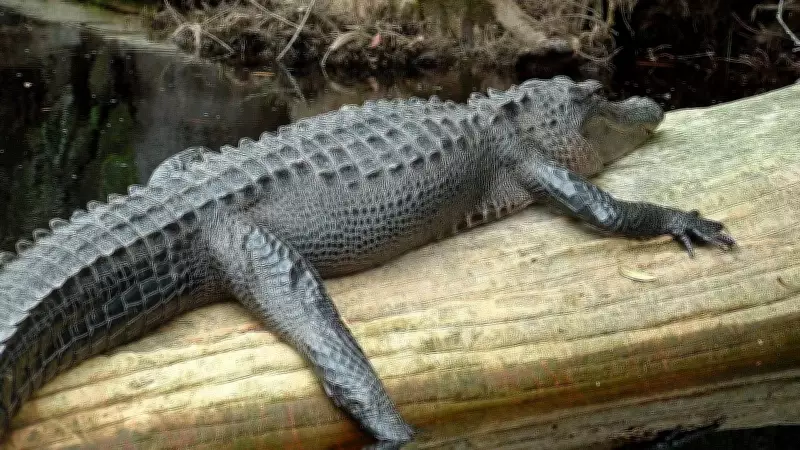
The wetlands of the southeastern United States still hold one of North America’s oldest surviving reptiles. The American alligator has changed surprisingly little over millions of years and continues to occupy slow-moving rivers, swamps, marshes, and coastal estuaries from Florida through Louisiana and parts of the Gulf Coast. Adult males can grow to imposing sizes, though most encounters involve smaller animals slipping quietly beneath the water surface. Their recovery is often treated as a rare conservation success story. By the mid-20th century, hunting and habitat destruction had sharply reduced numbers, but legal protection and wetland management allowed populations to rebound across much of their former range.
2. Hawaiian Monk Seal
Far from the mainland, the Hawaiian monk seal survives in one of the most isolated marine environments in the world. It spends much of its time around the northwestern Hawaiian Islands, hauling itself onto beaches and coral sandbanks to rest between hunting trips. Unlike more social seal species, monk seals are usually solitary. Their diet shifts between fish, squid, and crustaceans depending on what is available in surrounding waters. Human disturbance, entanglement in marine debris, and shrinking food access have all complicated recovery efforts. Even so, occasional sightings on busy Hawaiian beaches have become more common in recent years, bringing this rare animal into public view more often than before.

3. California Condor
The California condor moves through the air with almost no visible effort. With wingspans approaching three meters, it remains the largest flying land bird in North America. Historically, condors ranged across large parts of the western United States, but poisoning, habitat loss, and hunting drove the species close to extinction. At one stage during the 1980s, every remaining wild condor was captured as part of an emergency breeding program. That decision was controversial at the time. The species survives today largely because of those captive breeding efforts, with birds gradually reintroduced into parts of California, Arizona, and Utah. Lead poisoning from ammunition fragments still threatens populations, making long-term recovery uncertain.
4. American Bison
No animal is tied more closely to the historical image of the American plains than the bison. Huge herds once moved across central North America in numbers difficult to imagine now, shaping grassland ecosystems through constant grazing and migration. Commercial hunting during the 19th century reduced the species to a fraction of its former population. Some isolated herds survived in protected areas, including Yellowstone National Park, where wild bison continue to roam today. Modern conservation herds exist across several states, although many are managed within fenced reserves rather than fully open migratory landscapes.
5. Key Deer
The Key deer occupies a habitat far smaller than most large mammals could tolerate. Found only in the Florida Keys, this miniature subspecies of white-tailed deer adapted to life on small tropical islands where food and freshwater supplies are limited. Adults are noticeably smaller than mainland deer, with delicate frames and shorter stature. Roads, urban expansion, and hurricanes continue to affect their numbers because the islands offer little room for relocation when conditions worsen. They often wander through residential neighborhoods, bringing wildlife into unusually close contact with people.

6. Desert Tortoise
Across the Mojave and Sonoran deserts, the desert tortoise survives in landscapes that appear almost empty during the hottest parts of the year. Much of its life is spent underground inside burrows that protect it from extreme heat and dehydration. Its movements are slow and deliberate, though the species is well adapted to harsh desert conditions. The tortoise can store water for long periods and feeds on seasonal grasses, wildflowers, and cactus growth after rainfall. Expanding development, road traffic, and disease have caused steady declines in several areas where populations were once stable.
7. Red Wolf
The red wolf remains one of the rarest canids in the world. Smaller and leaner than the gray wolf, it historically occupied large portions of the southeastern United States before predator eradication campaigns nearly eliminated it. Today, wild populations are limited mainly to parts of North Carolina, supported through intensive monitoring and breeding programs. Questions over genetics and hybridization with coyotes have complicated conservation work for decades. Even identifying a “pure” red wolf population became a scientific debate in itself.
8. Island Fox
On six of California’s Channel Islands lives a fox found nowhere else. The island fox evolved separately on each island over thousands of years, leading to slight differences in size and appearance between populations. Because island ecosystems are fragile, the species declined rapidly after disease and predation pressures increased during the late 20th century. Golden eagles introduced indirectly through ecological changes became a major threat. Recovery programs involving captive breeding and habitat restoration later helped stabilize numbers. The foxes remain unusually trusting around humans compared with mainland wild canids.
9. Gila Monster
The Gila monster carries a reputation out of proportion to how rarely people actually see one. This heavy-bodied lizard, native to parts of Arizona and neighboring desert regions, spends much of its life hidden beneath rocks or underground shelters. Its venomous bite makes it one of the few venomous lizards in the world, though it is generally slow-moving and avoids confrontation. Bright orange or pink markings break up the dark scales across its body. Rather than chasing prey, the animal often feeds on eggs, small mammals, and nestlings discovered during slow searches through desert terrain.
10. Florida Panther
The Florida panther survives in fragmented patches of subtropical forest and swamp in southern Florida. It is considered a population of cougar adapted to the region’s dense wetlands and humid climate. Vehicle collisions remain one of the leading dangers because expanding roads cut through remaining habitat corridors. Earlier inbreeding problems also weakened the population before wildlife managers introduced additional cougars from Texas to improve genetic diversity. Sightings are uncommon despite years of conservation work, partly because the cats occupy vast territories and avoid human activity whenever possible.