

Over 3,000 Gharials Recorded in Landmark Ganga Basin Survey
A new central survey has recorded more than 3,000 gharials across the Ganga river basin. This marks a significant moment for the long-snouted reptiles, which were once nearing extinction. The survey, conducted by the Wildlife Institute of India, provides the first basin-wide snapshot of their population and habitat.
Mapping the Population Across Rivers
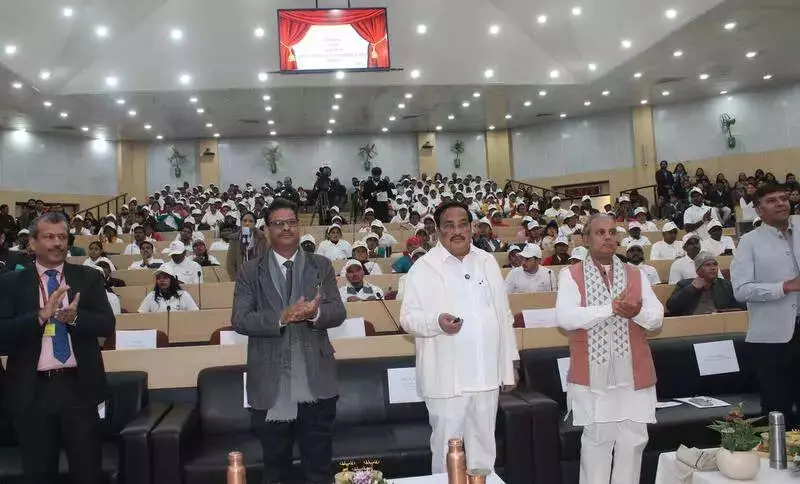
For the first time, researchers mapped gharials across 22 rivers and over 7,000 kilometers. Union Minister of Jal Shakti C R Patil released the report on Tuesday at the WII campus in Dehradun. The report is titled Population Status and Conservation Action Plan for Critically Endangered Gharial in the Ganga River Basin.
The survey found the strongest population in the Chambal river. This river supports 2,097 individuals. Ghaghra and Girwa rivers followed with 463 and 158 gharials respectively.

In contrast, rivers like the Kosi and even the Ganga recorded the lowest encounter rates. They had just 0.02 individuals per kilometer surveyed.
Survey Methodology and State-wise Findings
This is the first WII-led, basin-wide assessment of gharials. Previous studies focused only on specific rivers like Chambal, Girwa, and Gandak. The new survey integrates data across seven states and thousands of river kilometers.
Between November 2020 and March 2023, researchers conducted boat-based visual encounter surveys across 7,680 kilometers. They used the Minimum Population Size method to calculate gharial numbers based on confirmed sightings. Encounter rates helped assess density and distribution.
In Uttarakhand, gharials were found only in the Ramganga river inside Corbett National Park. Researchers observed 48 individuals in a 20-kilometer stretch.
Uttar Pradesh recorded more than 2,000 gharials across eight rivers. These include Yamuna, Sharda, Kauriala, Babai, and Gandak. Bihar showed lower numbers with 82 in Gandak and isolated sightings in Bagmati, Kosi, and Ganga. Jharkhand and West Bengal recorded no gharials.
Habitat Suitability and Conservation Challenges
The report also assessed habitat suitability across 12,825 kilometers of river stretches. Over 92% was classified as unsuitable. Human disturbance, altered flows, sand mining, and fishing caused this. Only 5.6% was highly suitable, mainly in Chambal, Yamuna, and smaller stretches of Sind, Gandak, Girwa, and Ramganga.
Former WII scientist SA Hussain contributed to the assessment. He said the report shows recovery in rivers with consistent protection, monitoring, and grow-and-release efforts. While Chambal shows a stable or rising population, other rivers remain conservation-dependent.
Global Status and Historical Context
The findings align with the International Union for Conservation of Nature's recent Green Status assessment. It categorised the gharial as Critically Depleted. Unlike the Red List, which measures extinction risk, the Green Status assesses progress toward ecological recovery. The IUCN noted that past efforts have prevented extinction, but the species remains highly dependent on active management.
Historically, gharials were found in the Ganges, Indus, and Mahanadi river systems. They faced a steep decline by the 1970s due to habitat loss, dam construction, and fishing. India launched a conservation programme in 1975, and the Chambal sanctuary emerged as a key habitat.
Ongoing Threats and Future Recommendations
Challenges persist. Over 8,000 juveniles have been released in various rivers, but many show little or no breeding. The Ghaghra is thought to host a sink population maintained by dispersal from Girwa. The Ken river received more than 140 individuals between 1982 and 2007 but now has none.
A WWF India report marking 50 years of gharial conservation found that only 0.5% of hatchlings survive to adulthood. Jailabdeen A, director of the Gharial Ecology Project, said identifying and protecting stronghold habitats where breeding continues is essential.
The WII report recommends reintroduction in rivers with suitable habitat, especially Chambal, Yamuna, and Ghaghra. It also calls for integrated habitat, population, and genetic monitoring for long-term viability.

