

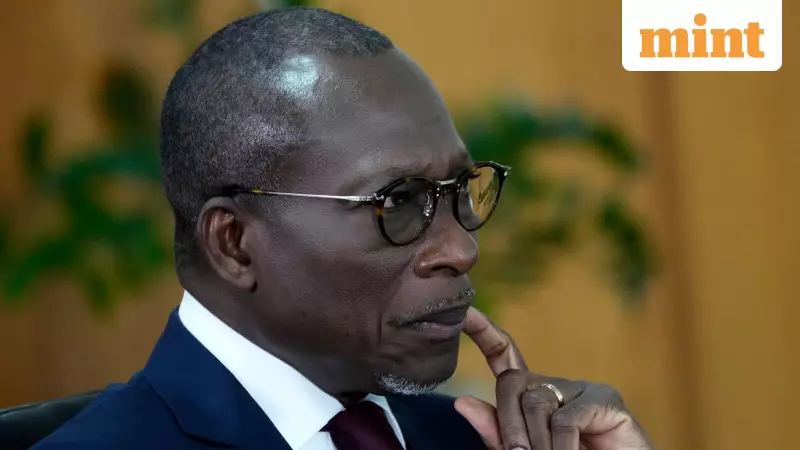
In a dramatic early morning incident, the West African nation of Benin successfully foiled an attempt by a group of soldiers to seize power and overthrow the government. The country's Interior Minister, Alassane Seidou, confirmed the failed coup in an official statement released on Sunday, December 7, 2025.
Mutiny in the Early Hours
Alassane Seidou stated that a "small group of soldiers launched a mutiny" with the clear aim of destabilising the state and its institutions. The incident began in the early hours of Sunday in Cotonou, the economic capital and de facto seat of government. Residents reported hearing sounds of gunfire after the rebellious soldiers declared they had removed President Patrice Talon from power.
However, the Beninese Armed Forces and their leadership swiftly moved to counter the uprising. Minister Seidou praised the military, stating they "remained committed to the republic" and stayed true to their oath. According to the president's close associates, Patrice Talon remained unharmed throughout the ordeal. Government spokesperson Wilfried Houngbedji assured the Associated Press that the situation was under control and that "everything is fine."

Background of Political Stability and Tension
This event marks a significant challenge to Benin's recent record of political stability. The country, formerly known as Dahomey under French colonial rule, gained independence in 1960 and was renamed the Republic of Benin in 1975. The decades immediately following independence were marked by multiple coups.
Political calm has largely prevailed since 1991, following the rule of Marxist-Leninist leader Mathieu Kérékou. The current president, Patrice Talon, a wealthy businessman nicknamed the "King of Cotton," first came to power in 2016. He won a second term in 2021 with 86% of the vote, after electoral reforms that critics say barred major opposition candidates. Talon is due to step down in April after the upcoming presidential election, where his party's pick, former Finance Minister Romuald Wadagni, is considered the favourite.
The coup attempt is not an isolated incident. Just last month, the country's legislature extended the presidential term from five to seven years. Furthermore, in January 2025, two associates of President Talon were sentenced to 20 years in prison for their alleged involvement in a separate coup plot in 2024.
Regional Context and Implications
The incident in Benin is the latest in a series of military takeovers that have unsettled West Africa. Last month, a military coup in Guinea-Bissau removed former President Umaro Embalo following a contested election. This pattern of instability raises concerns about democratic backsliding in the region.
Under Talon's leadership, Benin has positioned itself as a stable anchor within the Economic Community of West African States (ECOWAS). The country mediated during Niger's coup in 2023 and has advocated for regional integration. Talon's government has also worked to diversify international ties, engaging with the United States, the European Union, and China for aid and trade.
Economically, the International Monetary Fund (IMF) has noted that fiscal discipline under Talon has reduced debt vulnerability. IMF support has helped lower poverty rates from 40% to 36% of the population, though significant inequality persists, particularly in the north. This region also faces heightened security threats from jihadist spillover from neighbouring Sahel countries like Burkina Faso and Niger since 2019.
The swift action by the Beninese military to quash the mutiny has, for now, preserved the constitutional order. However, the attempt underscores the persistent tensions within the nation and the wider region, as Benin prepares for a crucial political transition in the coming months.

