

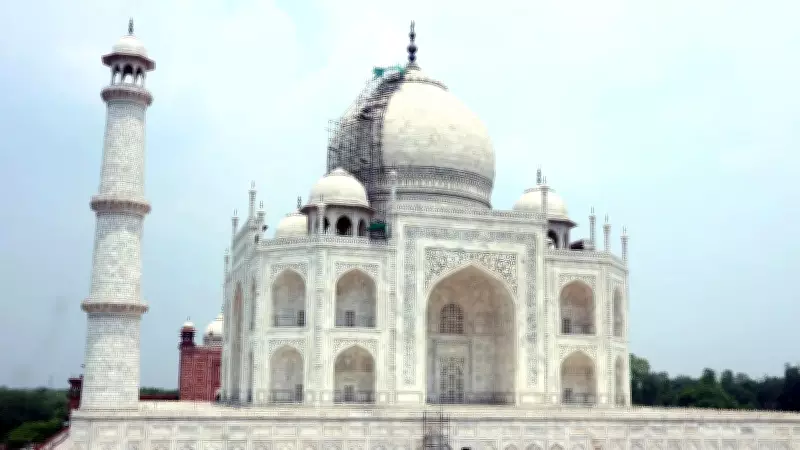
Their job is to find fault with the Taj Mahal. Where others see flawless texture and clean lines, their keen eye picks up stains and cracks. While most are awed by the delicate ornamentation, they constantly worry about a stone coming loose or a beehive forming. Rogue plants must be removed, and many unwanted elements must be protected against. This attention is not excessive because it is, after all, a timeless beauty and a wonder of the world that must be kept looking stunning. Those engaged in the maintenance of the Taj Mahal say it is all a labor of love.
Dawn Patrol: The Daily Routine
Long before the first tourist buses arrive at the Taj, Dilip Sharma is already on his rounds. At around 4 a.m., he starts walking the perimeter of the monument that Mughal Emperor Shah Jahan built between 1632 and 1654 in memory of his wife, Mumtaz Mahal. He checks the stonework, scans the lawns, and looks for anything that should not be there. Sharma is one of roughly 80 employees of the Archaeological Survey of India (ASI), which takes care of the Taj Mahal. For them, the day begins before the break of dawn, and the vigil never ends.
The Unseen Guardians
These workers are the unsung heroes behind the monument's pristine appearance. Their tasks include inspecting every inch of the marble for cracks, removing stubborn stains caused by pollution or bird droppings, and carefully extracting plants that have taken root in the stone joints. Beekeepers are sometimes called in to relocate hives without harming the bees. The team also monitors humidity levels and cleans the intricate inlay work with soft brushes and distilled water to prevent damage.

A Labor of Love
Despite the challenges, the workers take immense pride in their role. Many have been employed by the ASI for decades, passing down skills from generation to generation. They understand that preserving the Taj Mahal is not just a job but a duty to history and humanity. As Sharma puts it, "We are not just maintaining a building; we are caring for a symbol of love that belongs to the world." The work is meticulous and often tedious, but the reward is seeing the monument gleam under the morning sun, captivating millions of visitors each year.
The Taj Mahal attracts over 7 million tourists annually, placing immense pressure on its conservation. The ASI team works tirelessly to balance public access with preservation. They conduct regular scientific analyses to assess the impact of air pollution and acid rain, and they have implemented measures such as restricting vehicle traffic nearby and installing air purifiers. Every effort is made to ensure that this wonder of the world continues to inspire awe for generations to come.






