

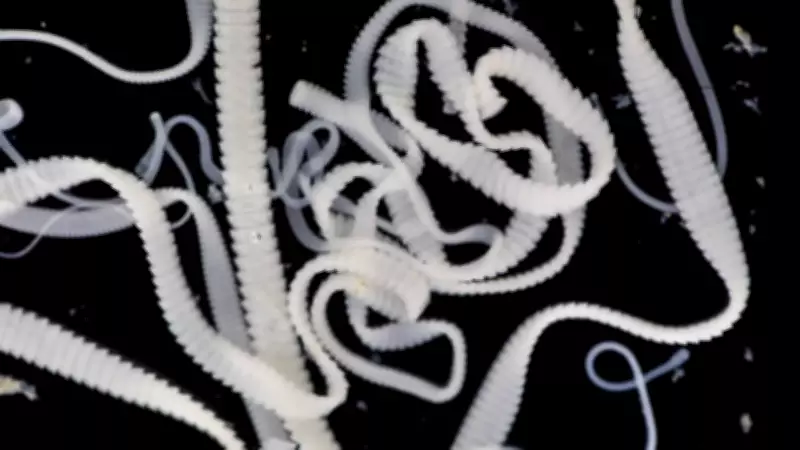
There is no denying that, after fatal viruses impacting life, the world is still not ready for another deadly outbreak growing faster than imagined. This dangerous parasite can affect not just humans but also animals. Here is all you need to know about this unsettling parasite that has quietly expanded its footprint across North America and officially arrived in the Pacific Northwest. For the first time, scientists have detected the dangerous tapeworm Echinococcus multilocularis in wild hosts along the contiguous U.S. West Coast.
The Fast Progression of a Fatal Parasite
While the parasite has been a long-standing public health issue in Europe and Asia, it was incredibly rare in North America. That shifted about 15 years ago when infections began appearing in dogs and people across Canada and the American Midwest. This latest discovery confirms the worm is still pushing into new territory.
How Does It Affect Local Coyotes?
Researchers from the University of Washington recently tested 100 coyotes in the Puget Sound region and were surprised to find that 37 of them carried the parasite. The results were published in the journal PLOS Neglected Tropical Diseases. According to a study highlighted by Science Daily, Dr. Yasmine Hentati, the study's lead author and a recent environmental and forest science graduate from UW, noted that while a handful of people and numerous dogs have gotten sick across North America, the parasite had never been seen in the Pacific Northwest until earlier this year. Finding it in a third of the local coyote population was a major wake-up call.

Interconnected Life Cycle
The tapeworm relies on a complex back-and-forth cycle between different animals to survive, and it rarely makes its primary hosts sick. Coyotes, foxes, and other wild canids are the hosts for this parasite. These animals can have thousands of worms living inside them without getting sick. They simply pass the parasites' eggs into the environment when they defecate. The next step occurs when rodents eat the eggs by mistake while foraging in areas where coyotes have been. Once inside the rodent, the eggs migrate to the liver and form cysts that can weaken or kill the animal. The cycle restarts when a coyote catches and eats the infected rodent.
Danger to Both Humans and Dogs
Humans and dogs can also contract this parasite, though it is not supposed to happen. The parasite does not target humans or dogs; infection occurs by accident. If the parasite does enter a human or dog, it can cause significant harm. People can contract the parasite by accidentally swallowing the invisible eggs—often by eating food contaminated with dog or coyote feces. In humans, this triggers a dangerous condition called alveolar echinococcosis. The disease causes slow-growing, cancer-like tumors to form in the liver and other organs. Because these cysts grow so slowly, symptoms might not appear for 5 to 15 years, making diagnosis extremely difficult. Without treatment, the infection can be fatal. The World Health Organization ranks it as the third most important food-borne illness globally.
Keeping Your Pets Safe
Dogs face a double threat depending on how they encounter the parasite. If they ingest coyote feces containing eggs, they can develop the same life-threatening liver cysts that humans get. However, if they eat an infected rodent, they might carry the adult worms in their gut and shed eggs, turning them into a hidden source of infection for their owners.
How to Protect Pets
According to the study, Dr. Guilherme Verocai, an expert on parasites, advises dog owners to ensure their pets do not hunt rodents or eat wild animals. He emphasizes the importance of regular veterinary visits for stool testing and deworming medication to prevent worm infections.

The Growing Threat
So far, human infections remain rare in the United States, and no cases have been reported on the West Coast. However, seven dogs have been infected in Washington, Oregon, and Idaho since 2023. Dr. Verocai and other experts stress the need for dog owners to be vigilant. As Dr. Hentati explained, coyotes have high infection rates because raw rodents are their primary diet, whereas most pets do not eat wild rodent livers. Nevertheless, scientists are highly concerned because of the specific strain involved. Decades ago, a mild "tundra variant" of the parasite existed on remote Alaskan islands. Genetic testing shows that the current outbreak is fueled by a much more infectious strain of European origin.





