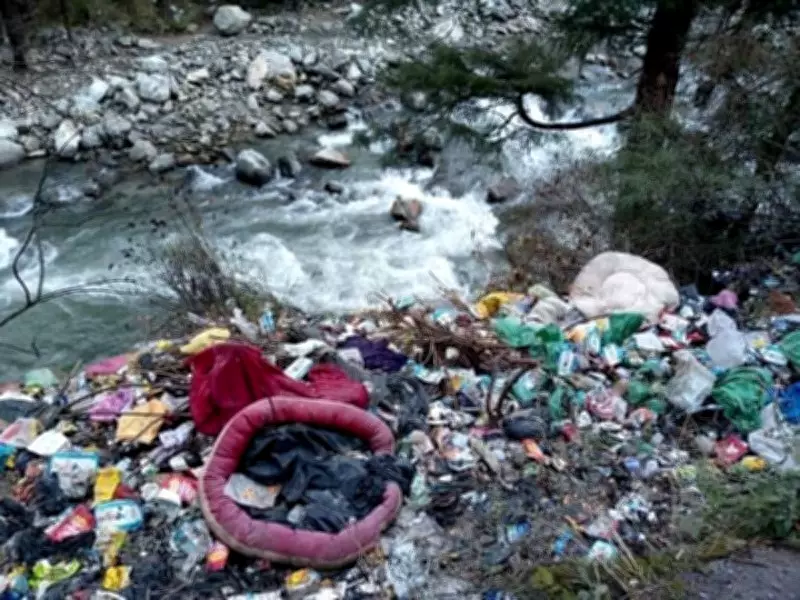
The pristine Dhauladhar hills, stretching across Bir-Billing, Rajgundha, Multhan, Barot, Chhota Bhangal and the upper reaches of Palampur, are facing a growing ecological crisis as garbage littering continues to scar one of Himachal Pradesh's most fragile mountain ecosystems. The increasing influx of tourists and trekkers has led to a sharp rise in plastic waste, liquor bottles, food wrappers and other non-biodegradable garbage, posing a serious threat to forests, rivers and wildlife.
Waste Management Gaps in Remote Tourist Destinations
Despite repeated appeals by environmentalists, local residents and social organisations, the authorities, including the Forest Department and the local administration, have failed to put in place an effective waste management mechanism in these remote tourist destinations. Heaps of plastic bottles, disposable food containers, liquor bottles, aluminium cans and polythene bags are strewn along trekking routes, forest trails, picnic spots, local water streams and roadsides. Garbage littering has become a common sight in the higher reaches of the Dhauladhar hills, tarnishing the natural beauty of the region and threatening its rich biodiversity.
According to environmental experts, an average tourist generates nearly 3 kilograms to 4 kilograms of waste during a visit to the hills. With more than 200 vehicles entering Chhota Bhangal and Barot every day during the peak tourist season, the quantity of waste being generated has increased manifold. However, there is virtually no scientific system for the collection, transportation and disposal of solid waste from these remote areas.

Bir-Billing and Rajgundha Under Severe Pressure
The situation in Bir-Billing and Rajgundha, one of the fastest-growing tourist destinations in Kangra district, is particularly alarming. Local residents allege that there is no organised mechanism to handle garbage generated by hotels, restaurants, homestays and visitors. Much of the waste ultimately finds its way into the Uhl river, polluting its ecosystem and posing a serious threat to aquatic life as well as downstream communities that depend on the river for drinking water and irrigation.
Environmental activists warn that plastic waste takes decades, and in many cases centuries, to decompose. During this period it contaminates soil and water sources, affects wildlife and eventually enters the food chain in the form of microplastics. According to estimates, nearly five lakh tourists are expected to visit the Dhauladhar region during the current tourist season.
NGOs Call for Awareness and Regulation
People's Voice and Environment Healers, two leading NGOs working for the protection of the environment, have urged the state government to launch an intensive awareness campaign to educate tourists about responsible travel practices. They suggest that informative pamphlets and awareness material should be distributed to tourists at the state's entry points, bus stands, railway stations, airports and major tourist destinations, urging them not to throw plastic waste, bottles and food packets in forests, rivers, water channels or along roadsides.
Neelam, head of NGO People's Voice, says that the call from the ground is clear - tourism in Himachal must be regulated and developed within the boundaries of environmental law. She urges the authorities to rethink tourism models - promoting low-impact, eco-sensitive travel rather than mass tourism that strains both nature and infrastructure. Without urgent intervention, the very beauty that draws millions of people to Himachal each year can be lost, possibly forever.
They also advocate for the installation of adequate dustbins at tourist hotspots, establishment of waste collection centres in remote areas, strict enforcement of anti-littering regulations and the imposition of heavy fines on violators. They say that trekking groups and adventure tourism operators should be made responsible for carrying back all non-biodegradable waste generated during their expeditions.

Tourist Influx from Neighbouring States
Tourists from neighbouring Punjab, Haryana, Chandigarh and Jammu and Kashmir frequently visit the scenic hills of the Kangra valley at weekends. However, many visitors leave behind heaps of plastic packets, water bottles, disposable plates, liquor bottles and food wrappers, severely damaging the natural landscape. Residents of Palampur, Baijnath, Bir-Billing and adjoining villages say that roadside forests, mountain streams and picnic spots have increasingly turned into dumping grounds. They fear that if immediate corrective measures are not taken, the region's ecological balance can suffer irreversible damage.
Official Responses and Collective Responsibility
Sanjiv Sharma, Divisional Forest Officer, Palampur, says that protecting the Dhauladhar hills is a collective responsibility. Municipal bodies, panchayats and local NGOs are making sincere efforts to keep the region clean but they require active support from various government departments and, above all, cooperation from tourists, he adds. "State agencies must come forward to assist the Forest Department, municipal corporations, panchayats and voluntary organisations engaged in preserving the fragile mountain ecosystem. Sustaining the biodiversity of the Dhauladhar hills is not possible without the active cooperation of visitors. It is unfortunate that many tourists still lack civic sense and indiscriminately throw plastic waste into rivers, streams and forests," he adds.
SDM, Palampur, Dr OP Yadav says that unless immediate and coordinated action is taken, the accumulated waste can undermine not only the ecological health of the Dhauladhar ranges but also the long-term sustainability of tourism, which remains one of the region's most important sources of livelihood.