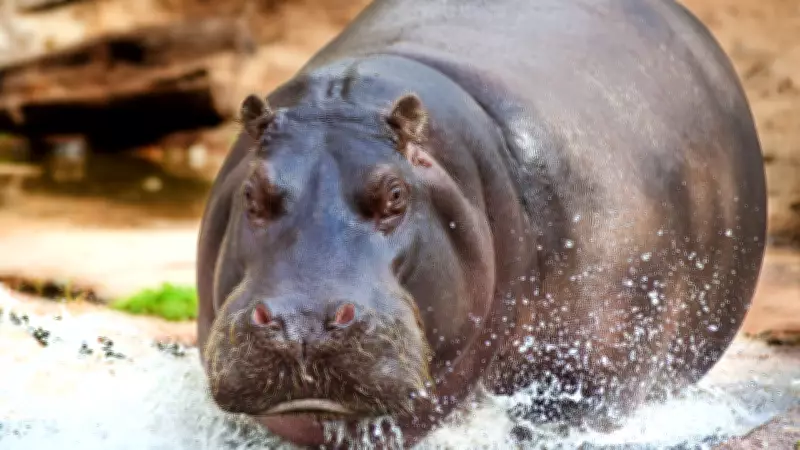
Hippo experts have discovered the significant ecological role hippos play in African aquatic ecosystems. An average hippopotamus deposits over 20 kilograms of manure per day, introducing large amounts of organic matter into rivers and lakes. This organic matter acts as a natural fertilizer for organisms like algae, fish, insects, and microorganisms, which form the base of the aquatic food chain. According to research published in the journal Scientific Reports, hippos carry organic matter from grasslands through nighttime grazing and deposit it into rivers when they return during the day.
Why Hippo Poop Is Vital for Natural Ecosystems
While hippos live submerged in water bodies, their impact extends far beyond riverbanks. Every evening, hippos leave rivers to graze on grasslands and return before sunrise, bringing enormous amounts of organic matter to aquatic environments. A study by scientists from the Department of Biological Sciences, Marine Research Institute, University of Cape Town investigated hippos' contribution to nutrient recycling in East African rivers. They found that hippos mediate connectivity and material flows between terrestrial and aquatic corridors by directly transporting plant material to rivers. The amount of grass carried by hippos to the Mara River System was calculated at about 36 tonnes per day.
How Hippo Dung Acts as a Natural Aquatic Fertilizer
Similar to fertilizer applied to farmlands, hippo excreta adds nutrients such as carbon, nitrogen, and silicon to river waters. These nutrients promote the growth of algae and microbes, which form the basis of aquatic food webs. A study titled Effects of the Hippopotamus on the Chemistry and Ecology of a Changing Watershed, conducted at the University of California, Santa Cruz, showed that hippo manure has been used as a natural source of fertilizer that fuels aquatic life for ages. This process is efficient: hippos eat vast amounts of grass at night and excrete partially digested plant material during the day. Researchers argue that this continuous nutrient exchange helps ensure biodiversity in many African rivers and lakes. Another independent study found that hippos deliver about 0.5 tons of silicon into water bodies each day, contributing to nutrient balance. Silicon is essential for the development of microscopic algae known as diatoms.

The Environmental Downside of Too Much Hippo Waste
While hippo dung is important for ecosystems, excessive waste can cause negative impacts. In rivers with reduced water flow, too much decomposing fecal material can deplete oxygen. In an examination of the Mara River, scientists discovered several incidents of oxygen deficiency directly linked to hippo pools. In some cases, fish kills occurred downstream after rainstorms disrupted waste piles. The scientists concluded that organic matter loading from hippopotami causes repeated hypoxia in the Mara River. Nevertheless, researchers emphasize that hippopotamuses are extremely important for ecosystem engineering. Although their dung may not be appealing, it plays a critical role in nutrient recycling in freshwater environments. Rather than mere river dwellers, hippos make their presence felt as ecosystem engineers every day, one huge dung heap at a time.