

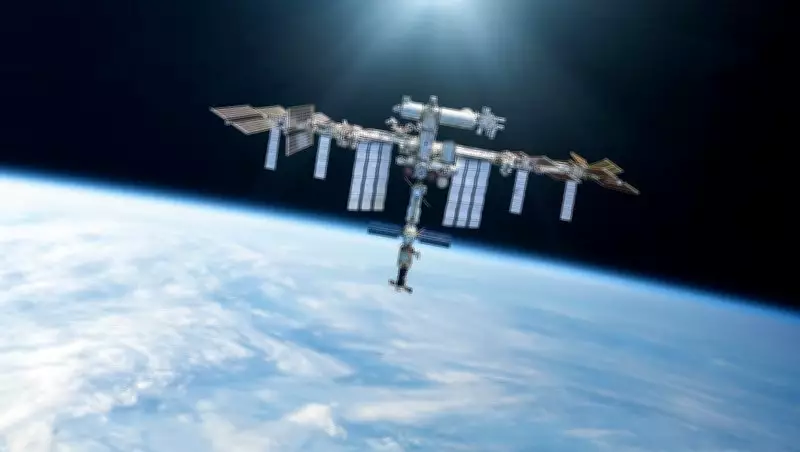
The International Space Station (ISS) is currently facing its most severe operational challenge in years due to a worsening structural air leak in the Russian segment, prompting emergency safety protocols.
Emergency Response Activated
On June 5, 2026, NASA elevated its safety response, ordering the four members of the SpaceX Crew-12 mission and NASA astronaut Chris Williams to enter an elevated safety posture. Astronauts donned their pressure suits and sheltered inside their docked Crew Dragon capsule as an emergency evacuation precaution while Russian cosmonauts performed intensive repair operations.
Location of the Leak
The persistent leak is localized within the PrK vestibule, a small transfer tunnel located at the back end of the Russian Zvezda service module. This critical module, launched in 2000, provides life support, power, and propulsion for the station. The PrK tunnel acts as a gateway connecting the main module to a primary docking port used by Russian Progress and Soyuz spacecraft.

Timeline of an Escalating Crisis
While the ISS naturally loses minor amounts of air during daily operations, the leak rate has dramatically fluctuated and escalated over several years:
- September 2019: Ground controllers first noticed an abnormal spike in the station's baseline air loss.
- 2020–2024: Multiple micro-cracks were discovered, patched with temporary sealants, and monitored. NASA and Roscosmos kept the hatch leading to the PrK tunnel closed to isolate the leaking air mass from the rest of the station.
- May–June 2026: The situation deteriorated when leak rates spiked from roughly one pound of air mass per day to over two pounds per day.
Why Is It Leaking?
Engineers from NASA and Russia's Roscosmos space agency have heavily debated the root cause of the structural failure. The primary culprit appears to be environmental fatigue and microscopic cracking within the metal hull. As the station rotates through Earth's shadow, it experiences intense thermal cycling. This, combined with the mechanical stresses generated when massive solar panels move or spacecraft dock, has caused the old structure to fatigue. Other historical, minor leaks on the station have been traced to micro-meteorite orbital debris impacts.
Contingency Plans
NASA has officially rated this leak as a 5 out of 5 on its risk scale, treating it as the top threat to astronaut safety. The primary hazard is that the localized structural cracking could suffer a catastrophic failure, ripping the tunnel open to the vacuum of space. Two primary safety strategies are currently being deployed:
- Safe Haven protocol: Crews are routinely commanded to shelter inside their respective escape spacecraft during riskier maintenance windows so they can immediately de-orbit and return to Earth if decompression occurs.
- Permanent hatch isolation: If Roscosmos's extensive June 2026 repair efforts fail, the ultimate technical solution is to permanently seal the hatch to the PrK vestibule.
While this would definitively save the ISS's atmospheric integrity, it would permanently sacrifice one of the station's vital docking ports. This accelerating degradation underscores the fragility of the aging orbital laboratory as it approaches its planned retirement and controlled de-orbit in 2030.






