

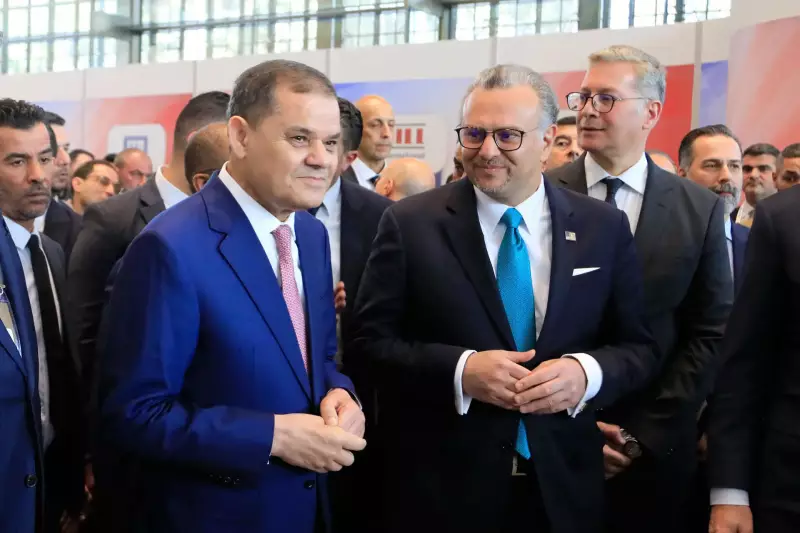
In a significant move to revitalize its energy sector, Libya announced on Saturday the signing of a major oil agreement valued at over $20 billion with international energy giants TotalEnergies and ConocoPhillips. This strategic partnership is designed to ramp up the country's oil production by an impressive 850,000 barrels per day over the next quarter-century, marking a pivotal step in Libya's economic recovery efforts.
Economic Impact and Financing Details
Prime Minister Abdulhamid Dbeibah highlighted that the agreement with the French and American firms is projected to bring in revenues exceeding $370 billion throughout the 25-year duration of the deal. Notably, he emphasized that this initiative is fully financed outside the state budget, alleviating fiscal pressures and ensuring independent funding for the ambitious project.
Libya Energy and Economic Summit in Tripoli
The announcement coincided with the opening of the Libya Energy and Economic Summit in Tripoli, which drew key international figures. Attendees included Massad Boulos, the Middle East adviser to former US President Donald Trump, along with officials from Turkey and Egypt, underscoring the global interest in Libya's energy potential.

During the summit, Dbeibah revealed that Libya is poised to sign additional agreements, including one with US energy behemoth Chevron focusing on exploration and production development. A separate deal with Egypt is also in the works to bolster support services within the sector, further diversifying Libya's energy partnerships.
Current Production and Challenges
Libya currently produces approximately 1.5 million barrels of oil per day, leveraging Africa's largest oil reserves, estimated at 48.4 billion barrels. However, the industry has faced substantial hurdles, particularly security issues stemming from the country's political division since the 2011 NATO-backed revolt that toppled longtime leader Moamer Kadhafi.
The nation remains split between the UN-recognised government in Tripoli, led by Dbeibah, and commander Khalifa Haftar's administration in the east. This fragmentation has historically hampered oil production and stability, making recent agreements a critical effort to overcome these obstacles.
International Perspectives and Future Prospects
Massad Boulos described the energy summit as "an opportunity to become a premier economic partner with the United States," adding that it serves as "a potential launchpad for Libya's return as a global energy superpower." These sentiments reflect a growing optimism about Libya's role in the international energy market.
Masoud Suleman, head of the National Oil Corporation, announced that a new licensing round for oil and gas exploration will be unveiled next month. This move follows Libya's last call for tenders in 2007-2008, which primarily focused on natural gas exploration, indicating a renewed push to attract global energy companies.
Revitalizing Libya's Energy Sector
Authorities have actively sought to draw major global energy firms back to Libya after years of political instability and fluctuating production levels. The recent agreements signal a concerted effort to stabilize and expand the oil industry, leveraging the country's vast reserves to foster economic growth and international collaboration.
As Libya navigates its complex political landscape, these deals represent a hopeful stride toward reclaiming its position as a key player in the global energy arena, with potential benefits for regional stability and economic development.

