

The National Highways Authority of India (NHAI) is set to address one of Gurgaon's most persistent traffic headaches with a major infrastructure intervention. In a significant move aimed at decongesting the bustling Delhi-Gurgaon Expressway, NHAI has proposed the construction of a three-kilometer flyover along the Narsingpur stretch. This ambitious plan was discussed during a high-level review meeting held on Wednesday in Delhi, bringing together NHAI chairman Santosh Kumar and Gurugram Metropolitan Development Authority (GMDA) CEO PC Meena.
Addressing a Critical Bottleneck
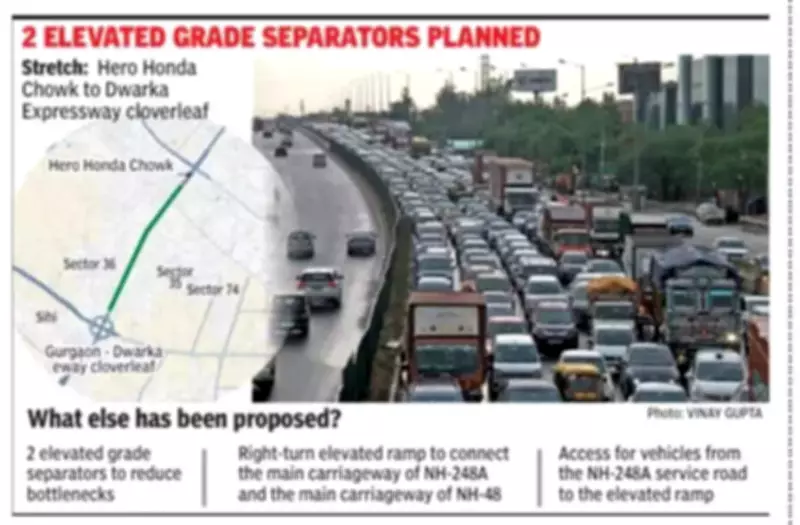
The targeted section between Hero Honda Chowk flyover and Dwarka Expressway cloverleaf has long been recognized as a regular bottleneck on this vital arterial road. Traffic congestion builds up consistently as vehicles from the four-lane Hero Honda flyover merge into the three-lane main carriageway near Narsingpur, causing sudden slowdowns and frustrating delays for thousands of daily commuters.
Multiple factors contribute to this persistent problem:

- The service road along this stretch remains in poor condition, forcing local vehicles onto the already crowded main carriageway
- Unauthorized cuts along the corridor create additional chokepoints
- With numerous villages and industrial units lining the expressway, traffic volume remains high throughout the day
- Peak hours witness particularly severe delays, affecting both personal and commercial mobility
Project Development and Coordination
During the meeting, NHAI chairman Santosh Kumar directed officials to immediately begin preparing a detailed project report (DPR) for the proposed flyover structure. However, officials clarified that the project remains at a conceptual stage, with alignment, design, and lane configuration to be finalized only after comprehensive studies.
An NHAI official emphasized, "While instructions were given to start preparing the DPR, the alignment, design and lane configuration will be finalized only after a thorough study. The proposal is currently at a conceptual stage and will be examined at the concept level first."
Comprehensive Traffic Solutions
The meeting focused on multiple aspects of road infrastructure improvement, including:
- Enhanced connectivity between key routes
- Effective congestion mitigation measures
- Strengthened public safety protocols
Both agencies agreed to coordinate closely on implementation, recognizing that inter-agency cooperation would be crucial for timely project execution. The decongestion of Rajeev Chowk emerged as a particular focus, with officials revealing plans for two elevated grade separators to improve traffic flow and reduce bottlenecks along this critical stretch.
Elevated Ramp Proposals
For commuters traveling from Delhi towards Sohna, NHAI has proposed a left-turn elevated ramp connecting the main carriageway of NH8 to the main carriageway of NH248A. This plan also includes provisions for an exit to the service road, offering multiple routing options.
Conversely, for traffic moving from Sohna towards Delhi, a right-turn elevated ramp has been proposed to connect NH248A's main carriageway with NH8's main carriageway. The design will also accommodate vehicles from the NH248A service road accessing the elevated ramp.
Officials indicated that this work would be prioritized to ease congestion and strengthen connectivity between Sohna and the Delhi-Mumbai Expressway. They were specifically instructed to engage with stakeholders to address potential bottlenecks, including land-related issues that might affect construction of the proposed elevated corridors.
Pedestrian Safety and Water Management
The meeting also addressed critical pedestrian safety concerns along NH8, with proposals to construct new foot overbridges (FOBs) at multiple locations. Under this collaborative plan:
- GMDA will identify stretches where FOBs are most urgently needed
- NHAI will take up construction responsibilities
- Upon completion, the FOBs will be handed over to GMDA for maintenance
These pedestrian structures will be equipped with ramps and lifts to improve accessibility and safety for all users. Officials expect these measures to help streamline two-wheeler movement and reduce pressure on the main carriageway.

Waterlogging emerged as another significant concern, particularly regarding flooding at underpasses on NHAI stretches during monsoon season. To address this, engineering teams from both agencies will conduct joint inspections of identified locations and undertake necessary works to strengthen stormwater drain connectivity.
GMDA CEO PC Meena highlighted specific measures, stating, "GMDA is laying a stormwater drain up to Badshapur to address waterlogging along the Narsingpur service lane. To improve the drainage network, NHAI will construct a culvert on NH8. Both agencies will jointly prepare an execution plan for this work."
A GMDA official added, "Coordinated site visits will be conducted to prepare an action plan for other vulnerable locations where stormwater drainage links or sewerage solutions are required ahead of the monsoon season."
Broader Mobility Vision
Both NHAI chairman Santosh Kumar and GMDA CEO PC Meena emphasized the need for stronger inter-agency coordination to ensure timely execution of projects aimed at improving mobility, safety, and commuter convenience across Gurgaon. This collaborative approach reflects a growing recognition that comprehensive urban mobility solutions require seamless cooperation between multiple government agencies.
The proposed three-kilometer flyover represents just one component of a broader strategy to transform Gurgaon's transportation infrastructure. As the city continues to grow as a major economic hub, such infrastructure investments become increasingly critical for sustaining development momentum while ensuring quality of life for residents and commuters alike.





