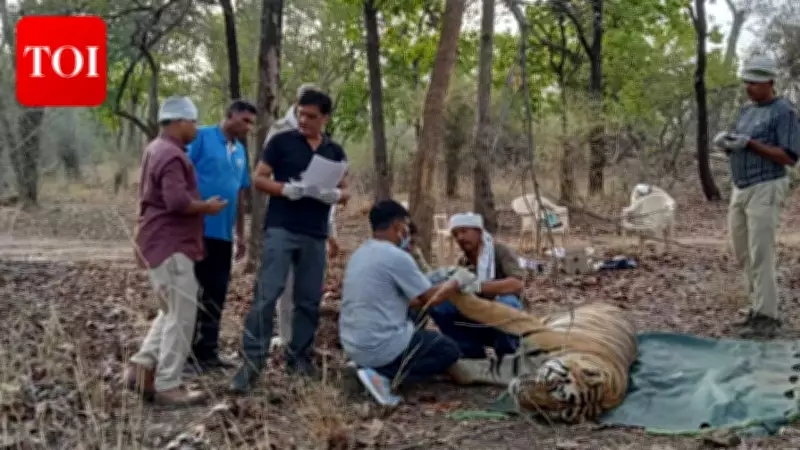
A special team of the National Tiger Conservation Authority (NTCA) has concluded that the tiger found dead inside a house in the buffer zone of Bandhavgarh Tiger Reserve died of cardio-respiratory failure linked to extreme stress, ruling out allegations of a tranquiliser drug overdose, according to sources. The tiger had killed a woman and injured three villagers before its death.
Incident and Initial Concerns
The tiger sparked panic in the village on May 24 after attacking residents. It was found dead during a rescue operation, leading to questions about whether the animal succumbed to an overdose of immobilisation drugs administered during capture efforts. However, sources familiar with the NTCA team's findings said the overdose theory has been ruled out, indicating the tiger was already dead before it was darted.
Stress and Condition of the Tiger
Officials associated with the inquiry stated that the tiger was likely under severe stress after being surrounded by hundreds of villagers during the incident. They added that the animal may also have been thirsty and hungry, which could have aggravated its condition and behaviour before it collapsed.

Second Autopsy Details
The second autopsy was conducted on Monday at the State Wildlife Forensic Health (SWFH) facility in Jabalpur after scrutiny intensified over the circumstances surrounding the tiger's death. A panel of three veterinarians performed the examination in the presence of an NTCA representative, senior Bandhavgarh Tiger Reserve officials, the Director of SWFH, and veterinary pathology experts from Nanaji Deshmukh Veterinary Science University (NDVSU), Jabalpur.
Before beginning the examination, the expert panel reviewed the rescue operation, including photographs and video footage of the first postmortem conducted at Bandhavgarh Tiger Reserve on Sunday under standard NTCA protocol.
Preliminary Findings
According to sources, the second postmortem found the tiger's skin to be rough and dry, muscles pale and dehydrated, and the gastrointestinal tract empty. Vital organs reportedly showed haemorrhagic changes and congestion, findings experts are linking to severe physiological stress and cardio-respiratory collapse.
Importantly, no visible haemorrhage was found in the right shoulder muscle at the darting site. Experts said this suggests the tranquiliser dart was administered after death, as living tissue would normally show bleeding or tissue reaction.
Ongoing Analysis
Officials said tissue and organ samples from all major organs have been preserved for toxicology and forensic analysis to scientifically establish the exact cause of death. While the final laboratory report is awaited, preliminary findings have reportedly ruled out the possibility of tranquiliser overdose. The entire autopsy process was photographed and videographed to ensure transparency.