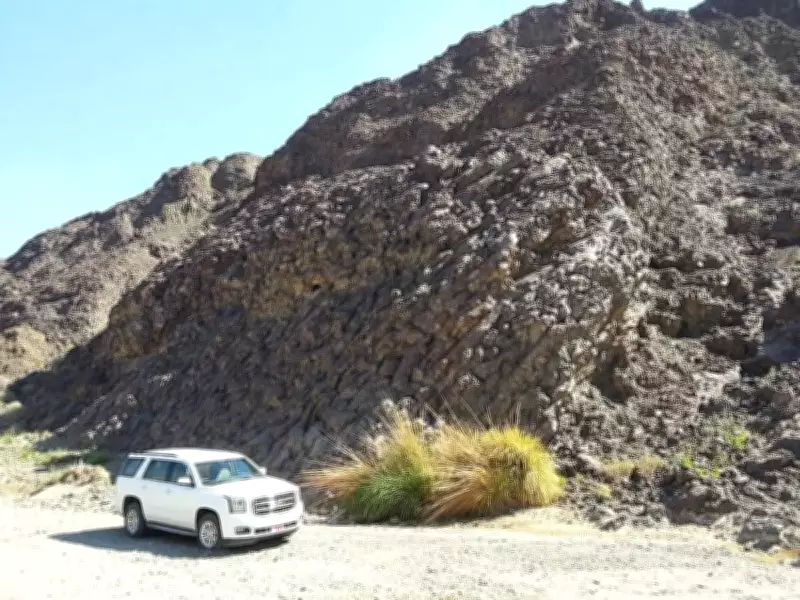
In Oman, geologists have the rare opportunity to walk across rock formations that are typically located kilometers below the ocean bed. This unique area, known as the Oman ophiolite, is considered the most extensive and well-exposed land example of oceanic crust and mantle ever discovered. Unlike expensive and risky deep-sea drilling projects, these rocks are exposed to the air, accessible to anyone willing to hike through the mountains.
Researchers praise the site as revolutionary for studying the formation of oceanic crust, hydrothermal processes, and natural carbon sequestration. The United States Geological Survey (USGS) notes that Oman's ophiolite is exceptionally well-preserved, with a complete rock sequence that provides invaluable insights into Earth's geology.
What is the Oman Ophiolite?
An ophiolite is a section of oceanic crust and upper mantle that has been uplifted onto land through plate tectonic activity. Typically, oceanic crust is covered by deep seas, but in Oman, a large portion was lifted above sea level through a process called obduction. This unusual event exposed a stratified sequence of ancient seafloor rocks, including mantle peridotites, layered gabbros, sheeted dikes, and pillow basalts. Together, these rocks represent almost the entire section of the oceanic lithosphere, making the Oman ophiolite one of the best natural examples of exposed oceanic crust.

Why Do Researchers Focus on These Rocks?
Oceanic crust covers the majority of Earth's surface, yet scientists have limited direct access to it. Sampling the deep ocean floor requires costly and technologically complex operations. The Oman ophiolite solves this problem by exposing hidden geological layers for scientific observation. Researchers can investigate the development of magma chambers under ancient oceans, the fracturing of crust during spreading, and the interaction of seawater with hot rocks. Geologists working on drilling projects in Oman have described the site as one of the best natural laboratories for studying the oceanic lithosphere. The ophiolite has also provided insights into seawater circulation in oceanic crust and its impact on mineral chemistry.
Chemical Evidence in Mantle Rocks Is Invaluable
One of the most fascinating aspects of the Oman ophiolite is its mantle rock, known as peridotite. Peridotites form deep within Earth's interior, far below the crust's surface, making direct observation impossible elsewhere. However, in Oman, peridotites are extensively exposed. Studying these rocks reveals insights into how Earth's mantle melts to form new oceanic crust at spreading centers. Scientists analyze the chemical composition of minerals, deformation features, and isotopic signals to determine conditions in the ancient mantle. Interestingly, peridotites have also become valuable for research on carbon capture and storage. In a 2004 paper published in Nature, researchers discovered that minerals in these rocks can undergo chemical reactions with carbon dioxide to produce carbonate minerals, offering potential applications for carbon capture technologies.
How Did Ocean Crust End Up in Mountains?
The geological process responsible for Oman's unique terrain is obduction. Typically, oceanic crust moves under continental crust through subduction. However, in Oman, a portion of the oceanic lithosphere was pushed over the edge of the Arabian continental margin instead of sinking into Earth's interior. This unusual phenomenon preserved a substantial piece of the oceanic lithosphere at the surface, creating an almost inverted geological structure: rocks that once existed in the depths of oceans now appear in desert mountains. Geologically, the Oman area allows researchers to explore layers of Earth's crust that are impossible to study using traditional methods.
Relevance of the Oman Ophiolite Today
Scientists continue to research Oman because it provides knowledge about several major processes inside our planet. These include seafloor spreading, magma plumbing, hydrothermal system evolution, collision zone dynamics, and chemical reactions within the natural carbon cycle. While some aspects of the ophiolite's geological history remain debated—such as whether it represents typical oceanic crust worldwide—the structure is widely considered highly valuable for studying Earth's geological features.