

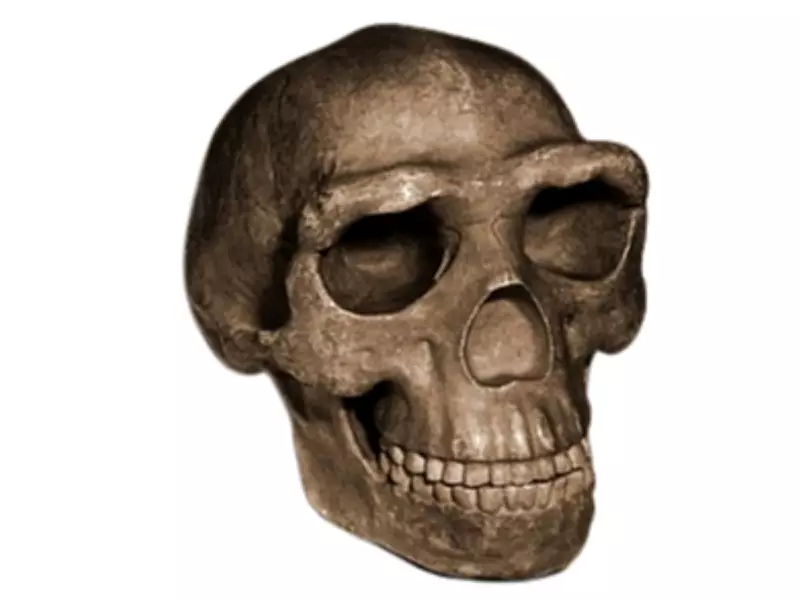
In December 1929, 25-year-old Chinese archaeologist Pei Wenzhong was working in a cold cave at Zhoukoudian near Beijing. As he brushed away layers of dirt, he uncovered an ancient human skullcap. The discovery was later called "Peking Man" and became a landmark find in the study of human origins.
At the time, scientists had found little evidence that early humans had lived on mainland Asia. The Smithsonian's Human Origins Program notes that the Zhoukoudian discovery provided an important fossil anchor linking the site to Homo erectus. The discovery prompted scientists to pay closer attention to East Asia in debates about human origins.
How Peking Man Fit into Debates About Human Evolution
In 1929, the human family tree still had many missing fragments. Peking Man helped fill a major gap in the fossil record.

Based on a peer-reviewed research study about the teeth of Peking Man, which was published in Scientific Reports, the fossils located in Zhoukoudian Locality 1 are among the oldest and most recognizable hominins found. The research notes that early descriptions of the fossils suggested a link between apes and humans. Researchers interpreted the skullcaps as evidence for human evolution, and the fossils drew more attention to Asia in discussions of early human ancestry.
A Foundation for Studying Ancient Anatomy
The skullcap became an important research reference. It quickly became a key reference for researchers studying human evolution over hundreds of thousands of years.
An analysis of the comparative anatomy of Zhoukoudian Homo erectus arm bones, which is available on PubMed, says that the remains played a major role in determining the physical form of Asian Homo erectus. Although excitement about the 1929 dig eventually waned, the skullcap remained a baseline reference. Researchers still use the skullcap in studies of human variation and classification.
Understanding Behaviour and Chronology
For years, the main question about Peking Man was when early humans lived. New dating techniques have helped resolve this question. The lower layers at Zhoukoudian Locality 1 are dated to about 780,000 to 400,000 years ago, rather than a single date of 0.77 million years ago. Establishing this date helps scientists understand early human movement across the world.
As excavations continued, attention shifted to what Peking Man looked like and how they lived. The cave layers contained evidence of early tool use and subsistence practices. In particular, Zhoukoudian has long been considered evidence for early controlled fire use by humans. But researchers continue to debate the evidence. The debate now focuses more on daily life and adaptation.
Why Peking Man Still Matters Today
Further excavations within the same area have revealed the remains of an early modern human in Tianyuan Cave, which dates back approximately 40,000 years. This suggests that Tianyuan Cave was used by different human populations over millennia.
Recent research continues to treat Zhoukoudian as a key reference point for studies of Homo erectus in China.






