

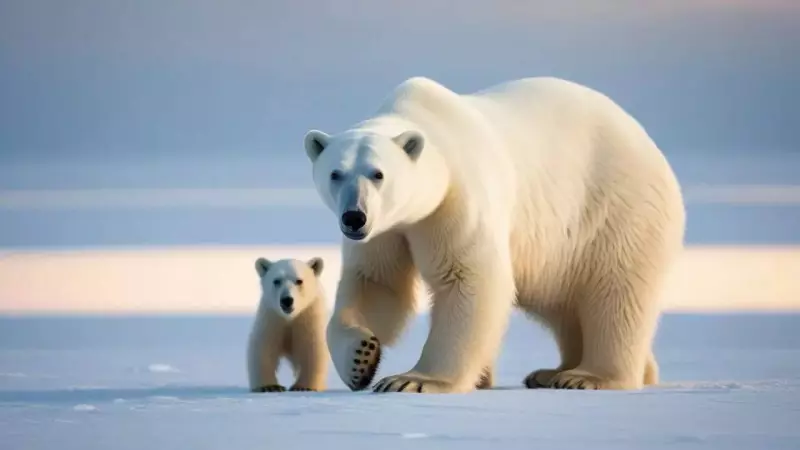
The Arctic, a realm of ice and snow, is home to some of the planet's most iconic creatures, with the polar bear standing as a symbol of strength, endurance, and the stark beauty of the frozen north. These formidable land predators inhabit environments characterized by extreme cold, heavy snowfall, and vast ice sheets—conditions that would prove fatal to most other species. Their ability to not only survive but thrive in such harsh settings is a testament to millions of years of evolutionary refinement.
Polar Bear Fur: The Illusion of Whiteness and Its Thermal Benefits
One of the most fascinating aspects of polar bears is that their famous "white" fur is not truly white at all. In reality, the individual hairs are transparent or clear, creating an optical illusion of whiteness by scattering light. This clever adaptation serves as exceptional camouflage, allowing polar bears to blend seamlessly with the snow and ice of the Arctic landscape. By remaining nearly invisible, they can stealthily approach prey such as seals without detection.
Beyond camouflage, the structure of polar bear fur is ingeniously designed for insulation. The hairs are hollow, which helps trap heat close to the body, while a special greasy coating on the outer hairs prevents ice from forming. This dual-layered system includes a thick undercoat that acts like a warm sweater and a longer outer layer that functions similarly to a waterproof raincoat, keeping the bear dry after swimming. These features enable polar bears to endure temperatures as low as -46°C (-50°F) for extended periods, though body fat is crucial for maintaining warmth in frigid waters.

The Role of Black Skin in Arctic Survival
Beneath their transparent fur, polar bears possess black skin, a trait that has intrigued scientists for decades. Initially, it was believed that this dark pigmentation helps absorb heat from the sun, although recent studies suggest the thermal benefits may be more nuanced than previously thought. More definitively, the black skin, rich in melanin, provides vital protection against the intense ultraviolet rays that reflect off snow, ice, and water in the Arctic—similar to how melanin safeguards human skin from sun damage.
This combination of clear fur and black skin represents a rare and intelligent natural solution, offering both camouflage and UV shielding in one of Earth's coldest habitats. The pigmentation process begins early in life: newborn cubs weigh only about 500 grams and have pink skin visible through a thin layer of white fuzz, with pink noses and foot pads. By three to four months old, as they leave the maternity den, their skin darkens to black, particularly on the nose, lips, and paw pads. This color change continues internally, with cubs' pink tongues gradually turning black as they mature, though the exact ecological function of tongue pigmentation remains ambiguous and is likely genetically linked to overall skin coloration.
Additional Adaptations for Mastery of the Arctic
Polar bears are equipped with a suite of other specialized traits that enhance their survival in the Arctic. Their large paws feature small papillae that provide grip on slippery ice, and their strong, curved claws are essential for capturing prey. These adaptations make polar bears apex predators, adept at hunting seals and navigating treacherous sea ice with ease.
What may appear as simple "white fur" is, in reality, a complex evolutionary toolkit. It encompasses thermal regulation, effective camouflage, and UV protection, all working in harmony to support life in an extreme environment. From their hollow fur to their black skin and robust paws, every aspect of a polar bear's physiology is finely tuned for Arctic existence, showcasing nature's remarkable ingenuity in the face of adversity.






