The ancient Roman town of Pompeii was buried under volcanic ash following the catastrophic eruption of Mount Vesuvius in AD 79. This natural disaster destroyed houses, streets, temples, and thousands of lives in a matter of hours. The city remained hidden beneath pumice and ash deposits for nearly 1,700 years. Today, Pompeii is one of the greatest archaeological sites in the world, offering a unique glimpse into the daily life of ancient Romans. From plaster casts of victims to preserved frescoes and bakeries, the ruins vividly illustrate the sudden impact of nature on human existence.
The Eruption of Mount Vesuvius and the Destruction of Pompeii
What seemed like an ordinary day in August of AD 79 turned catastrophic when Mount Vesuvius erupted with immense force. As Roman author Pliny the Younger described, the sky grew so dark that it appeared "as if the lamp had been put out in a dark room." According to the Dipartimento di Biologia at the Università di Firenze, ash, lava rocks, and poisonous gases rained down on Pompeii and neighboring cities, including Herculaneum. Archaeologists suggest that building roofs collapsed under the weight of pumice stones before pyroclastic surges finally struck the city. Britannica notes that Pompeii was ultimately buried under an ash layer up to 23 feet thick. The ruins of the ancient city vanished for centuries, but the same ash that caused destruction also protected the site from decay.
Pompeii Archaeology Reveals Everyday Roman Life
Pompeii is not merely a symbol of tragedy; its rediscovery marked a turning point for archaeology and ancient history studies. Excavations began in 1748, and even today, new areas of the city continue to be unearthed. Visitors to Pompeii can see many familiar elements of Roman life. Bakeries still feature their stoves alongside stone counters. Public baths are adorned with bright frescoes. Walls bear graffiti with political slogans and jokes. Archaeologists have even uncovered fast-food restaurants from ancient times. These discoveries enable scientists to better understand the lives of Romans nearly 2,000 years ago.

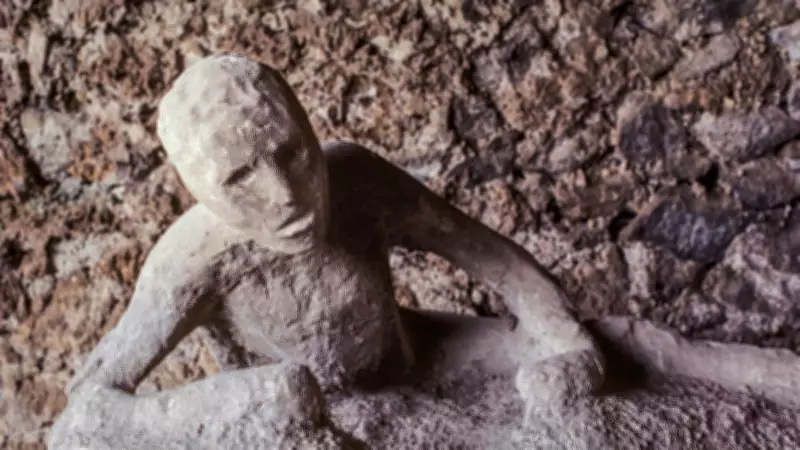
Perhaps the most striking feature of Pompeii is the plaster casts of its victims. In the 19th century, archaeologists found cavities in the solidified ash containing human remains. By filling these cavities with plaster, they captured the final moments of those who tried to escape the eruption.
Why Pompeii Still Fascinates the Modern World
Pompeii continues to captivate scholars and tourists alike because it retains a remarkably human feel. Unlike ruined temples or monuments, Pompeii offers a snapshot of everyday life frozen in time. Scientists continue to study Vesuvius, an active volcano, with research published in the Journal of Volcanology and Geothermal Research. Modern projects, such as muon radiography, aim to understand the volcano's inner workings. Meanwhile, new discoveries keep emerging from the ancient city. Recently, archaeologists unearthed luxurious baths, colorful frescoes, and domestic items that shed light on both the wealth and fragility of Roman society.
Pompeii demonstrates that history is not only about powerful rulers and wars but also about ordinary people who ate meals, left graffiti on walls, and fought for survival against an unexpected catastrophe. Two thousand years after the tragedy, the ash-covered town still speaks powerfully to us.