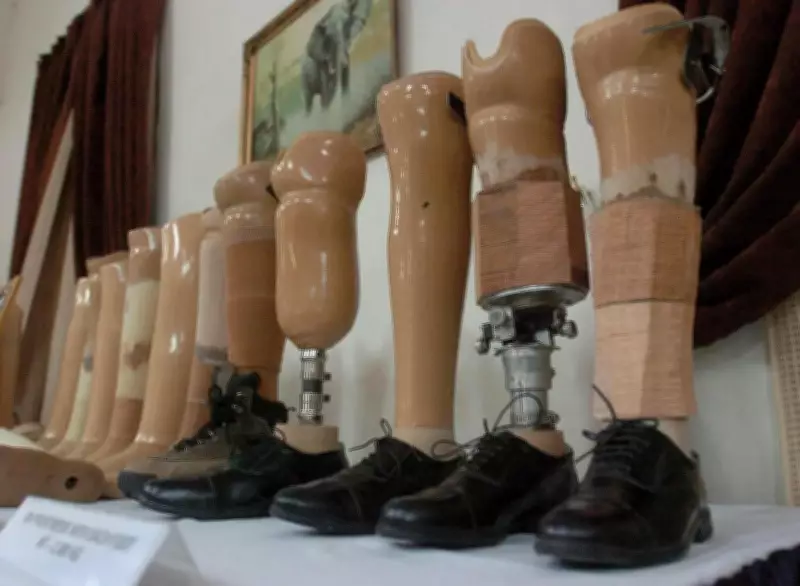
The Armed Forces Medical Services (AFMS) has unveiled ambitious plans to transform Pune's historic Artificial Limb Centre (ALC) into an international centre of excellence for rehabilitation, with a strong emphasis on indigenous prosthetics, research collaborations, and disability inclusion. Director General of AFMS, Vice Admiral Arti Sarin, announced this vision during the 82nd raising day celebrations of the ALC on Monday.
Expanding National and Global Role
Sarin stated that the institution would assume a larger national and global role in rehabilitation as India pushes for greater inclusion and accessibility for persons with disabilities. She also inaugurated a "Holistic Mobility Clinic" on the ALC campus, designed to streamline rehabilitation and patient care by consolidating services under one roof.
"Even if a limb is lost, hope will not be lost. We will stand by them, from the first dressing to the first step," Sarin said while outlining the future roadmap for the centre.

International Outreach and Training
Beyond serving military personnel, the ALC has expanded its outreach internationally. Sarin noted that the centre had trained paramedics from the Myanmar and Nepal armies and conducted a limb-fitment camp in Myanmar last year, where 50 patients received prosthetic limbs and rehabilitation training within two weeks. This year, the centre plans to fit 100 artificial limbs during another outreach mission there.
Highlighting the growing global challenge of limb loss caused by wars, trauma, and diabetes, Sarin emphasized that the role of rehabilitation centres had become critical. "For the Armed Forces, this challenge is even more acute, as thousands of our brave young soldiers have sacrificed their limbs defending the nation and hundreds sustain non-combat injuries," she said.
Historical Significance and Technological Pioneering
Established in 1944 and modelled after Queen Mary's Hospital in Roehampton, London, the ALC was the first organized limb rehabilitation centre in South East Asia. Over eight decades, it has emerged as a premier institution for amputee rehabilitation for battle casualties, veterans, and civilians.
Sarin stated that AFMS had a dual responsibility: to return wounded soldiers to duty at the earliest and to ensure they continue to lead dignified and productive lives. The ALC has consistently pioneered rehabilitation technologies in India. It was among the first in the country to use indigenous carbon-fibre prosthetic components and had fitted India's first running blade prosthesis to retired Major DP Singh, widely known as India's first blade runner.
She also cited the achievements of battle casualty amputee Lt Col Avnish Bajpai, who completed a full marathon using running prosthetics and later took up diving and skydiving.
Supporting Government's Disability Inclusion Agenda
Sarin said the centre could play a key role in supporting the government's disability inclusion agenda under the Union Budget 2026-27 by helping establish modern rehabilitation centres across the country through military-civil cooperation. The future roadmap for ALC includes structured training programmes, innovation hubs linked with academia and industry, national rehabilitation registries, and development of affordable high-performance indigenous prosthetics.
Holistic Mobility Clinic: A Game Changer
The newly inaugurated Holistic Mobility Clinic is expected to be a game changer for patients. Brigadier CN Satish, the commandant of the ALC, told TOI that patients will receive all medical services under one roof in a holistic manner. The centre is now equipped with advanced CADCAM facilities, a state-of-the-art gait and balance lab, an upper limb training lab, and newly introduced 3D printing technology.
"Earlier all these services used to be provided at different sections on the campus. It is a challenging thing for a patient. Therefore we have created a proper facility where everything will be at one place. It makes a difference because these patients will be able to interact with each other to realize others are also going through the same physically challenged," he added.
The commandant said that the centre has provided various types of limbs to nearly 80,000 patients, including the civil population, since its inception in 1944.