

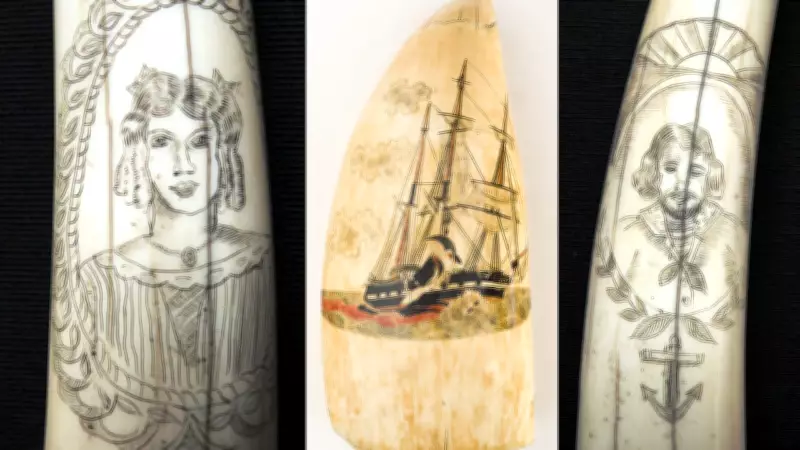
Scrimshaw, a unique maritime art form, is deeply rooted in the history of whaling and sailors' craftsmanship. Originating from the need to pass time during long sea voyages, scrimshaw allowed sailors to preserve memories of their families and themselves. This art form, typically carved onto whale bones and teeth, combines personal expression with historical context, offering a window into the lives and emotions of those who created it.
The Origins of Scrimshaw in Maritime History
Scrimshaw flourished from the late eighteenth century through the nineteenth century, coinciding with the peak of the whaling industry. Sailors spent months or even years at sea, and during their leisure time, they turned to engraving on whale teeth, bones, and baleen. According to the University of Cambridge’s 'Unlocking the cultural and biological archive of sea mammal art,' scrimshaw refers to engravings done by sailors during their free time on whale teeth, bones, and other objects. The term likely developed among sailors themselves, reflecting their unique culture.
Scrimshaw as a Form of Sailor Expression
Scrimshaw was more than just decoration; it served as a visual journal. Sailors carved detailed depictions of ships, portraits, seaside views, and idealized images of loved ones left behind. The New Bedford Whaling Museum notes that scrimshaw often reveals homesickness, chronicling the inner life of sailors alongside the outer world around them. Each piece tells a story, from victorious whale hunts to moments of loneliness and hope. In an era without instant communication, scrimshaw became a tangible representation of sailors coping with distance and longing.

Materials and Techniques in Traditional Scrimshaw
Traditional scrimshaw used whale teeth, bones, or baleen as the canvas. Basic tools like needles or knives were employed to inscribe figures onto the surface, followed by rubbing ink, soot, or tobacco juice to highlight the design. The carved lines were filled with color to create contrast and visibility. Despite the simplicity of tools, the level of detail achieved was remarkable.
Scrimshaw’s Place in Modern Maritime Heritage
Today, scrimshaw is recognized as a prominent form of maritime folklore art. Historical pieces are preserved in museums and private collections, valued for their artistic and cultural significance. However, modern scrimshaw artists avoid using whale products due to conservation laws, opting for alternative materials like fossilized ivory or synthetic substitutes. Maritime historians emphasize that scrimshaw provides crucial insights into life aboard ships, often missing from historical documents. It allows observers to not only see depicted events but also feel associated emotions. Thanks to scrimshaw, history remembers episodes that might otherwise remain unnoticed, reflecting the resilience and creativity of those who sought to preserve something tangible amid hardship.






