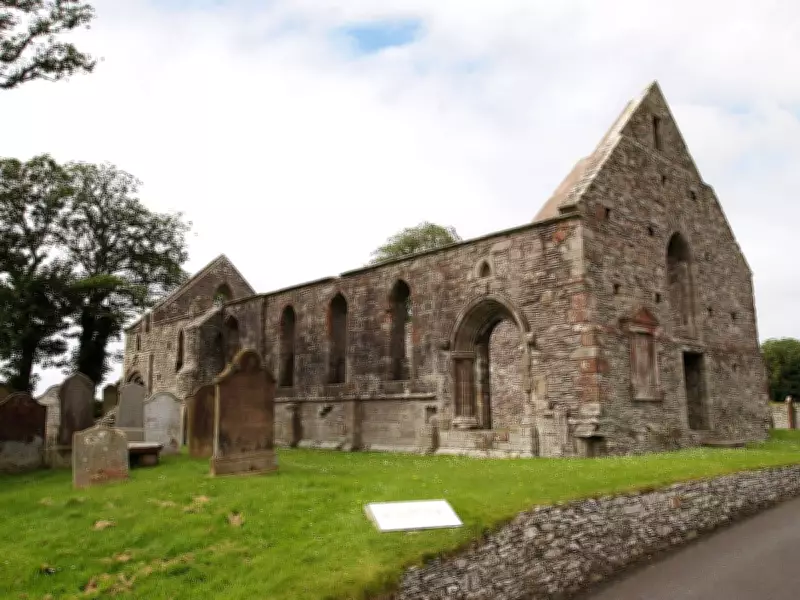
In 1957, a group of workers waterproofing the medieval crypt around Whithorn Priory in southwest Scotland uncovered a series of neatly constructed stone structures. They quickly realized they had exposed three stone coffins from the past. Initially viewed as a routine find in a site long associated with early Christianity and St. Ninian, the burials led to a significant re-evaluation of the location. Later excavations and modern scientific analysis changed the way we view Scotland's first Christian centre, revealing a complex history of high-status individuals, long-distance travel, and the changing nature of religious practice.
A Timeline That Became More Complicated
Over the years, popular culture celebrated Whithorn as a monastery hub. Modern laboratory methods challenge this basic story. An investigation report released from the University of Bradford has revealed that the first monks buried in log coffins on this site date back to the 7th century AD, much earlier than generally thought. Radiocarbon dating has completely transformed the timeline of history. However, the same study uncovered fascinating evidence of lavish feasts dating back to the sixth and fifth centuries. According to the study, Whithorn did not emerge overnight as a monastery. It developed in different phases, serving as an area for ceremonial gatherings of prestigious Christians before becoming the official monastery and episcopal centre.
Global Networks and Elite Diets
The significance of the graveyard became evident when scientists examined the remains of medieval bishops buried there. Based on a research study preserved at the University of Glasgow research repository, chemical analysis of the remains revealed that these saintly figures lived lifestyles different from the general population. Stable isotope results indicated that the religious leaders of Whithorn ate an omnivorous diet including fish, in stark contrast to local inhabitants who predominantly consumed meat. Further tests revealed that these bishops were individuals who travelled to Whithorn from the east. This vital data confirms that Whithorn was not a solitary local cemetery but a powerful, well-connected facility linked to a wider European church network.

A Tiny Map of Power
The arrangement of the area also suggests that the site was well planned rather than constructed by chance. Research shows that at the end of the sixth century, Whithorn was a strict site with a very holy inner area reserved for burials and shrines, physically separated from the outer residential area. This distinction proves that having a burial site close to the centre of the monastery was a privilege directly linked to religion and social power. Graves were not just suitable places for laying the deceased; they also served as permanent symbols of belonging and status. It was a highly stratified site, housing people whose diets, wealth, and geographic locations varied in distinct and evident ways.
The Legacy Left by 1957
An accidental finding by construction workers has totally changed the history of Scotland. The burial plots prove that Scotland's first Christian centre was much stronger and more organised than anyone could have imagined. Instead of a traditional local cemetery, archaeology has revealed an active centre for ceremony, leadership, and memories. The ancient bones and stones still reveal evidence that early medieval society was characterised by distinction, a strict order, and an incredibly multilayered religion that developed through the generations.