The year 2025 will be remembered as the moment Generation Z's long-simmering political frustration erupted onto the global stage. What was once misread as disengagement or dismissed as online noise transformed into a powerful wave of youth-led protests that swept across continents, challenging entrenched systems of corruption, inequality, and exclusion, and fundamentally altering expressions of dissent and democracy.
The Spark in Nepal and a Global Tinderbox
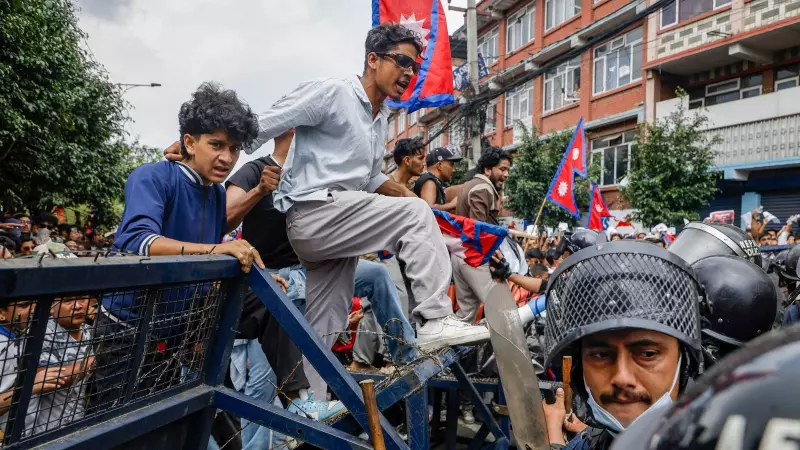
The symbolic epicentre of this awakening was Nepal. In September 2025, the government's decision to impose a ban on social media platforms acted as the final trigger for an explosive backlash. However, as activists on the ground clarified, the ban was merely the spark that lit a pre-existing fuse. Raksya Bam, a 26-year-old activist from Kathmandu, explained that the reaction stemmed from a deep-seated series of disappointments, watching nepotism prevail while capable youth struggled for dignity.
This pattern was not confined to Nepal. From Asia to Africa to Latin America, a familiar script unfolded. Dr. Philip Varghese of Christ University, Bengaluru, noted that revolutions never appear from thin air. "Persistent unemployment, entrenched corruption, widening inequality, and the erosion of participatory decision-making" created the fertile ground for these uprisings. The myth of Gen Z as politically disengaged lay in ruins by 2025.

A Digital-First Playbook for Mobilisation
While the drivers of protest—inequality, corruption, exclusion—were familiar, the mechanics of mobilisation underwent a dramatic shift. Unlike earlier movements, the 2025 Gen Z uprisings were born in a digital-first ecosystem. Platforms like Discord, TikTok, and Instagram evolved from mere communication tools into spaces where politics was co-created and narratives were shaped.
"Digital spaces completely redefined participation for us," stated Bam, highlighting how on Discord, protestors even elected an interim Prime Minister, Sushila Karki. A meme could disseminate a political argument faster than a formal press conference. For young professionals like Nupur Bharat Redkar, a 21-year-old PR professional, these platforms served as democratic classrooms, making political discourse open, creative, and accessible.
Global Flashpoints: From Jakarta to Nairobi
The unrest manifested in diverse geographies, united by common grievances:
- Indonesia: Demonstrations erupted in Yogyakarta, Jakarta, and Kalimantan over economic stagnation and proposals to increase housing subsidies for MPs.
- Philippines: Tens of thousands marched against corruption in flood-control projects.
- Madagascar: Protests over chronic power outages, water shortages, and corruption pushed many youth to consider emigration.
- Kenya: Mass demonstrations rocked Nairobi following custodial deaths of a blogger and a teacher, compounded by anger over rising living costs and police brutality.
- Morocco: Groups like GenZ 212 Moroccan Youth Voice criticised crumbling public services while the government invested heavily in mega-events like the 2030 FIFA World Cup.
Similar tensions simmered in Turkey, Peru, and Mexico, painting a picture of a generation in global revolt.
The Paradox and the Pressure
The decentralised, leaderless nature of these movements proved to be both a strength and a challenge. This structure made the protests harder to suppress, as there was "no single head to crush." However, Bam acknowledged the difficulty in transitioning from resistance to reform, as states are built to negotiate with few leaders, not thousands of voices. Dr. Varghese warned that without concrete institutional reforms, these digital uprisings risked fading without lasting impact.
Beneath the political noise lurked a quieter crisis of mental well-being. A UNICEF-backed 2025 study revealed that six out of ten Gen Z individuals felt overwhelmed by current events. Dr. Pavitra Shankar of Aakash Healthcare explained that constant exposure to crises—from climate change to economic anxiety—kept youth in a heightened state of stress, leading to burnout and vulnerability to mood disorders.

The way forward, as articulated by activists like Raksya Bam, is clear: "We need proof, not promises." Proof that systems can uphold dignity, merit, and accountability. Until that proof is delivered, a watchful, sceptical, and digitally-empowered Generation Z refuses to look away, remembering everything and reshaping the future of political engagement one protest at a time.