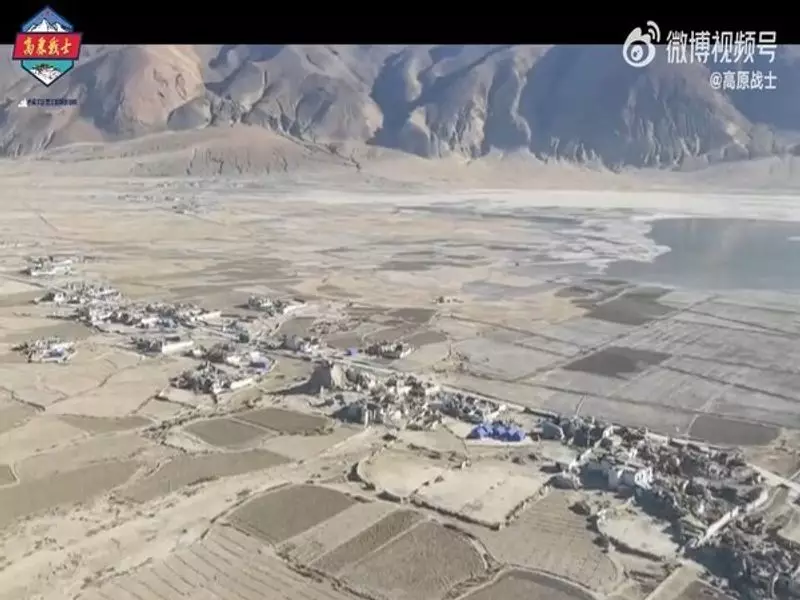
A mild earthquake jolted the Tibet region early on Sunday, according to data from the National Center for Seismology (NCS). The seismic event, which registered a magnitude of 3.4 on the Richter scale, serves as a reminder of the area's geological activity.
Details of the Seismic Event
The tremor occurred at 5:46 AM Indian Standard Time (IST) on Sunday, March 23. The epicenter of the earthquake was located in Tibet at a depth of 10 kilometers beneath the Earth's surface. Precise coordinates provided by the NCS place the epicenter at a latitude of 33.29 degrees north and a longitude of 81.38 degrees east.
The earthquake's magnitude was measured at 3.4, which classifies it as a light tremor. Earthquakes of this intensity are often felt by people indoors, especially on upper floors of buildings, but typically cause negligible to minor damage. The region's sparse population likely limited the immediate impact.

Regional Context and Monitoring
The Tibet Autonomous Region is situated on the seismically active Tibetan Plateau, which is constantly being shaped by the ongoing collision of the Indian and Eurasian tectonic plates. This geological process makes the region, including areas bordering northern India, prone to frequent tremors.
Monitoring agencies like India's National Center for Seismology keep a close watch on such activity. No reports of damage to property or loss of life have been received following this particular event. Authorities have not issued any tsunami warnings, as the magnitude was far too low to trigger such an event.
Understanding Earthquake Preparedness
While this earthquake was minor, it underscores the importance of preparedness in seismically active zones. Residents in areas prone to tremors are advised to:
- Secure heavy furniture and appliances to walls.
- Identify safe spots in every room, such as under sturdy tables.
- Prepare an emergency kit with water, food, a first-aid kit, and important documents.
- Know the evacuation plan for your home and workplace.
Seismologists continue to monitor the region for any aftershocks, though these are unlikely to be significant following a quake of this scale. The event is a routine occurrence in the complex geology of the Himalayas and the Tibetan Plateau.
For individuals in India, particularly in northern states that sometimes feel tremors from such events, it is recommended to follow official updates from the National Center for Seismology for accurate and timely information.