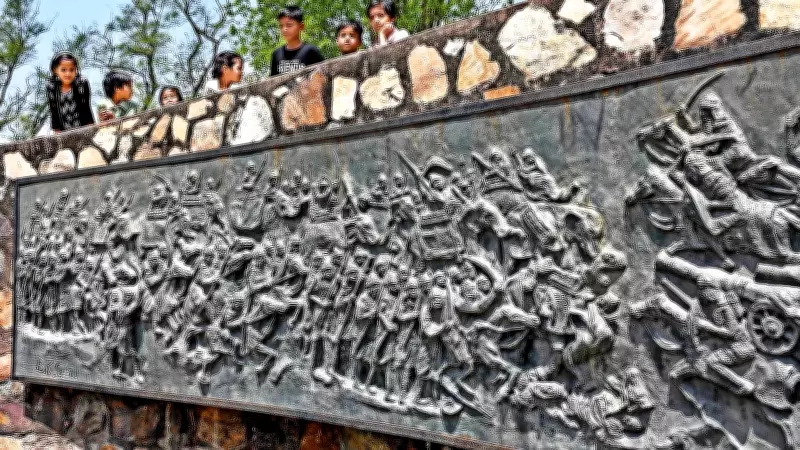
On a drowsy afternoon in Babarpur village in Panipat, around 90 km north of Delhi, dogs sprawl across the road and vegetable fields stretch into the distance. Outside a cycle repair shop humming with flies, Mahesh Raj and his friend Ashok Kumar, an auto driver, sit passing time. Ask them how the village got its name, and the answer comes easily.
However, when questioned about the First Battle of Panipat fought 500 years ago, both men appear puzzled. The battle, which took place on April 21, 1526, marked a decisive turning point in Indian history, establishing the Mughal Empire under Babur. Yet today, the site of this monumental conflict is largely forgotten, with no memorial or plaque to commemorate the event.
A Forgotten Landmark
Babarpur village, named after the Mughal emperor, lies near the battlefield. But residents and visitors alike show little awareness of its historical importance. The area now features agricultural fields and scattered settlements, with no sign of the clash that changed the subcontinent's destiny.

Historical Significance
The First Battle of Panipat saw Babur's forces defeat the Lodi Sultanate using innovative tactics, including the use of firearms and field fortifications. This victory paved the way for Mughal rule, which lasted over three centuries and left a lasting impact on India's culture, architecture, and governance.
Historians lament the lack of preservation. Dr. Rohan Sharma, a historian at Delhi University, states: "This site is as important as any world heritage location. The absence of a museum or even a marker is a missed opportunity to educate the public about a pivotal moment in our past."
Local Perspectives
Mahesh Raj, a farmer, says: "We know the village is named after Babur, but we never learned about the battle in school. It's just a name to us." Ashok Kumar adds: "If there were a monument, it might attract tourists and help our economy. But right now, there is nothing."
The village's obscurity contrasts with other historical sites like Agra's Taj Mahal or Delhi's Red Fort, which draw millions annually. Panipat's battlefield remains neglected, with no government initiative to mark its quincentennial.
Calls for Preservation
Local activists have urged the Archaeological Survey of India to designate the area a protected site. They propose a small museum and a memorial park. However, progress has been slow due to land ownership issues and funding constraints.
As the 500th anniversary passes, the fading memory of the First Battle of Panipat serves as a reminder of how easily history can be forgotten. Without concerted efforts, this turning point may slip entirely from public consciousness.